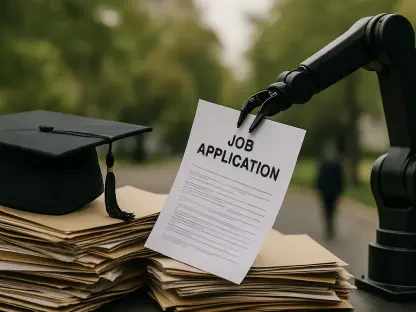

The cost of a single marketing mis-hire has ascended to unprecedented heights, often exceeding three times the individual’s annual salary when accounting for lost momentum and wasted ad spend. The traditional landscape of marketing recruitment has undergone a quiet but radical transformation, moving away from subjective creative evaluation toward a rigorous analysis of business impact. What was once viewed as a predominantly creative or brand-driven department has pivoted into a high-pressure growth engine directly tied to revenue, pipeline velocity, and board-level metrics. For HR leaders, this shift elevates the stakes of every hiring decision. A marketing mis-hire is no longer just a culture mismatch or a missed creative opportunity; it is a direct threat to the company’s bottom line and market position. Identifying genuine talent now requires a specialized lens to peer through the polished portfolios and AI-generated content that frequently mask a lack of fundamental expertise.
Navigating the High-Stakes Shift in Modern Marketing Recruitment
Historically, marketing was often categorized as a support function, focused on visibility, brand awareness, and aesthetic output. In this legacy environment, HR leaders evaluated candidates based on campaign volume and the visual appeal of their portfolios. However, the digital revolution and the rise of data analytics have fundamentally altered the industry’s DNA. Modern marketing is now a quantitative discipline where success is measured by Customer Acquisition Cost, Lifetime Value, and measurable contribution to sales. Understanding this historical shift is essential because it explains why old evaluation frameworks are failing. Today’s HR teams must bridge the gap between traditional recruiting and the technical, data-centric demands of the modern marketing department.
Moreover, the decentralization of media and the complexity of modern buyer journeys mean that marketing leaders must manage multi-layered ecosystems. The days when a generalist could oversee a broad brand strategy with minimal technical oversight have largely vanished. This evolution demands that HR professionals look beyond interpersonal charm and instead focus on a candidate’s ability to navigate a landscape defined by rapid algorithmic changes and shifting consumer privacy standards.
Deconstructing the Modern Risks of Marketing Recruitment
The Performance Gap: Distinguishing Activity from Impact
One of the most significant challenges in modern marketing recruitment is distinguishing between activity and impact. Many candidates have spent years in environments that rewarded tactical output—launching ads, publishing blog posts, or managing social media accounts—without ever being held accountable for the resulting revenue. For HR leaders, the risk lies in hiring tacticians when the business requires growth architects. Data shows that companies often struggle to find candidates who can tie their daily tasks to the company’s broader financial health. Without a deep dive into the reasoning behind specific decisions, organizations risk onboarding individuals who can execute tasks but cannot drive strategic growth.
Furthermore, the surge in performance marketing has created a generation of specialists who are proficient in specific platforms but lack an understanding of the broader marketing funnel. When these individuals are placed in leadership roles, they often struggle to balance short-term conversion with long-term brand equity. This gap between siloed technical skill and holistic business strategy remains a primary driver of executive turnover within the marketing function.
The AI Paradox: Challenges in Candidate Evaluation
The emergence of generative AI has created a new layer of complexity for HR teams. Tools like specialized marketing automation software allow mid-level professionals to produce senior-sounding strategy decks and highly persuasive messaging with minimal effort. This simulation of competence makes it incredibly difficult to assess a candidate’s true creative and analytical depth through resumes or portfolios alone. When a writing sample or a campaign narrative can be manufactured in seconds, traditional artifacts lose their value as proof of expertise. HR leaders must now contend with the reality that a candidate’s work may no longer be a reflection of their individual intellectual contribution or problem-solving ability.
Beyond the creation of content, AI also assists candidates in gaming the application process itself. From optimized resumes that bypass screening algorithms to AI-coached interview responses, the barrier between an applicant and a recruiter is increasingly blurred by technology. To combat this, HR departments are forced to pivot toward live, unscripted evaluations that test a candidate’s spontaneous thinking rather than their ability to prompt a machine.
Organizational Mismatch: Misalignment in Job Design
A frequent, yet overlooked, cause of marketing mis-hires is internal misalignment regarding the actual needs of the business. Often, a company will advertise for a Head of Marketing, envisioning a visionary leader, when the organization actually requires a player-coach who can build systems and optimize channels from the ground up. This mismatch creates immediate friction, as the high-level strategist may lack the technical interest to manage the nitty-gritty of digital operations, while a builder might lack the executive presence needed for board meetings. Misunderstanding these nuances at the job design phase ensures that even a top candidate can become a mis-hire.
Additionally, the failure to define key performance indicators before the hiring process begins often leads to subjective assessments of a new hire’s success. If the executive team expects immediate lead generation but the new hire is focusing on foundational brand positioning, the relationship will inevitably sour. HR leaders play a critical role in facilitating these internal conversations to ensure the job description matches the operational reality of the company.
Future Trends: The Convergence of Data Science and Marketing
Looking ahead, the line between marketing and data science will continue to blur. Future marketing leaders will be expected to possess a high degree of technical fluency, managing complex attribution models and AI-enabled tech stacks. We are moving toward a landscape where regulatory changes regarding data privacy and the sunsetting of traditional tracking methods require marketers to be more innovative and tech-savvy than ever before. HR leaders should anticipate a shift where marketing roles increasingly require skills in data engineering, predictive modeling, and systems thinking. Proactive HR teams are already beginning to prioritize candidates who demonstrate agile learning, as the tools used today may be obsolete in eighteen months.
Moreover, the rise of first-party data strategies will necessitate a new kind of marketer—one who is as comfortable with database management as they are with creative storytelling. The integration of zero-party data, where consumers intentionally share their preferences, will require a sophisticated approach to trust-building and transparency. Organizations that fail to hire for these competencies will find themselves disadvantaged in a market where traditional advertising continues to lose its efficacy.
Actionable Strategies: Validating Real Marketing Competence
To mitigate these risks, HR leaders must move toward evidence-based, skills-centric hiring. First, implement live, time-bound challenges rather than relying on static portfolios. Asking a candidate to audit a mock ad account or diagnose a failing funnel in real-time reveals their true problem-solving process. Second, shift interview questions from retrospective storytelling to outcome-based inquiries. Instead of asking what they did, ask for the specific revenue targets they were responsible for and the trade-offs they made to reach them. This approach strips away the veneer of polished anecdotes and exposes the underlying logic of their professional history.
Furthermore, redefining job descriptions to focus on measurable outcomes rather than vague titles is essential. By specifying the required functional depth and the expected level of AI fluency, HR can filter for candidates who possess the specific DNA the role requires. Collaborative interviewing, involving both technical specialists and executive leadership, ensures that the candidate is vetted for both their ability to execute and their capacity to lead.
Securing the Future of the Marketing Function
The risk profile of marketing hires changed significantly as the industry transformed into a quantitative discipline. HR leaders who modernized their evaluation methods—moving from reviewing deliverables to assessing decision-making and technical fluency—found themselves better equipped to build high-impact teams. The core of a successful hire rested on the ability to distinguish lived experience from simulated competence. Those who succeeded prioritized behavioral consistency and logical rigor over the superficial appeal of a candidate’s presentation.
By anchoring the recruitment process in tangible business outcomes and rigorous validation, organizations protected themselves from the volatility of a rapidly shifting digital economy. Strategic recommendations for the coming years included the implementation of “trial projects” to verify cultural and technical fit before finalized contracts. Ultimately, the transition toward a skills-based hiring model proved to be the most effective safeguard against the hidden costs of marketing mis-hires.