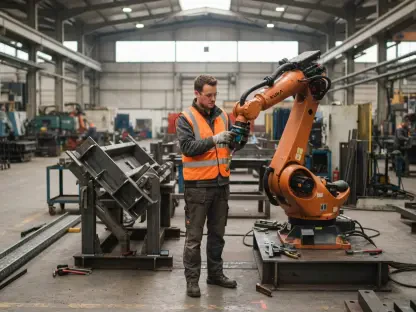

The contemporary boardroom currently finds itself navigating an unprecedented era where the rapid deployment of autonomous systems is outstripping the development of governance policies meant to protect the organizational human fabric. As companies race to integrate generative models and specialized agents into their daily operations, a significant disconnect has emerged between the pursuit of technical efficiency and the preservation of human ingenuity. Directors often find themselves prioritizing the immediate allure of reduced overhead while inadvertently overlooking the long-term erosion of employee trust and institutional knowledge. This tension suggests that the success of digital transformation depends less on the sophistication of the software and more on how effectively a company aligns its workforce strategy with its technological ambitions. Boards must move beyond viewing human capital as a mere cost center to be optimized, recognizing that without a foundation of psychological safety and clear purpose, even the most advanced algorithmic systems will fail to deliver their promised value.
The Productivity Paradox: Shifting From Cost-Cutting to Human Growth
Current industry assessments reveal that while approximately forty-two percent of boards maintain a rigorous focus on the productivity and efficiency gains offered by advanced automation, far fewer engage with the human-centric implications of these shifts. Discussions regarding employee well-being, for instance, appear on fewer than ten percent of board agendas, while the critical issue of maintaining human trust in automated decision-making is addressed by only six percent of leadership teams. This narrow oversight creates a strategic blind spot where the desire for rapid results ignores the reality that technological tools are only as effective as the people who operate and refine them. When efficiency becomes the sole metric of success, organizations risk alienating their most creative talent, leading to a culture of fear rather than one of innovation. Consequently, boards need to expand their definition of performance to include metrics that capture the health of the human-machine partnership.
A sophisticated approach to governance requires a fundamental deconstruction of professional roles to identify where human judgment remains indispensable and where machine precision offers the greatest advantage. Instead of viewing jobs as monolithic blocks that can be easily replaced by software, directors should encourage management to break down positions into specific tasks that reflect current operational needs. This granular perspective allows organizations to repurpose human talent toward high-value activities such as complex problem-solving, emotional intelligence, and ethical oversight, which machines still cannot replicate with nuance. By focusing on role evolution rather than simple displacement, boards can foster an environment where technology serves as a powerful catalyst for human professional growth. This shift in perspective ensures that the organization remains resilient, as it leverages the unique strengths of both its digital infrastructure and its biological workforce in a symbiotic and mutually beneficial relationship.
Strategic Realignments: Bridging the Capital Allocation Divide
Structural challenges in capital allocation further complicate the balance between technological investment and human development, with nearly forty-nine percent of respondents reporting limited oversight in this area. A significant part of this disconnect stems from traditional accounting practices that categorize investments in hardware and software as capital expenditures while treating human training and development as immediate operational expenses. This distinction often biases board decisions toward tangible technological assets that appear more favorable on a balance sheet, even if those assets lack the necessary human support to function optimally. Directors must bridge this gap by demanding more transparency regarding how financial resources are split between infrastructure and workforce enablement to ensure a balanced growth strategy. Without a clear understanding of how spending on human capital supports technical implementation, companies risk building sophisticated systems that no one is properly trained to manage, ultimately leading to wasted capital and diminished returns.
The successful integration of advanced automation requires boards to abandon the narrow view of technology as a mere replacement for human labor. Forward-thinking leadership teams implement a more holistic governance model that treats the development of internal talent as a strategic priority rather than a secondary operational concern. They move beyond simple metrics of efficiency to focus on the long-term value created by a workforce that is empowered by digital tools rather than diminished by them. Actionable steps should be taken to synchronize technological roadmaps with comprehensive reskilling initiatives, ensuring that the organization remains resilient in the face of rapid change. By recalibrating their financial frameworks to recognize the tangible value of human judgment, boards ensure that capital is allocated to both infrastructure and the people required to drive it forward. Ultimately, the organizations that thrive are those that view the rise of digital agents as an opportunity to amplify human creativity, proving that the most sustainable competitive advantage is built on a foundation of mutual trust and shared purpose.