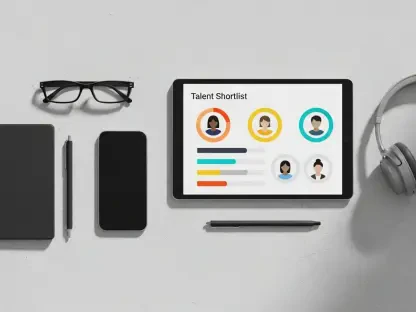

A new wave of digital natives is entering the workforce, bringing with them a sophisticated understanding of technology that is fundamentally reshaping the hiring process and the nature of entry-level work. Recent research involving 2,000 university graduates has uncovered a profound reliance on artificial intelligence, with nearly two-thirds admitting to using tools like ChatGPT to craft the very applications that land them their first jobs. This widespread adoption presents a complex dilemma for employers, blurring the lines between resourcefulness and dependency, and forcing a critical re-evaluation of what it means to be a skilled and authentic candidate in an increasingly automated world. The data suggests a generation that is not only comfortable with AI but sees it as an essential component of their professional toolkit, a trend that carries significant implications for recruitment, training, and the future of work itself.
The New Landscape of Recruitment
The Rise of AI-Assisted Candidacy
The modern job application process has been transformed into a technologically driven exercise, where a candidate’s proficiency with AI can be as influential as their listed qualifications. The finding that 65% of recent graduates utilize AI for creating cover letters and resumes signals a major paradigm shift. This behavior is not merely about saving time; it reflects a strategic approach to navigating automated applicant tracking systems (ATS) that often filter candidates based on keyword optimization. Graduates are leveraging these tools to produce polished, professional-sounding documents that they believe will increase their chances of passing initial screenings. This indicates a high level of digital literacy and an adaptive mindset, but it also standardizes application materials, potentially stripping them of the personality and unique voice that once helped candidates stand out to human recruiters. This normalization of AI assistance pressures all applicants to adopt similar methods to remain competitive, fundamentally altering the baseline expectations for application quality and effort.
This growing reliance on artificial intelligence to craft application materials has concurrently fueled a crisis of authenticity in the hiring process. The same research revealed a troubling statistic: more than half of the graduates surveyed confessed to exaggerating their skills or experience on their professional profiles to gain a competitive edge. The most commonly embellished area was prior work experience, followed closely by technical skills, personal projects, and even language proficiency. When combined with the sophisticated language capabilities of AI, these embellishments become more convincing and significantly harder for hiring managers to detect. Recruiters are now faced with the daunting task of deciphering whether a perfectly worded resume reflects a candidate’s genuine abilities or their skill in prompting an AI. This creates a challenging environment where the traditional resume is becoming a less reliable indicator of a candidate’s true potential, pushing companies to seek alternative methods for verifying skills and assessing character.
A Signal of Systemic Gaps
The influence of AI extends far beyond the application process, with nearly six in ten new employees continuing to depend on these tools to perform their daily job responsibilities. This significant statistic is often rooted in a feeling of being undertrained or ill-equipped to meet the demands of their new roles. This behavior should serve as a crucial indicator for employers, suggesting a significant disconnect between the theoretical knowledge provided by academic institutions and the practical, real-world skills required in the modern workplace. Rather than viewing this reliance as a shortcoming of the individual graduate, it can be interpreted as a reflection of inadequate corporate onboarding and training programs. The need for AI assistance to complete routine tasks points to a failure by companies to provide the necessary support and mentorship that early-career professionals require to build confidence and competence in their foundational duties, forcing them to seek external digital support to bridge the gap.
This dependency on AI in the early stages of a career has broader implications for long-term employee development and organizational innovation. When new hires lean on AI as a crutch rather than a tool, they may miss critical opportunities to develop fundamental problem-solving skills, critical thinking, and a deep understanding of their industry. Over-reliance can stifle creativity and lead to a homogenization of ideas, as employees may default to AI-generated solutions instead of engaging in the challenging process of original thought. For businesses, this trend signals a need to proactively redesign training initiatives. Effective programs must not only teach the technical aspects of a job but also instill the confidence and core competencies that enable employees to work autonomously. The ultimate goal is to cultivate a workforce that can leverage AI to augment its capabilities, not one that becomes entirely dependent on it for basic functions, thereby ensuring a sustainable pipeline of future leaders and innovators.
Adapting to an AI-Integrated Workforce
Redefining Skills and Expectations
In response to the pervasive use of AI, the consensus among human resources and recruitment experts is shifting away from prohibition and toward adaptation. Instead of attempting to police the use of these powerful tools, forward-thinking organizations are beginning to reframe AI proficiency as a core professional skill. The prevailing view is that banning AI is not only impractical but also counterproductive, as it ignores the reality of the modern digital workplace. Industry leaders suggest that companies should foster an environment of transparency, openly signaling that the responsible and ethical use of AI is a welcome competency. This approach encourages graduates to be honest about their use of these tools and allows employers to assess how they leverage technology to enhance their work. By embracing AI as a legitimate part of the professional toolkit, businesses can better identify candidates who are prepared for the future of work and can integrate these technologies to drive efficiency and innovation.
This strategic shift requires a corresponding evolution in employee training and development, particularly for those at the beginning of their careers. The most effective employers are moving beyond simply accepting AI use and are actively training graduates on how to leverage it as a supplementary tool rather than a replacement for human intellect. Best practices involve teaching new hires to use AI for tasks like editing their writing for clarity, brainstorming alternative solutions to a problem, or preparing for potential objections in a presentation. This educational approach ensures that AI serves to refine and challenge an employee’s work, not create it from scratch. The focus remains on preserving the essential human elements of a role—critical judgment, emotional intelligence, and personal accountability. By guiding graduates to harness AI’s analytical power without sacrificing their unique personality and insights, companies can cultivate a workforce that is both technologically adept and authentically human.
The Evolution of Hiring Practices
The rise of AI-generated application materials is compelling a necessary re-evaluation of traditional hiring methods that have long been the bedrock of recruitment. An over-reliance on resumes and cover letters is becoming increasingly problematic, as these documents now often reflect a candidate’s mastery of technology more than their suitability for a specific role. Experts in the field argue that the ease with which polished, keyword-rich applications can be created by AI diminishes their value as assessment tools. This has prompted a call for a fundamental shift toward evaluation methods that prioritize “human signals.” These include structured, competency-based interviews, skills assessments that require candidates to perform role-relevant tasks, and questions designed to gauge critical thinking and problem-solving abilities. This evolved approach uses technology to support and streamline the hiring process but ensures that the final judgment remains firmly in human hands, creating a more equitable and effective system for identifying genuine talent.
While AI-crafted applications may be adept at clearing the initial hurdle of automated screening systems, they frequently fall short when they reach a human reviewer. Recruiters are trained to look for authenticity, and a generic, overly polished application often fails to convey the unique experiences, skills, and ambitions that make a candidate memorable. The key to navigating this new landscape, as industry leaders have pointed out, is to strike a balance. Candidates should be encouraged to use AI to enhance and polish their application materials—correcting grammar, improving phrasing, and ensuring clarity—but not to fabricate or replace their personal narrative. The most compelling applications will always be those where technology is used to amplify a candidate’s authentic voice, not silence it. Ultimately, the goal for both applicants and employers was to ensure that AI served as a tool for refinement, allowing the individual’s true qualifications and personality to shine through in a competitive job market.