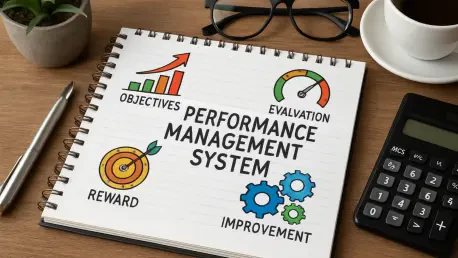

The year 2030 is rapidly approaching, and as organizations navigate unprecedented shifts in technology, workforce expectations, and business agility, the systems that measure and develop their most critical asset—their people—are under intense scrutiny. A performance management system designed for a bygone era of static job roles and annual reviews is not just outdated; it represents a significant liability in an increasingly competitive landscape. The central question every leader must confront is whether their current approach is a relic of the past or a bridge to the future. Traditional, compliance-driven appraisals are demonstrably failing to engage employees, develop skills at the required pace, or provide the real-time insights needed to compete effectively. The chasm between what these legacy systems offer and what the modern workplace demands is widening daily, creating a strategic imperative for transformation. Organizations must now assess if their performance management framework is genuinely built to thrive in the dynamic environment that will define the next decade.
The Great Performance Paradigm Shift
The most fundamental change occurring in performance management is the definitive and accelerating move away from the traditional annual review, a process that is increasingly seen as an anachronism in today’s fast-paced business world. This once-a-year, backward-looking evaluation is being systematically replaced by a more dynamic model centered on continuous, forward-looking development. This evolution is far more than a simple procedural tweak; it signifies a complete philosophical overhaul of how organizations cultivate talent and drive results. The underlying driver of this transformation is the stark reality that modern business cycles are now measured in weeks or months, not years, and employee development must align with that accelerated pace. Waiting twelve months to provide feedback creates an impossibly slow and irrelevant loop in a world that demands constant adaptation, skill acquisition, and agility. A continuous model, by contrast, fosters this much-needed agility by integrating performance conversations into the natural, ongoing rhythm of the daily workflow, making them timely, relevant, and actionable.
This transition from static evaluation to dynamic development has been powerfully validated by pioneering organizations that have already navigated this shift. Companies such as Adobe, Deloitte, and Microsoft have led the charge, demonstrating the tangible benefits of abandoning outdated annual ratings in favor of a system built on regular check-ins, real-time feedback, and a strong focus on managerial coaching. The results from these early adopters have been compelling, showing marked improvements in key business metrics, including employee engagement, talent retention, and overall organizational nimbleness. Their success has effectively created a proven blueprint for other organizations to follow, illustrating that a continuous performance model directly translates into a more resilient, motivated, and high-achieving workforce. In this new paradigm, the focus shifts decisively from judgment to development, transforming managers from mere assessors into dedicated coaches and empowering employees to take genuine ownership of their professional growth and career trajectory.
The Engines of Change Powering 2030s Systems
A primary engine powering this paradigm shift is the widespread and accelerating digitalization of HR functions across industries. Businesses are aggressively implementing unified Human Capital Management (HCM) suites that effectively break down the operational silos of the past. A future-ready performance system does not operate in isolation; it is seamlessly integrated with an organization’s goal-setting, learning, and engagement modules to provide a comprehensive, holistic view of the entire employee journey. At the heart of this evolution is the integration of Artificial Intelligence (AI) and advanced data analytics. Modern EPM platforms are leveraging predictive analytics to identify potential skill gaps before they become critical organizational weaknesses, recommend highly personalized development paths for individual employees, and ensure that goals are tightly aligned from the executive suite down to the front lines. This integration delivers a new, sophisticated layer of workforce intelligence that was previously unattainable, enabling more strategic and proactive talent management. Furthermore, AI is being critically deployed to mitigate the unconscious biases that have long plagued traditional performance reviews, ensuring evaluations are more objective and equitable.
The extensive migration to cloud-based solutions has served as a massive catalyst, effectively democratizing access to these sophisticated performance management tools. Cloud deployment eliminates the need for large, prohibitive upfront capital investments in on-premise infrastructure, offers virtually infinite scalability to grow with the business, and provides the essential remote accessibility required for today’s hybrid and globally distributed workforces. This technological shift allows even small and medium-sized enterprises (SMEs) to leverage the kind of enterprise-grade performance management capabilities that were once the exclusive domain of large corporations. Concurrently, there is an undeniable cultural pull from the modern workforce itself. Employees, particularly those from younger generations, have grown up in a digitally native world of instant feedback and now expect a similar level of immediacy and transparency in their professional lives. This has created surging demand for real-time performance conversations, transparent goal-tracking frameworks, and a clear, continuous line of sight into how their individual contributions connect to the organization’s broader strategic objectives.
Navigating Headwinds on the Horizon
Despite the clear and compelling benefits of modernizing performance management, the path to implementing a future-ready system is not without significant obstacles. A primary restraint for many organizations is the high total cost of ownership (TCO) associated with advanced EPM platforms. Beyond the initial software licensing fees, companies must budget for substantial additional expenses related to extensive system customization, complex data migration from legacy systems, and the intricate process of integrating the new platform with a diverse ecosystem of existing HR and business software. These ancillary costs can be a formidable barrier, particularly for budget-conscious companies or those in cost-sensitive industries, effectively slowing the pace of adoption. Many organizations are also hampered by deeply entrenched legacy appraisal systems that are difficult to displace. These older platforms often operate in rigid technological silos, making interoperability with modern, cloud-based HR tools a technically complex and costly challenge that can derail transformation efforts before they gain momentum.
Beyond the financial and technical hurdles, organizations face significant human and regulatory challenges. The increasing reliance on employee data for performance analytics brings with it substantial data protection and compliance risks. Handling sensitive performance information requires strict and unwavering adherence to a growing body of regulations, such as the GDPR in Europe. Ensuring that both the technology platform and the organizational processes are fully compliant is a continuous, resource-intensive responsibility that falls on both the software vendors and their clients. Perhaps the most persistent and universal challenge, however, is overcoming simple human resistance to change. Shifting from a familiar, predictable annual review process to a model of continuous, transparent feedback can be a culturally jarring experience for an entire organization. Managers may feel burdened by the increased expectation for frequent coaching conversations, while employees might feel overly scrutinized by the heightened level of data tracking. Successfully navigating this transition requires a robust and thoughtful change management strategy to build trust and demonstrate the value of the new approach to all stakeholders.
Untapped Frontiers and Emerging Opportunities
One of the most significant and promising opportunities for market growth lies within the small and medium-sized enterprise (SME) sector. Historically, advanced HR technology was often priced out of reach for smaller businesses, but the landscape has changed dramatically. The proliferation of scalable, cloud-based subscription models has democratized access to powerful performance management tools, making them affordable and accessible for companies without large IT budgets or dedicated implementation teams. This shift is empowering smaller organizations to compete more effectively for top talent by offering the kind of modern, engaging, and development-focused employee experience that was once the exclusive domain of large corporations. As a result, the SME segment is rapidly emerging as a key driver of market expansion, adopting these new technologies to foster agility, improve productivity, and build a competitive edge in the war for talent.
Another massive frontier for growth is found in emerging markets, particularly within the dynamic and rapidly expanding economies of the Asia Pacific (APAC) region. Swift economic growth, coupled with intense competition for skilled labor and strong government-led digitalization initiatives, is fueling an aggressive modernization of HR practices across these countries. Companies in these regions are often able to leapfrog older, legacy technologies and adopt cutting-edge EPM solutions from the outset, positioning them at the forefront of talent management innovation. Alongside this geographic expansion, the strategic integration of performance management with Learning and Development (L&D) platforms presents a powerful opportunity. By directly linking performance data, such as identified skill gaps or developmental needs, to personalized and targeted learning paths, organizations can create a more adaptive and future-proof workforce. This synergy ensures that employee development is precisely aligned with both individual career aspirations and critical organizational needs, fostering a continuous cycle of improvement and capability building.
A Look Inside the 2030 Toolkit
A truly future-ready performance management system is not a single, monolithic tool but rather a sophisticated suite of seamlessly integrated capabilities designed to work in concert. At the core of this toolkit are reinvented performance appraisal systems that move far beyond simplistic, subjective ratings. These modern systems incorporate comprehensive competency mapping and structured, role-based assessments that are designed to be fair, transparent, and directly linked to business outcomes. They provide a clear and objective framework for evaluating contributions while focusing conversations on future growth and development rather than past shortcomings. These foundational systems are powerfully complemented by 360-degree feedback tools. By systematically capturing structured, multi-source insights from an employee’s peers, managers, direct reports, and even external stakeholders, these platforms foster a culture of deep transparency and enhanced self-awareness. They provide a well-rounded, holistic view of an individual’s impact, helping to identify blind spots and uncover hidden strengths that a traditional top-down review would almost certainly miss.
Building on this foundation, dynamic goal-setting and tracking systems are another non-negotiable component of the modern EPM toolkit. These platforms are designed to integrate proven methodologies like Objectives and Key Results (OKRs) and Key Performance Indicators (KPIs), allowing for real-time visualization of progress against critical targets. They ensure that every individual’s goals are clearly and visibly aligned with team, department, and overarching business objectives, creating a “golden thread” that connects daily work to strategic priorities. This turns high-level strategy into tangible, executable action and provides clarity and purpose for the entire workforce. Finally, the entire system is held together and brought to life by continuous feedback and learning platforms. These tools are engineered to cultivate a vibrant coaching culture through features such as regular check-ins, quick-pulse surveys, integrated employee recognition, and automated feedback loops. By embedding development into the daily routine, these platforms make continuous improvement an organic part of the organizational DNA, transforming performance management from a periodic event into an ongoing, value-creating process.
The Evolving Competitive Landscape
The Employee Performance Management market is currently led by established technology giants such as SAP, Oracle, and Workday. These industry stalwarts offer comprehensive, deeply integrated Human Capital Management (HCM) suites where performance management functions as a powerful, data-rich module within a broader ecosystem of HR tools. Their extensive global reach, vast product footprints, and ability to serve the complex needs of large, multinational enterprises make them the go-to choice for organizations seeking a unified, end-to-end talent management solution. Their platforms are designed to handle scale and complexity, providing large enterprises with the robust analytics and enterprise-grade security required to manage a global workforce effectively. Their market leadership is reinforced by their significant investment in research and development, ensuring their platforms continue to evolve with new capabilities, particularly in the realms of AI and predictive analytics.
However, the competitive landscape is being dynamically reshaped by a new wave of emerging leaders and specialized, pervasive players like Lattice, 15Five, and Culture Amp. These more agile vendors have gained significant traction, particularly in the mid-market segment, by offering highly intuitive, user-friendly interfaces, a strong and dedicated focus on continuous feedback and employee engagement, and more nimble implementation models. They often lead with a product philosophy centered on enhancing the employee experience, which resonates strongly with companies looking to build a more modern, people-centric culture. Innovation serves as a key differentiator in this crowded field. Microsoft, for instance, is pioneering a new approach by embedding performance management directly into the natural flow of work with its Viva platform. This solution integrates OKR tracking, continuous feedback mechanisms, and well-being analytics directly within the widely used Microsoft Teams environment, reducing friction and making performance conversations a natural and seamless part of daily collaboration and communication.
The New Battlegrounds of Market Dynamics
When analyzed by organization size, large enterprises remain the dominant force in the market, consistently driving the highest share of revenue and adoption. This is largely due to their pressing need to manage complex, geographically dispersed workforces and their greater capacity for investment in comprehensive, end-to-end technology solutions. These organizations require platforms that can scale across diverse regions, support multiple languages, and integrate with a wide array of existing enterprise systems, making the offerings from major HCM suite providers particularly attractive. In stark contrast, the fastest-growing segment in the market is comprised of small and medium-sized enterprises (SMEs). The increasing accessibility of affordable, scalable, and cloud-based solutions has effectively leveled the playing field, empowering smaller businesses to implement the kind of sophisticated talent strategies that were once the exclusive purview of large corporations. This democratization of technology is enabling SMEs to compete more effectively for talent by offering a modern and engaging employee experience.
Looking at the market through an industry lens, certain sectors have emerged as clear leaders in the adoption of modern EPM solutions. The Banking, Financial Services, and Insurance (BFSI) sector currently represents the largest vertical adopter, a trend driven by its highly regulated environment, a sharp, data-driven focus on productivity metrics, and the inherent need to manage performance across large, distributed teams. Following closely are other technology-forward sectors such as IT & ITeS, Healthcare, and Telecom, all of which are investing heavily in these platforms to streamline appraisal processes and improve workforce engagement. Geographically, North America continues to hold its position as the largest market, a status attributable to its mature corporate landscape, a culture of early technology adoption, and the presence of many major EPM vendors. However, the Asia Pacific (APAC) region is projected to be the fastest-growing market through 2030, fueled by rapid economic expansion, fierce regional competition for skilled talent, and strong government initiatives promoting digitalization, all of which place a high premium on effective performance and development strategies.
The Strategic Imperative of a Future-Ready System
The Employee Performance Management market has clearly navigated a profound inflection point, evolving from a historically administrative, compliance-driven function into a strategic, technology-enabled discipline that proved central to organizational resilience and success. The market’s robust and sustained growth trajectory was a testament to the indispensable role that effective performance management played in helping businesses navigate the complexities of the modern workplace. The future of EPM was definitively established as continuous, data-driven, AI-enhanced, and deeply integrated into the flow of daily work. The powerful convergence of cloud technology, advanced analytics, and a fundamental cultural shift toward development-focused conversations reshaped how organizations evaluated, engaged, and ultimately developed their most valuable asset: their talent. As businesses continued to prioritize agility, enhance the employee experience, and build their strategies around skills-based planning, the demand for innovative and unified performance management solutions intensified, cementing this market as a critical and dynamic area of strategic investment.