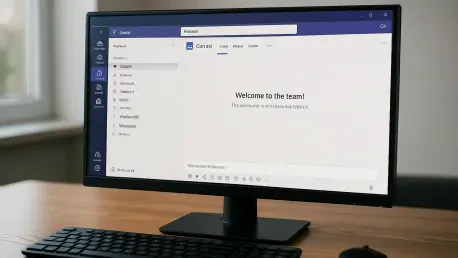

The subtle language of digital communication is about to undergo a corporate-led transformation, as Microsoft prepares to roll out a feature that will allow companies to embed their unique identity directly into the fabric of everyday interactions. In the world of virtual meetings, the standard set of emojis—a thumbs-up, a heart, a clap—has served as a universal, albeit limited, vocabulary for non-verbal feedback. This is set to change with the introduction of “Branded Meeting Reactions” for the Teams platform. According to the Microsoft 365 Roadmap, this feature, currently in development with a projected rollout beginning this March, will empower IT administrators to upload a custom suite of reaction icons. This moves beyond simple personalization and enables organizations to replace or supplement the standard emoji set with symbols that reflect specific brand elements, event themes, or internal company initiatives. These curated reactions will then become available to all participants within an organization’s meetings, fundamentally altering the expressive toolkit available during digital collaboration.
From Personalization to Corporate Governance
This development marks a significant strategic pivot from user-centric customization to enterprise-controlled expression. Recent platform updates have focused on individual user choice, such as the inclusion of diverse skin tone selections and a unified GIF picker, granting employees more ways to represent themselves authentically. The introduction of branded reactions, however, shifts the locus of control from the individual to the organization. Microsoft presents this as a method for fostering more cohesive, on-brand digital experiences, but its potential impact extends far deeper, positioning it as a powerful instrument for corporate governance and culture shaping. For C-suite executives, HR directors, and Chief People Officers, these bespoke reactions offer a subtle yet persistent mechanism to reinforce company values and guide the emotional tenor of meetings. This is a form of passive training, where company ideals are not just spoken but are actively used in daily communication.
In large, geographically dispersed organizations, leadership can leverage this tool to cultivate a shared visual language that transcends cultural and departmental silos. By curating a specific set of reactions—for instance, a unique icon representing a core value like innovation or a symbol celebrating customer success—a company can subtly encourage and amplify desired behaviors. Each click of a branded reaction becomes more than just a momentary acknowledgment; it transforms into an active affirmation of the collective culture. This process helps to build and maintain a strong sense of organizational identity, particularly in hybrid work environments where informal cues and shared physical spaces are absent. The feature provides a constant, low-friction method for employees to align with and signal their commitment to the company’s strategic priorities, turning a simple interface element into a sophisticated tool for cultural engineering.
The Mandate for Strategic Management
The effective deployment of branded reactions will necessitate a proactive and collaborative approach to governance between distinct corporate functions. Success hinges on a robust partnership between the Marketing department, which typically owns and manages brand assets, and the IT department, which controls the administration of the Teams platform. This collaboration is crucial for ensuring that the custom icons are not only visually aligned with the company’s brand identity but are also deployed with clear strategic intent. Leaders must establish well-defined lifecycles for these custom assets to prevent the reaction tray from becoming a cluttered and confusing repository of outdated logos from past marketing campaigns or symbols from long-concluded internal events. A disciplined management strategy is essential to maintain a clean, professional, and intuitive user experience for all employees.
This feature ultimately compels organizations to think more critically about the purpose behind their digital collaboration tools. Are these platforms merely for communication, or are they active participants in shaping the workplace environment? Used strategically, branded reactions can foster a powerful sense of tribe and belonging among employees, making them feel part of a cohesive and unique organizational culture. Conversely, a poorly planned or haphazard deployment risks creating another layer of meaningless corporate noise, where custom icons are perceived as inauthentic or irrelevant, potentially leading to disengagement. The key takeaway for forward-thinking leaders is to use the time before the feature’s full release to define not just the visual appearance of these new icons, but more importantly, what they are meant to symbolize about the organization’s core identity, values, and strategic ambitions.
A New Frontier in Digital Culture
The introduction of branded reactions represented a pivotal moment in the evolution of corporate communication tools. It was a clear signal that the platforms facilitating work were no longer passive conduits for information but had become active agents in shaping organizational culture. The initial rollout prompted leadership teams to engage in deeper conversations about their digital identity and the messages they wished to convey through every available channel. Organizations that successfully integrated this feature moved beyond superficial branding and used it to reinforce their mission in a tangible, daily context. This deliberate approach to digital expression helped bridge the gap in hybrid work models, offering a new way to build community and shared purpose when physical proximity was not a given.