
Allowing participants to experience failure within a simulation is a more effective teacher than providing predetermined answers in a scripted workshop environment. This fundamental shift marks the end of an era where passive learning dominated the corporate landscape, as organizations now realize that leadership is a craft honed through practice rather than a set of theories to be memorized. In 2026, the global business environment is characterized by rapid technological disruptions and shifting social expectations, making the traditional lecture-based training model appear increasingly obsolete. Emerging managers, who have grown up in a world of interactive digital interfaces, find little value in static presentations that offer generic solutions to complex problems. Instead, they seek environments that encourage exploration and the testing of personal boundaries. This transition toward immersive learning is not merely a preference of the younger workforce but a strategic response to the volatility of the modern market, where the ability to pivot and adapt is the primary driver of organizational resilience.
Beyond Gamification: Navigating the Complexity of Serious Simulations
Real-Time Consequences and Adaptability
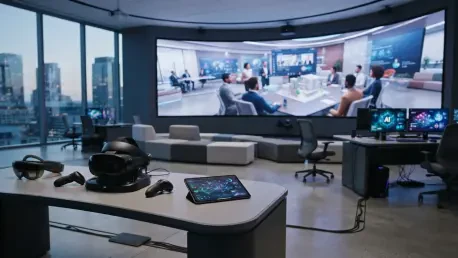
There is a critical distinction that must be made between basic gamification and true immersive learning within the corporate environment. While many programs use points, badges, and leaderboards to encourage superficial participation, serious simulations create high-stakes environments where decisions have meaningful, often messy consequences. These scenarios replicate the actual pressures of the modern workplace, forcing leaders to navigate conflict, manage limited resources, and deal with incomplete information in a controlled yet unpredictable setting. By experiencing the results of their choices in real-time, managers develop the resilience and adaptability required for genuine behavioral change rather than just temporary knowledge retention. The goal is not to win a game but to survive a professional challenge that mirrors the volatility of the current market. This level of engagement ensures that the lessons learned are visceral and lasting, providing a foundation for growth that traditional methods simply cannot match.
The Mirror Effect: Discovering Personal Thresholds
Every leadership trait possesses a dual nature, acting as a double-edged sword that can either build or destroy organizational health. Confidence, for instance, can easily slide into arrogance if not tempered by humility, while deep analytical thinking may lead to debilitating decision paralysis when speed is required. Immersive simulations allow individuals to discover these personal thresholds safely before their actions cause genuine damage to a team’s morale or productivity in the real world. By hitting these boundaries in a virtual or role-play environment, a manager can learn to balance their natural tendencies and recognize the warning signs of their own behavioral extremes. This self-awareness is the cornerstone of effective management, as it allows leaders to adjust their style to fit the needs of the moment. Without the safe environment provided by high-fidelity simulations, these lessons are often learned the hard way through lost talent or failed projects. Consequently, the simulation acts as a mirror, reflecting the leader’s impact on others.
Strategic Synergy: Managing the Intersection of Humans and Machines
The Ethical Compass: Leading in an AI-Driven Economy
As the landscape of 2026 unfolds, data from the Harvard Business Impact Global Leadership Study indicates that over half of management roles now involve significant integration with AI for strategic decision-making. While these automated systems can process vast amounts of data and offer logical recommendations, they fundamentally lack the capacity for moral responsibility or human empathy. The modern leader must therefore act as the ethical compass for the organization, using technology as a robust tool while maintaining the final word on issues that require a human touch. Immersive training bridges this gap by teaching managers how to integrate automated insights with sound human judgment in pressurized situations. By simulating environments where AI-generated data conflicts with human intuition, leaders learn to navigate the nuance of ethical choice. This synergy between machine efficiency and human ethics represents the new frontier of competitive advantage for firms today.
Psychological Resonance: The Impact of Simulated Experience
The concept of “bleed,” borrowed from the study of role-playing, illustrates how the emotions and identities explored during a simulation can positively impact a person’s real-world behavior. Practicing assertiveness or conflict resolution in a simulated “safe space” allows an individual to internalize that confidence, eventually applying it in actual high-stakes meetings. Academic evidence from 2026 involving various professional administrators demonstrates that live role-play simulations provide invaluable opportunities for reflection and evidence-informed decision-making. These experiences allow for the development of “muscle memory” for complex social interactions that cannot be replicated through video tutorials or standard reading materials. When a manager successfully navigates a simulated crisis, the psychological impact creates a lasting imprint that guides their future actions. This method ensures that the training is not just a temporary exercise but a permanent enhancement of their leadership toolkit.
Future Readiness: Establishing a Foundation for Sustainable Growth
Practical Application: Moving Beyond Theoretical Training
Organizations that successfully navigated the transition to immersive learning recognized that the old ways of measuring professional growth were no longer sufficient. Leaders moved away from the comfort of scripted workshops and instead embraced the messiness of human interaction combined with algorithmic support. It became clear that the most effective managers were those who prioritized emotional intelligence and sound judgment over raw technical proficiency. By replacing lecture-based modules with high-stakes simulations, companies observed a tangible shift in how conflict was managed and how ethical dilemmas were resolved. These institutions prioritized the development of soft skills that remained beyond the reach of automated systems, ensuring that their human capital was prepared for the nuances of a digital-first economy. The decision to integrate failure as a core component of the learning process ultimately fostered a culture of resilience. Consequently, the focus shifted from simple competence to the mastery of complex interpersonal dynamics.
Organizational Evolution: The Long-Term Value of Human Connection
The transition from passive instruction to active, immersive participation was a necessary evolution in the face of an AI-driven economy. By the mid-point of 2026, the most successful organizations had already abandoned the rigid, attendance-based metrics of the past in favor of measuring real behavioral shifts. These pioneers understood that the value of human leadership increased as technical roles became more automated. They invested heavily in psychological safety, allowing their teams to fail forward in simulated environments before facing the high stakes of the real world. The results manifested in stronger team cohesion, more ethical decision-making, and an enhanced ability to lead through uncertainty. This movement proved that while technology can manage data, only humans can lead people with the empathy and nuance required for true progress. Ultimately, the integration of simulation and artificial intelligence created a more resilient workforce, setting a standard for development that prioritized the human experience.