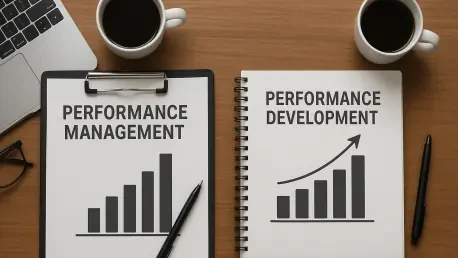

Effective performance development occurs through daily tasks and interactions rather than being confined to isolated once-a-year meetings. This realization marks a departure from traditional corporate structures that long prioritized retrospective critiques over prospective growth. For decades, the standard review cycle functioned as a bureaucratic ritual, often leaving both managers and subordinates feeling depleted rather than inspired. As the professional landscape evolves, organizations are discovering that rigid metrics and administrative box-checking fail to capture the nuance of modern work. Instead, the focus has shifted toward creating environments where learning is continuous and professional milestones are achieved through ongoing support. This transition represents a fundamental reimagining of the relationship between an employer and their workforce. By fostering a culture that values incremental progress, companies are better positioned to retain top talent and thrive in a volatile economy.
Adapting to a Modern Feedback Culture
The Transformation: Evolution of Agile Objective Setting
The hallmark of an effective development model is the move away from once-a-year meetings in favor of ongoing feedback loops. Instead of top-down mandates issued every January, managers and employees are now co-creating short-term objectives that allow for much-needed agility in a fast-paced market. This shift acknowledges that learning happens through daily tasks and social interactions, making real-time support far more valuable than a retrospective critique that happens months after the fact. Organizations that embraced this model noted a significant rise in employee engagement, as individuals felt their work was directly connected to the company’s mission. By breaking down large-scale annual goals into manageable monthly targets, teams remained flexible enough to pivot when market conditions shifted. This dynamic approach ensured that development was not a secondary concern but a primary driver of efficiency across every level of the organization.
The Impact: Co-Creating Professional Pathways
Bridging the gap between intent and execution remains a challenge, as legacy systems often emphasize administrative compliance over genuine growth. Research suggests that only a small fraction of the workforce feels truly motivated by traditional performance systems, often because these processes feel like paperwork rather than a path to career success. To rectify this, progressive firms replaced the static review form with a living document that tracks progress in real-time. This allows for early intervention, enabling managers to coach and address skill gaps as they emerge rather than waiting for a formal cycle. When development is integrated into the daily workflow, it loses its status as an ‘extra’ task and becomes a natural part of the professional experience. This cultural shift required a move away from punitive evaluations and toward a supportive framework that prioritized future potential over the simple cataloging of past mistakes.
The Intersection of Leadership and Technology
The Strategy: Cultivating Accountability and Digital Insights
Successful performance development requires senior leaders to do more than just approve a new policy; they must model the behaviors they want to see across the organization. This means setting clear priorities and engaging in two-way dialogues where employees feel safe to share their own perspectives. When a manager’s own career advancement is tied to how well they develop their team, the commitment to coaching shifts from an optional task to a core business priority. In this environment, leadership is defined by the ability to elevate others rather than simply overseeing output. Accountability is established when developmental goals are transparent and visible to the entire team, fostering a sense of shared responsibility. Leaders who actively sought feedback from their subordinates created a culture of mutual respect and psychological safety. This foundation proved essential for implementing changes, such as integrating advanced analytics into the review process.
The Solution: Leveraging Data for Growth
Technology and data are also reshaping how excellence is defined by tracking a wider range of performance indicators, such as collaboration, teamwork, and employee well-being. Artificial intelligence is beginning to play a supportive role by highlighting an employee’s soft skills from their daily digital work, which reduces the mental burden on managers who once had to rely on memory. While AI can organize data and spot patterns, it is most effective when used to fuel more human, insightful conversations between a leader and their direct reports. Modern platforms now synthesize diverse data points to provide a holistic view of an individual’s contribution, moving beyond simple sales figures or project deadlines. This visibility allows managers to recognize ‘invisible’ labor, such as mentoring peers or solving internal process bottlenecks. By leveraging these digital insights, organizations created a more equitable evaluation system that rewarded diverse skill sets and value.
Overcoming Resistance and Building Capability
The Challenge: Reducing Friction Through Workflow Integration
One of the biggest hurdles to this transition is the perceived administrative burden that comes with frequent feedback and documentation. To combat this, organizations simplified their processes and integrated feedback tools directly into daily platforms like project management software and communication channels. This integration allowed data to flow naturally into the system without requiring managers to dedicate hours to manual entry. By reducing the friction associated with reporting, companies encouraged more frequent, low-stakes interactions that built trust over time. Furthermore, simplification meant that feedback was delivered while the relevant work was still fresh in everyone’s mind, increasing its practical utility. When the administrative weight was lifted, managers found they had more time for meaningful coaching sessions that focused on career trajectories rather than just ticking off completed tasks. This streamlined approach ensured the system supported the work flow.
The Skill: Addressing the Coaching Capability Gap
Addressing the coaching gap also required a significant investment in building manager capabilities, as many leaders lacked the specific skills needed for effective feedback. Training programs focused on active listening, empathy, and the ability to turn a mistake into a learning opportunity. By providing managers with the right scripts and framework for difficult conversations, organizations reduced the anxiety often associated with performance discussions. This capability building was supported by a culture of transparency, where feedback was viewed as a gift for growth rather than a punitive measure. As managers became more proficient in these soft skills, the quality of daily interactions improved, leading to higher levels of trust and better business outcomes. Companies that prioritized this human element found that their employees were more resilient and adaptable to change. This investment in people served as a strategic buffer against turnover and mental fatigue.
The Outcome: Strategic Integration for Long-Term Success
The transition from performance management to performance development emerged as a strategic necessity for organizations looking to thrive in a competitive landscape. Success was achieved by focusing on practical support for leaders, providing them with clear expectations and streamlined processes that did not add to their administrative load. By fostering a culture of continuous dialogue and leveraging technology to highlight a broader range of contributions, companies transformed their performance systems into engines for sustainable growth. The organizations that thrived were those that treated talent development as an ongoing business strategy rather than a periodic requirement. They integrated professional growth into the daily rhythm of work, ensuring that every interaction served as a building block for future success. This forward-looking mindset allowed businesses to align individual aspirations with organizational goals, creating a synergy that drove long-term resilience.