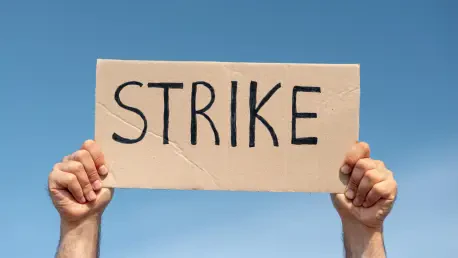

A tense standoff is developing at Portland Community College, Oregon’s largest institution of higher learning, where the possibility of a widespread labor strike looms over its campuses. After ten months of fruitless contract negotiations, the two primary employee unions, representing a combined force of approximately 2,300 workers, have declared an impasse with the college administration. This move has triggered a formal state-mandated process that could culminate in hundreds of faculty, academic professionals, and classified staff walking off the job as early as mid-March, potentially disrupting operations for thousands of students. The core of the dispute lies in a chasm between the unions’ demands for what they deem a fair cost-of-living adjustment and the college’s starkly conservative offer, a disagreement rooted in fundamentally different interpretations of the institution’s financial health and its obligations to its employees. As both sides dig in, the coming weeks will be critical in determining whether a compromise can be reached or if the college community will face its first major labor stoppage in recent memory.
The Union’s Position
Demands for a Living Wage
The Federation of Faculty and Academic Professionals (PCCFFAP) and the Federation of Classified Employees (PCCFCE) have presented a unified front, arguing that their wage proposals are not just reasonable but essential for their members’ financial survival. Their joint proposal calls for a substantial cost-of-living adjustment, seeking a wage increase ranging between 6.5% and 8.75% over a two-year period. Union leaders contend that anything less amounts to a significant pay cut when measured against the relentless pressures of inflation and escalating healthcare premium costs. They paint a picture of dedicated employees who are struggling to make ends meet, with their purchasing power steadily eroding. This economic strain, they argue, directly impacts morale and the quality of service provided to students. The unions assert that the college’s focus should be on investing in its frontline workers—the instructors, advisors, and support staff who are the bedrock of the student experience—to ensure they can afford to live in the communities they serve and remain committed to their vital roles within the college.
From the unions’ perspective, the college’s claims of financial hardship are a matter of misplaced priorities rather than absolute scarcity. They challenge the administration’s budgetary narrative, suggesting that a more creative and equitable approach to financial management could easily accommodate their wage demands. Union representatives have pointed to the college’s reserve funds as a potential source of funding, arguing that policies governing these reserves could be adjusted to better support the institution’s human infrastructure without jeopardizing its long-term stability. The central argument is that the administration is prioritizing a conservative fiscal policy and bolstering management at the expense of its workforce. They see a disconnect between the college’s public mission to serve the community and its internal treatment of the employees who carry out that mission daily. This perception has fueled a sense of being devalued and has strengthened the resolve of the combined union membership to fight for a contract that they believe reflects their true contribution to the college’s success.
The Human Element of the Dispute
Beyond the specific percentages and contract clauses, the conflict is deeply rooted in the fundamental need for employees to feel respected and valued for their work. The unions argue that the administration’s meager offer sends a clear message that the labor of faculty, academic professionals, and classified staff is not a priority. This sentiment is particularly acute for classified employees, who often represent the lowest-paid workers on campus and are most vulnerable to economic instability. For them, a meaningful wage increase is not about luxury but about basic financial security. The unions stress that a stable, fairly compensated, and motivated workforce is not a budgetary line item to be minimized but is the single most critical asset for achieving the college’s educational goals. An environment where employees are worried about paying their bills is not conducive to the supportive and engaging learning atmosphere that students deserve. Therefore, the fight for a fair contract is framed as a fight for the very soul and effectiveness of the institution itself.
The unprecedented solidarity between the PCCFFAP and the PCCFCE marks a significant development in the college’s labor relations. By joining forces, the two distinct unions, representing everyone from full-time professors to maintenance staff and administrative assistants, have created a powerful collective voice. This united front, encompassing a vast majority of the college’s non-managerial workforce, significantly raises the stakes for the administration. It transforms the negotiation from separate discussions into a unified movement for economic justice across the entire campus community. This collaborative strategy amplifies their message, increases their bargaining power, and demonstrates a shared belief that the well-being of all employee groups is interconnected. The potential for a joint strike presents a far more disruptive scenario than a single-union action, putting immense pressure on the college to return to the bargaining table with an offer that addresses the concerns of its entire workforce, not just one segment.
The College’s Stance
A Case for Fiscal Prudence
In stark contrast to the unions’ demands, the Portland Community College administration has presented an offer that it characterizes as a necessary measure of fiscal responsibility in an increasingly precarious financial environment. The college has proposed a wage increase of less than one percent over two years—specifically, 0.35% in the first year, with a potential increase of up to 0.5% in the second. Administration officials frame this conservative proposal not as a reflection of how they value their employees, but as a direct response to a convergence of negative economic pressures threatening the institution’s long-term health. They argue that committing to a large, multi-year wage increase would be fiscally irresponsible and could jeopardize the college’s ability to fulfill its core mission for students and the broader community. The administration’s position is that ensuring the college’s sustainability must be the top priority, even if it means making difficult and unpopular decisions in the short term. This stance is presented as a crucial act of stewardship to protect the institution from deeper financial instability down the road.
The college’s cautious approach is underpinned by a worrying financial forecast. Officials cite a projected decline in student enrollment, a trend affecting many higher education institutions, which directly impacts tuition revenue. Simultaneously, the college is facing rising operational costs for essential services, including technology upgrades and facilities maintenance. Perhaps the most significant threat is the looming possibility of substantial state budget cuts, which would further strain an already tight budget. The administration has already taken proactive steps to address a potential $21 million deficit in its next biennium, implementing over $14 million in budget reductions through a combination of layoffs and hiring freezes. These actions, they contend, are evidence of the serious financial challenges at hand. Within this context, the administration views its minimal wage offer as a vital component of a broader strategy to navigate a period of significant uncertainty and avoid more drastic measures that could harm both programs and personnel in the future.
Navigating an Uncertain Future
The administration’s conservative financial strategy extends beyond immediate budget concerns; it is a calculated effort to safeguard the institution against future volatility. College leaders contend that overextending the budget to meet the unions’ demands could trigger a cascade of negative consequences, potentially forcing them to consider significant tuition hikes or deeper, more damaging program and service cuts. Such outcomes would directly harm students, undermining the college’s commitment to access and affordability. The administration is thus engaged in a difficult balancing act: attempting to manage employee compensation expectations while ensuring the college remains a financially viable and accessible resource for its diverse student population. From this perspective, the current negotiation is not simply about a two-year contract but about making strategic decisions that will position PCC for stability and success for many years to come, preserving its ability to adapt to the unpredictable landscape of public education funding.
While the declaration of an impasse signals a serious breakdown in negotiations, a strike is not yet inevitable. The action formally initiates a state-mandated 30-day “cooling-off” period, a structured window designed to provide one final opportunity for resolution. During this month-long period, three negotiation sessions overseen by a state-appointed mediator are scheduled. This phase moves the conflict into a more formalized setting, where a neutral third party can help facilitate communication and explore potential avenues for compromise that may have been overlooked. These upcoming sessions represent the last clear chance for both the unions and the college administration to find common ground and avert a walkout. The outcome of these mediated talks will be pivotal, determining whether the college community can achieve a peaceful settlement or will face the profound disruption of a strike that would impact thousands of students and staff across the district.
A Crossroads for Oregon’s Largest College
The standoff at Portland Community College represented a fundamental clash of realities. The employee unions had argued for what they saw as essential compensation to maintain a stable and respected workforce capable of effectively serving students, viewing the college’s offer as a dismissal of their labor. In contrast, the college administration had viewed its conservative stance as a vital and responsible measure to navigate a precarious financial future and preserve institutional integrity for the community. The state-mandated cooling-off period and the intervention of a mediator provided a final, critical opportunity for dialogue. Ultimately, the path chosen during those crucial final negotiations determined whether a compromise could be forged or if the deep chasm between the two sides would lead to a historic disruption, fundamentally altering labor relations and the operational landscape of the institution for years to come.