
A new wave of graduates is stepping into a professional world that presents a stark paradox: a fiercely competitive job market where the demand for proficiency in artificial intelligence has soared to unprecedented heights, creating a significant disconnect for new entrants. This article analyzes the widening AI skills gap for early-career professionals and outlines the strategic role of Human Resources in transforming this challenge into a competitive advantage by exploring the data defining the gap, HR-led initiatives to bridge it, and the long-term implications for building a future-proof workforce.
The Widening Chasm: Quantifying the AI Skills Disconnect
The Data-Driven DilemmRising Demand vs. Graduate Readiness
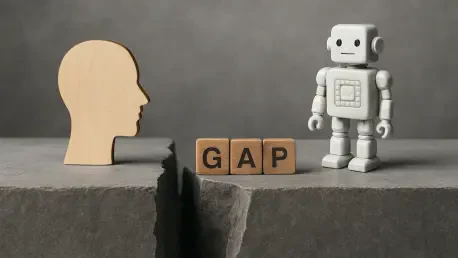
The gap between employer expectations and graduate capabilities is no longer anecdotal; it is a measurable trend with significant business implications. Recent data reveals that over half of all entry-level roles now require some degree of AI proficiency, a stark contrast to traditional academic curricula that often lag behind rapid technological advancements. This mismatch leaves graduates unprepared for the practical demands of the modern workplace.
Furthermore, this skills shortage is a primary roadblock to corporate progress. Nearly one-third of organizations identify a lack of specialized skills as their most significant barrier to successful AI adoption. This trend reveals a growing disconnect where companies are eager to integrate AI to drive efficiency and innovation, yet the incoming talent pipeline lacks the practical experience to execute these strategies effectively.
Real-World Impact on Business and Early-Career Talent
For businesses, the consequences of this skills gap are immediate and costly. A company’s ability to implement transformative AI technologies is severely hindered, leading to delayed projects, missed opportunities, and a diminished competitive edge. Innovation stagnates when teams lack the foundational data literacy and hands-on experience with tools necessary to move from concept to execution.
For early-career professionals, the challenge is equally daunting. Many graduates enter the workforce with strong theoretical knowledge but find themselves overwhelmed when confronted with the complex AI tools and digital workflows that are standard in business environments. This lack of practical application not only creates a steep learning curve but also undermines their confidence, potentially leading to disengagement and higher attrition rates as they struggle to meet expectations.
The HR Mandate: Architecting a Future-Ready Workforce
Proactive Development Beyond Traditional Onboarding
Human Resources must evolve its approach from passive orientation to active, strategic development. Structured onboarding programs that immediately immerse new hires in AI-enabled tools and digital processes are critical. Instead of a brief overview, these programs should serve as a foundational boot camp, equipping graduates with the core competencies needed from day one.
This initial training must be supported by long-term growth frameworks. Structured mentoring, which pairs new hires with experienced colleagues, provides invaluable guidance and real-world context. Moreover, clear development pathways that outline opportunities for skill acquisition and career progression build the confidence and practical skills required for immediate and sustained contributions, turning potential into tangible performance.
Reshaping Talent Attraction for the AI Generation
To secure the best emerging talent, organizations must shift their recruitment messaging. The focus should move from expecting fully-formed experts to showcasing a culture of learning and development. Talent attraction strategies that emphasize opportunities for growth, clear career progression, and a supportive environment resonate strongly with a generation eager to learn but aware of its practical skill gaps.
This shift requires a tactical change in how roles are presented. Reshaping job descriptions to highlight the training, mentorship, and hands-on projects a new hire will receive reassures candidates that they will be equipped for success, not expected to be AI experts on day one. This approach positions the company as a partner in their professional development, making it a far more attractive destination for ambitious talent.
Fostering a Collaborative, Multigenerational Ecosystem
A truly effective workforce leverages the strengths of all its members. HR is uniquely positioned to create integrated teams that blend the digital fluency and fresh perspectives of early-career professionals with the deep industry knowledge and strategic wisdom of experienced colleagues. This synergy is essential for navigating the complexities of AI integration.
To facilitate this, HR can spearhead knowledge-sharing initiatives that create a two-way street for learning. Reverse mentoring programs, for instance, allow recent graduates to train senior staff on new AI tools while experienced leaders provide crucial business context. Such initiatives not only ensure continuous upskilling across the organization but also foster team cohesion and a shared commitment to innovation.
The Road Ahead: Navigating an AI-Driven Economy
Defining the Essential AI Competencies of Tomorrow
As AI becomes more embedded in business operations, the definition of essential skills will continue to evolve. Foundational data literacy—the ability to interpret and question data-driven insights—is becoming a universal requirement. Equally critical is a strong understanding of ethical AI use to ensure that technologies are deployed responsibly and without bias.
Beyond technical know-how, the most valuable competencies are becoming more human-centric. Adaptability and a commitment to continuous learning are emerging as core soft skills, just as important as proficiency with any single AI tool. The future belongs to professionals who can not only use technology but also pivot, learn, and apply new knowledge as the landscape shifts.
Strategic Benefits and Inherent Risks
Organizations that proactively invest in cultivating early-career AI talent stand to gain a significant long-term advantage. This strategy builds a sustainable talent pipeline, reduces reliance on a competitive external market for scarce skills, and fosters a culture of internal innovation. The result is an organization that is not only more resilient but also better equipped to lead in an AI-driven economy.
Conversely, the risks for companies that fail to adapt are substantial. These organizations will likely fall behind competitors who are more adept at leveraging AI for efficiency and growth. They will struggle with AI adoption due to internal skills shortages and face higher talent attrition as ambitious employees leave for companies that offer better development opportunities. Inaction is no longer a viable strategy.
Conclusion: From Skills Gap to Strategic Opportunity
The AI skills gap represents a critical business challenge, one that Human Resources is uniquely positioned to solve through strategic, people-focused initiatives. By moving beyond traditional approaches, HR departments can transform this potential weakness into a source of profound competitive strength.
Ultimately, organizations must view investment in early-career talent not as a simple training expense but as a core business imperative. The companies that commit to designing clear development pathways, embedding AI literacy into their culture, and championing continuous upskilling are the ones that will build a resilient, future-proof workforce ready to thrive in an AI-powered future.