
Bridging the Gap Between Software Innovation and Operational Execution
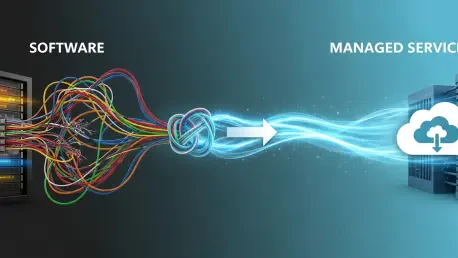
In the rapidly tightening global labor market of the present day, the mere provision of specialized software has ceased to be the definitive competitive advantage for firms operating in the staffing, security, and cleaning sectors. The digital landscape for these essential industries is undergoing a fundamental transformation that prioritizes the execution of business processes over the simple licensing of tools. Historically, software providers like zvoove Group focused exclusively on delivering digital platforms designed for internal workflow management. However, the recent acquisition of profitask, a German specialist in managed payroll and outsourced sales, signals a bold strategic pivot. By evolving from a pure software developer into a comprehensive service partner, zvoove is redefining the relationship between technology vendors and their clients. This evolution aims to address growing operational complexities and regulatory burdens by integrating Business Process Outsourcing (BPO) and managed services directly into a unified ecosystem.
The Evolution of Service Technology: Staffing and Security
To understand this transition, one must examine the historical bottleneck that existed between software capability and administrative reality. For years, staffing and cleaning firms utilized specialized platforms to track hours and manage payroll, yet the actual execution of these tasks remained a heavy manual lift for internal human resources teams. The industry has witnessed a gradual shift where the provision of tools is no longer sufficient to ensure client success in a high-stakes environment. By internalizing a managed service infrastructure, zvoove responded to market feedback suggesting that clients are increasingly looking to outsource non-core functions to focus on primary business goals. This move reflects a broader trend where technology providers are expected to not just facilitate a process, but to own the outcome entirely.
Transforming Core Business Functions: Managed Integration
Internalizing Managed Payroll: Solving Administrative Complexity
One of the most critical aspects of this shift is the integration of specialized admin centers into the core offering. Managing payroll in highly regulated sectors involves navigating a minefield of branch surcharges and legal compliance requirements. By bringing these services in-house, the organization effectively removes the friction between the software developer and the end-user. Clients no longer need to coordinate between a software vendor and a third-party payroll provider; instead, they benefit from a seamless feedback loop. This integration ensures that software updates and regulatory changes are reflected instantly in managed workflows, reducing the risk of compliance errors and freeing up internal resources for the clients.
Scaling Growth: Outsourced Sales and Profile Marketing
Beyond administrative relief, the transition moves into the commercial engine of the business through a “Sales-as-a-Service” model. In a competitive labor market, staffing agencies often struggle to balance candidate recruitment with aggressive outbound sales. The shift to managed services allows the provider to handle outreach, appointment setting, and candidate profile marketing on behalf of its clients. This approach allows firms to scale their revenue-generating activities without the immediate need to increase their own headcount or overhead. It represents a significant departure from traditional software models, as the vendor now actively participates in the revenue growth of its customer base.
Enhancing Brand: Specialized Centers for Development
The complexity of the modern workforce also requires a more holistic approach to professional development and marketing. With the inclusion of specialized training and media centers, the focus expands to include the “soft” infrastructure of client operations. These branches concentrate on sales professional development and digital employer branding. By offering these as managed services, the provider helps clients overcome the modern challenge of attracting top-tier talent and maintaining a professional digital presence. This multifaceted approach ensures that the software is supported by high-quality human capital and modern marketing strategies, creating a robust ecosystem that addresses virtually every pain point a firm might encounter.
Navigating the Future: Business Process Outsourcing and AI
The integration of managed services is a critical step in a long-term strategy heavily influenced by artificial intelligence and automation. Looking ahead, the organization is positioned to leverage its BPO capabilities to train and refine AI models on real-world operational data. As the industry moves toward more automated decision-making, having an in-house managed service department provides a level of ground truth for AI development that pure software companies lack. A future is expected where regulatory compliance and sales outreach are not just managed by people, but are augmented by predictive analytics and automation, setting a new standard for efficiency and speed in the service sectors.
Strategic Implications: Modern Service Firms
The shift from software to managed services offers a clear roadmap for firms looking to stay competitive in an era of increasing complexity. Businesses should view this evolution as an opportunity to audit their own internal processes and identify which functions are truly core to their value proposition. The major takeaway is that efficiency is no longer just about having the right software; it is about finding a partner who can execute the heavy lifting of administration and sales. To capitalize on this, firms should embrace the BPO model to reduce fixed costs and shift toward a variable-cost structure that scales with their growth. By offloading complex payroll and marketing tasks to a specialized partner, companies can redirect their focus toward client relationships and strategic expansion.
A New ErEnd-to-End Partnership
The strategic shift by zvoove Group highlighted a significant turning point in the professional services industry. By combining software innovation with operational execution, the company established itself as an end-to-end partner rather than a mere vendor. This transition acknowledged that in a highly regulated market, the most valuable asset a provider offered was the reduction of complexity. As these managed services were integrated, the boundary between technology and operations continued to blur, which provided staffing and security firms with a more resilient foundation. Leaders who recognized this trend early secured a competitive edge by transitioning their internal resources away from administrative burdens and toward high-value strategic growth. This model proved that the future of the service industry relied on the deep integration of human expertise and technical precision.