
The era of the mandatory office pizza party and the awkward after-hours Zoom mixer has officially collapsed under the weight of employee skepticism and widespread professional exhaustion. As 2026 unfolds, the corporate world is witnessing a fundamental reordering of how teams interact, moving away from superficial activities toward deep, restorative engagement. This transition is not merely a trend in human resources; it represents a radical pivot in how the global economy values the human element within the professional machine. Organizations that once relied on performative gestures are now forced to confront the reality that a disconnected workforce is a fragile and unproductive one. By swapping the traditional “trust fall” for environments that prioritize psychological safety, leaders are finding that productivity is a byproduct of authentic belonging rather than a result of forced proximity. The current shift signals a departure from the “one-size-fits-all” mentality, embracing a more nuanced understanding of how diverse professionals build trust and rapport in a modern setting.
Addressing the Modern Crisis of Workplace Burnout
Part 1: The Necessity of Active Engagement
The primary driver behind this cultural evolution is a documented crisis in employee mental health and engagement that has reached a boiling point across several industrial sectors. With record-high rates of burnout and declining engagement levels across the global workforce, companies are treating team-building initiatives as essential infrastructure rather than discretionary perks. For instance, recent industry reports indicate that nearly 40 percent of professionals feel a sense of isolation in their daily roles, a statistic that has direct implications for innovation and project velocity. Organizations now recognize that maintaining a vibrant, connected culture is a prerequisite for long-term viability and employee retention in an increasingly competitive market. The cost of replacing a high-performing employee has soared, making the investment in genuine connection a financial imperative rather than just a social one. This shift represents a move toward more sustainable labor practices that prioritize the person behind the professional.
Part 2: Integrating Wellness into Corporate Infrastructure
Successful companies have moved beyond isolated wellness programs to a systemic approach that weaves health into the very fabric of their operations. This transformation involves more than just offering gym memberships or meditation app subscriptions; it requires a complete overhaul of how time is allocated within the workday. By redesigning workflows to include “deep work” blocks and mandatory disconnection periods, organizations are proving that they value the cognitive health of their staff. For example, some tech firms have implemented “asynchronous-first” communication policies that reduce the constant interruptions of instant messaging, allowing employees to focus on complex tasks without the anxiety of immediate response. This transition ensures that mental and physical health are treated as sustained operational priorities rather than one-off event-day benefits. It is a structural commitment to the idea that a healthy worker is a more effective professional, leading to a more resilient and capable organizational culture.
Adapting Connection Strategies for a Hybrid World
Part 1: Navigating the Hybrid Paradox with Strategic Frequency
The rise of hybrid work has made face-to-face interaction both rare and highly valuable, leading to a shift in how corporate gatherings are scheduled. The massive, once-a-year conference is being phased out in favor of smaller, more frequent “team experiences” that provide regular touchpoints for connection. These micro-events focus on specific project milestones or cultural alignment, allowing for more intimate and relevant conversations than a large-scale convention ever could. By decentralizing the connection budget, companies are able to respond more quickly to the needs of specific departments, ensuring that the social needs of the team are met in real-time. This model reduces the logistical strain on employees who may find long-distance travel for a single week-long event to be disruptive and draining. Instead, localized meetups and short-duration retreats have become the preferred method for maintaining high levels of group cohesion and morale in a dispersed work environment.
Part 2: Embracing Restorative and Natural Environments
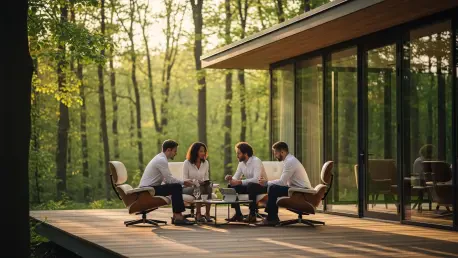
The physical setting of team building has shifted toward restorative environments that offer a mix of professional alignment and personal recovery. Whether through countryside retreats focused on “green health” or wellness-led city experiences, organizations are seeking out backdrops that provide mental clarity. These settings allow teams to step away from the fast-paced nature of urban work and engage in activities that naturally promote relaxation and bonding. Scientific studies increasingly show that exposure to natural light and outdoor settings significantly lowers cortisol levels and boosts creative thinking. Consequently, the trend of booking windowless hotel ballrooms for strategic planning sessions has largely vanished in favor of open-air venues and locations with direct access to nature. This environmental shift is a physical manifestation of a company’s commitment to the holistic wellbeing of its people, proving that where a team meets is just as important as the agenda they intend to discuss.
Strategic Next Steps for Cultural Longevity
The transition toward genuine connection provided a clear roadmap for organizations seeking to thrive in a landscape defined by flexibility and diversity. To maintain this momentum, leadership teams prioritized the implementation of regular, small-scale interactions that favored quality over quantity. They moved away from generalized activities and instead invested in experiences that aligned with the specific values and professional goals of their unique workforce. By integrating restorative environments and inclusive practices into the standard operating procedure, businesses successfully dismantled the barriers that previously hindered authentic collaboration. The focus shifted toward creating sustainable social systems that supported both individual growth and collective achievement. Moving forward, the most resilient companies were those that treated social cohesion as a dynamic asset requiring ongoing investment, ensuring that the human element remained central to the corporate strategy while fostering a culture of mutual respect and shared purpose.