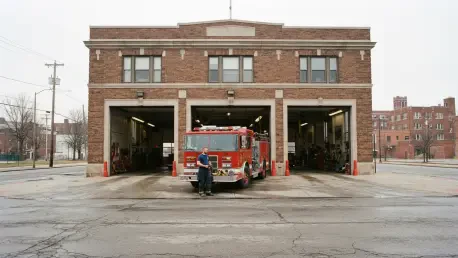

Although the city simplified residency verification and moved testing to City Hall, these procedural changes have not yet resulted in a more diverse workforce. The Cleveland Division of Fire is navigating a period of intense institutional scrutiny as city officials and community leaders grapple with a persistent lack of racial and gender diversity within its ranks. This issue, highlighted during a recent meeting of the Cleveland City Council Workforce, Education, Training and Youth Development Committee, centers on the division’s failure to maintain a workforce that reflects the demographic reality of the city it serves. Despite decades of federal oversight aimed at rectifying discriminatory hiring practices, recent data suggests that the department has regressed since the lifting of a federal consent decree, leading to calls for systemic reform and increased transparency in the recruitment process. The city currently faces a critical moment where administrative promises must finally translate into measurable demographic shifts.
Historical Context and the Post-Decree Era
For thirty-six years, spanning from 1977 to 2013, the Cleveland Division of Fire operated under the heavy hand of a federal consent decree. This legal mandate was the direct byproduct of systemic discrimination and was originally designed to implement rigorous procedures for recruiting and hiring minority candidates who had been historically excluded. The decree was championed by organizations such as The Vanguard—a group representing Black and Hispanic firefighters—who filed class-action lawsuits to challenge the exclusionary practices that had defined the department for generations. The primary objective of the decree was to remedy the effects of past discrimination by ensuring that minority representation among the staff increased at a steady and measurable pace. However, the conclusion of federal oversight in 2013 marked a significant turning point, after which the demographic trajectory of the department began to shift back toward a historical norm that favored white male applicants.
Since the lifting of the federal mandate, the statistical evidence of regression has become increasingly difficult for city leaders to ignore. Data reviewed in 2026 indicates that approximately 75% of all new hires in recent years were white men, a figure that stands in stark contrast to the demographic makeup of the city itself. Current staffing records reveal that out of 736 uniformed firefighters, only 99 identify as Black, while a mere 18 are women. This trend has prompted an intense level of skepticism from the City Council Workforce Committee, particularly under the leadership of Chair Richard Starr. The frustration centers on why a department that once functioned under strict equity guidelines has allowed its recruitment pipeline to narrow so significantly. This regression suggests that without the external pressure of the federal court system, the department’s internal culture defaulted to traditional and less inclusive hiring patterns, resulting in a workforce that lacks diversity.
Internal Barriers and Selection Methodologies
The modern hiring framework is a complex, multi-tiered system managed primarily by the Civil Service Commission and an internal Applicant Review Committee. While the city has made some administrative adjustments intended to lower the barriers for entry, significant hurdles continue to impede the progress of minority applicants. Leeanne Guzman, the project director for the Civil Service Commission, noted that residency verification requirements were simplified to assist local candidates. Previously, applicants were required to submit up to seven different documents to prove residency, a bureaucratic burden that often discouraged residents of the city’s urban core. Furthermore, the National Testing Network authorized Cleveland City Hall as a verified testing center for the mandatory exam. By centralizing the testing location within the city center, officials intended to attract a more diverse pool of local candidates and reduce the logistical friction associated with travel requirements.
Despite a surge of interest during the 2023 hiring cycle, which saw over 1,000 applications, the attrition rate during the testing and background phases remains a significant concern. The current selection process utilizes an anonymization of candidate files, removing names, race, and gender before they are ranked based on test scores and various point bonuses. These bonuses are awarded for military service, Cleveland residency, and attendance at local schools. However, the final stage of the process involves a 17-member Applicant Review Committee, composed entirely of internal firefighters, who review the top-scoring files and make recommendations to the division chief. This internal control has become a primary target of criticism, as skeptics argue that even anonymized files can contain markers of social and cultural background that allow internal reviewers to perpetuate existing biases. The heavy reliance on a purely internal committee creates an insular loop of decision-making.
Legislative Criticism and Community Perception
City Council members have expressed deep skepticism regarding the Division of Fire’s ability to police its own hiring practices without significant external intervention. Council Member Stephanie Howse-Jones specifically questioned the role of the 17-member internal committee, suggesting that its structure may inadvertently sustain the same cultural barriers that the consent decree sought to dismantle. The concern is that the current methodology is woefully inadequate for the task of building a representative workforce in a city as diverse as Cleveland. By managing the majority of the recruitment and selection process internally—without substantial oversight from the Department of Human Resources or external diversity experts—the division is perceived as failing to modernize its approach. This insularity is seen as a primary reason for the demographic stagnation observed over the last decade, leading to what many leaders describe as a state of administrative paralysis regarding equity.
The legislative frustration is not merely about numbers; it is about the broader impact of exclusionary practices on the community’s trust in public institutions. Council members have argued that the city is effectively contributing to generational harm by failing to provide equitable access to high-paying, stable career paths within the public safety sector. When the fire department does not reflect the community it serves, it creates a psychological and cultural distance that makes recruitment even more difficult. The perception of the department as a white-dominated institution persists in many neighborhoods, acting as a powerful deterrent to potential non-white applicants. Leaders emphasize that until the department can demonstrate a fundamental shift in its hiring outcomes, it will continue to struggle with its reputation among the city’s youth. The current situation is described as a cycle where the lack of representation today directly undermines the recruitment efforts of tomorrow.
Accountability Measures and Future Solutions
Recruiters within the department, such as Antoine Cruz and Lieutenant Jeremy Caldwell, have pointed to the logistical difficulties of maintaining a diverse candidate pool during the long hiring process. They noted that the sheer volume of applicants makes it difficult to maintain the consistent contact and mentorship necessary to help minority candidates navigate the rigorous testing phases. In search of modern solutions, the committee has looked toward the City of Toledo as a potential model for success. Toledo’s fire department achieved greater diversity by integrating in-person oral interviews into their process and maintaining a highly transparent, user-friendly recruitment website. Council members suggested that Cleveland should adopt similar strategies, moving away from a purely score-based, internal review system toward one that values community representation and interpersonal engagement. This shift would allow the city to identify high-potential candidates who might otherwise be lost.
As the city transitioned from 2026 to the 2027 budget season, the Council established a firm boundary regarding financial support for the division. Leaders demanded a comprehensive, data-driven plan that replaced internal insularity with external accountability and transparent evaluation metrics. The proposed solutions centered on institutionalizing mentorship programs, ensuring that minority candidates received the guidance necessary to survive rigorous background checks. Furthermore, the city moved to restructure the Applicant Review Committee by including civilian oversight and experts in diversity to break the cycle of self-perpetuating bias. Officials prioritized a shift toward community-based recruitment that treated local schools as a primary pipeline for talent. These actions represented a decisive pivot from passive observation to active intervention, setting a clear mandate for the incoming fire chief to rebuild the department’s culture and ensure long-term equity.