
Sofia Khaira stands at the forefront of organizational evolution, specializing in the delicate intersection of global stability and workplace culture. As an expert in diversity, equity, and inclusion, she has spent her career helping businesses transform their talent management practices into resilient systems that do not just survive crises but support the humans within them. With the world feeling smaller and more interconnected than ever, her insights into how international turmoil bleeds into the cubicle and the home office are more critical than ever for leaders aiming to maintain a high-performing, healthy workforce.
Our discussion centers on the shifting paradigm of crisis management, moving away from reactive “emergency mode” toward a permanent, “always-on” strategic framework. We explore the profound psychological impact of global conflicts on employee mental health, the specific vulnerabilities that arise within diverse teams, and the tangible steps HR leaders can take to foster psychological safety. By examining the efficacy of modern support systems and the role of front-line managers, this conversation provides a roadmap for navigating the economic, social, and emotional disruptions that define our current era.
With global political turmoil and major world events now serving as primary drivers of low mood for three-quarters of the workforce, how should organizations rethink their responsibility toward employee mental health?
The reality is that we can no longer treat the workplace as a vacuum sealed off from the rest of the world; the 2025 Workforce Mental Health Report shows that a staggering 75% of employees are grappling with a low mood driven by the weight of current affairs. When headlines about conflicts in regions like Iran, Ukraine, or Gaza dominate our screens, they don’t just stay on the phone—they follow people into their morning meetings and strategy sessions. For many, these events are more than just news; they are visceral stressors that top even personal finances or crime in terms of negative influence. Organizations have to realize that psychological scars from armed conflict reach far beyond national borders, and ignoring this weight is a direct threat to both morale and retention. We must move toward a model where mental health support is integrated into the daily flow of work, acknowledging that our teams are carrying a heavy emotional load before they even log on for the day.
Many companies treat international conflicts as one-off emergencies, but you advocate for an “always-on” approach—what does that look like in practice for a modern HR department?
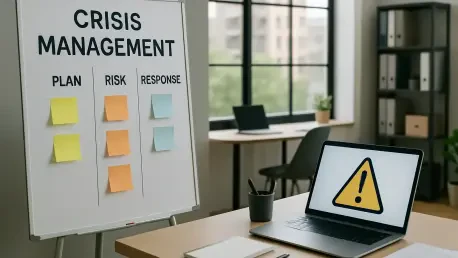
Moving away from the “binder on a shelf” mentality is essential because, by the time a crisis hits the news, a reactive organization is already behind the curve. In practice, this means building crisis preparedness into the very DNA of your workforce strategy, ensuring that systems for communication and operational continuity are functional 365 days a year. We shouldn’t be asking if another incident will occur in 2026, but rather if we have the multi-disciplinary teams in place to handle the inevitable disruption to travel, project timelines, and supply chains. This involves bringing together leaders from every department—finance, operations, and HR—to pre-determine how the company will adjust workloads and protect business operations during periods of high instability. When an organization has a proactive, scalable plan, it prevents the “perpetual emergency loop” that exhausts leadership and leaves employees feeling abandoned in times of need.
How do specific stressors like military obligations or family connections in war-torn regions create unique vulnerabilities that a standard corporate policy might miss?
Standard policies often fail to account for the deep, personal layers of disruption that global instability causes, such as an employee suddenly needing to navigate immigration concerns for family members or managing the trauma of having loved ones in a conflict zone. These aren’t just “personal issues”; they are operational risks that affect workforce availability and long-term productivity, leading to severe anxiety or trauma-related symptoms. For an employee with caregiving responsibilities abroad or military obligations, the stress of a conflict is compounded by the fear that their professional standing might suffer if they take a step back. By explicitly outlining workforce adjustments and flexible paths in advance, a company can provide a safety net that protects its most important resources. Recognizing these unique vulnerabilities is a core component of inclusion, ensuring that those most affected by world events feel their employer is a source of stability rather than another source of pressure.
Given that front-line managers are often the first to notice signs of distress, how can companies better equip them to foster a sense of “psychological safety” during turbulent times?
Front-line managers are the heartbeat of the organization, and their ability to recognize when a direct report is struggling is often the difference between a minor dip in performance and a total burnout. According to a 2024 American Psychological Association report, employees who feel psychologically safe—meaning they can speak honestly about their fears without retribution—are significantly less likely to experience emotional exhaustion. Training managers to move beyond “status updates” and into “human updates” allows them to create space for respectful, constructive dialogue where employees feel heard. When managers are equipped to facilitate these difficult conversations, it prevents office tensions from escalating and helps to maintain a culture of trust. Ultimately, when an employee knows their manager understands the weight of the world they are carrying, they are much more likely to remain engaged and committed to the team.
The data suggests a high success rate for Employee Assistance Programs, but many still see them as a “check-the-box” benefit—how can leaders maximize the impact of these services?
The numbers tell a compelling story of what is possible when these programs are actually utilized: a study of over 166,000 employees found that 79% recovered from anxiety or depression and 61% saw a turnaround in workplace productivity problems after using EAP services. To maximize this impact, leaders must go beyond simply listing a phone number in an onboarding packet and instead actively facilitate access and de-stigmatize the help-seeking process. This means talking about these resources openly in town halls and ensuring that the services offered are robust enough to handle complex, trauma-related issues stemming from global crises. When employees see that their leadership truly believes in the efficacy of these programs, they are more likely to view them as a lifeline rather than a bureaucratic formality. By bridging the gap between offering a service and encouraging its use, a company can significantly improve the health and resilience of its entire workforce.
What is your forecast for the evolution of the employer-employee relationship as we continue to navigate this era of global instability?
My forecast is that we are entering an era where the traditional boundaries of the employment contract are being rewritten, with “credible leadership during crisis” becoming a primary metric for talent attraction and retention. Employees are no longer just looking for a paycheck; they are evaluating whether an employer can provide stability and flexibility in a world that feels increasingly volatile. We will see a shift where the most successful businesses are those that treat their crisis plans as living documents, constantly updated to reflect new economic, cyber, and climate realities. Preparedness will become a competitive advantage, and the organizations that prioritize the well-being of their people as a core operational strategy will be the ones that thrive. In the long term, trust will be the currency of the workplace, and that trust is built in the difficult moments when a company chooses to lead with empathy and clear, consistent communication.