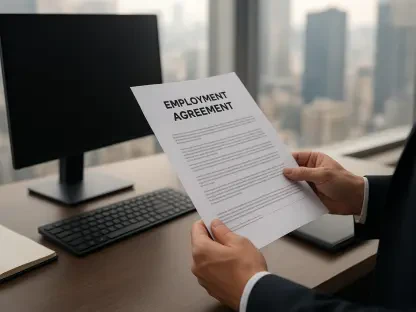

Workers across various sectors often discover that their overtime hours have mysteriously vanished from their final paychecks without any clear explanation or recourse. This phenomenon, commonly referred to as wage theft, costs employees billions of dollars annually, yet the mechanisms to prevent it have remained largely stagnant until very recently. As corporate structures become increasingly complex and remote work configurations blur the lines between professional and personal time, the necessity for robust, undeniable evidence of labor has never been more critical for the modern workforce. Relying on traditional paper trails or easily editable digital spreadsheets often leaves workers vulnerable to administrative errors or intentional manipulation by management teams seeking to bolster profit margins. Consequently, the conversation has shifted toward the implementation of high-fidelity documentation systems that act as an impartial arbiter for both parties involved in a labor contract. This technological evolution aims to create a verifiable standard that ensures every hour worked is an hour paid, bridging the gap between historical labor abuses and contemporary ethical standards.
The Evolving Standards of Labor Accountability
Digital Audits: The Power of Automated Record Keeping
Automated time-tracking software has emerged as a frontline defense against the systematic underpayment of employees in labor-intensive industries like retail and manufacturing. These systems utilize sophisticated algorithms to cross-reference scheduled shifts with actual logins, creating a secondary layer of verification that minimizes the risk of human error during payroll processing. By integrating these tools directly into point-of-sale systems, companies can provide a real-time view of labor costs while ensuring that every minute of work is accounted for in the final tally.
The integration of artificial intelligence into payroll management has further refined the ability to detect anomalies that might indicate systematic wage theft across large enterprises. Modern AI tools scan thousands of payroll entries to identify patterns where overtime is consistently truncated or where breaks are automatically deducted regardless of actual usage. This proactive approach allows compliance officers to address systemic issues before they escalate into costly lawsuits. When linked with mobile apps, these systems provide employees with instant feedback on their earnings.
Immutable Ledgers: The Shift Toward Blockchain Technology
While standard digital databases offer significant improvements over paper logs, they remain susceptible to retroactive editing by administrators with high-level access permissions. To combat this vulnerability, some forward-thinking organizations have begun using blockchain technology to create immutable ledgers of employee hours and compensation. In this model, every entry regarding work performed is cryptographically signed and added to a chain that cannot be altered or deleted without leaving a clear trail of evidence, preventing attempts to “shave” hours from a worker’s total.
Implementing blockchain-based documentation also facilitates the use of smart contracts, which automatically trigger payments once specific work milestones are verified. This automation removes the need for a human intermediary to approve every payroll cycle, thereby reducing opportunities for intentional delays or miscalculation of bonuses. By encoding the terms of an employment agreement directly into the payment infrastructure, the system ensures that the agreed-upon rates are applied consistently. This technological shift streamlines administrative processes and prioritizes ethical labor practices.
Implementation Challenges and Policy Impacts
Privacy Concerns: Balancing Monitoring With Employee Rights
The push for more comprehensive documentation inevitably raises concerns regarding the extent of employee monitoring and the potential for invasive surveillance practices. While tracking hours is essential for fair pay, the use of biometric scanners or always-on camera systems can create a hostile work environment characterized by a lack of trust. Organizations must navigate the fine line between collecting necessary data for payroll accuracy and infringing upon the personal privacy of staff. Effective documentation requires clear policies that define what data is being collected and stored.
Transparency serves as the most effective counterweight to the risks of increased surveillance, as it ensures that employees are active participants in the documentation process. Providing workers with full access to their own data allows them to verify that the information used for payroll is correct. This open-access model helps to demystify the technology and builds a bridge of communication between management and the frontline workforce. By fostering an environment where documentation is a mutual benefit, businesses can mitigate the psychological impact of constant monitoring.
Legal Accountability: Moving Toward Transparent Reporting
Legislative bodies responded to the rise of sophisticated documentation by introducing more stringent reporting requirements that demanded a higher level of detail in corporate filings. These regulations required companies to provide verifiable evidence of their payroll processes, effectively penalizing those who continued to rely on opaque systems. As a result, the burden of proof in wage disputes shifted significantly, as courts began to view a lack of robust digital documentation as a failure of governance. This pressure incentivized firms to upgrade their infrastructure to modern standards.
Ultimately, the shift toward hyper-accurate documentation functioned as a catalyst for a broader cultural change regarding the sanctity of labor contracts. Management teams that embraced these changes found that their relationships with employees improved, as the removal of pay-related uncertainty led to higher levels of morale and retention. These organizations demonstrated that investing in transparent systems was a strategic advantage that attracted top-tier talent. The focus eventually turned toward refining these tools to ensure they remained adaptable to various flexible work arrangements.