
The difference between a valid legal notice and a dismissed fine often hinges on a single word, as the Home Office recently discovered in a landmark legal battle that reached the highest court in the land. When a prominent restaurant chain in Northern England received a £15,000 penalty for immigration violations, it did not just pay the fee; it challenged the very foundation of how the government communicates its allegations. This dispute has now culminated in a Supreme Court ruling that fundamentally alters the balance of power between the state’s enforcement arms and the procedural rights of business owners across the country.
From a Local Restaurant to the Highest Court: A Shift in Legal Power
The narrative began in a Middlesbrough curry house, where an inspection by immigration officers led to a significant financial penalty against Akbar’s Restaurants. The government alleged that the establishment employed an individual without a valid right to work, but the paperwork served to the business was surprisingly vague. Rather than pointing to a specific breach, the Home Office utilized a broad-brush approach that listed multiple, conflicting legal grounds for the fine, effectively leaving the employer in the dark about the exact nature of the charge.
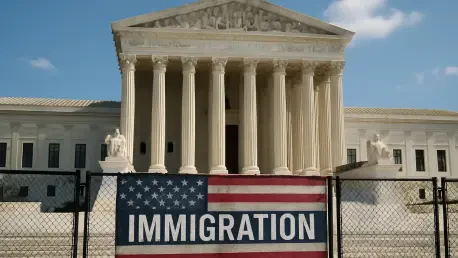
This lack of clarity forced the case through several layers of the judicial system, eventually landing before the most senior judges in the United Kingdom. What started as a local dispute over a single employee transformed into a defining moment for administrative law. The resulting judgment sent a clear signal that the government cannot bypass procedural transparency in its rush to penalize businesses. For the restaurant chain, which employs hundreds of people across multiple locations, the victory was less about the money and more about the principle of fair notice.
The Mounting Pressure of Right-to-Work Enforcement in the United Kingdom
Understanding the weight of this ruling requires looking at the increasingly intense environment for employers regarding immigration compliance. By early 2024, the government dramatically escalated the financial risks for businesses by tripling the maximum fines for right-to-work violations, with repeat offenders now facing penalties as high as £60,000. This fiscal shift has been accompanied by a massive surge in enforcement activity, with official data showing a 57.5% increase in illegal working visits over the last year.
For modern businesses, an immigration audit is no longer a remote possibility but a pressing operational risk that demands absolute clarity in how laws are applied. The sheer scale of the potential fines means that a single administrative error could threaten the insolvency of a small or medium-sized enterprise. In this high-stakes climate, the demand for precision from the Home Office is not merely a legal preference but a necessity for corporate survival.
Analyzing the Supreme Court’s Mandate for Specificity in Penalty Notices
The core of the legal conflict involved Section 15 of the Immigration, Asylum and Nationality Act 2006, which requires the Home Secretary to state why an employer is being fined. In the case of Akbar’s Restaurants, the Home Office attempted to bypass this by listing three separate, mutually exclusive legal reasons for a breach rather than identifying the actual violation. The Supreme Court’s unanimous decision, delivered by Lord Sales, clarified that the government cannot force an employer to guess the nature of their crime through an expensive appeal process.
The ruling established that administrative responsibility rests solely with the Home Secretary to decide on a specific reason before a penalty is ever issued. By ensuring that the power to fine is contingent upon following exact administrative procedures, the court protected the right of businesses to make informed decisions about their legal defense. This decision reinforced the idea that procedural fairness is a prerequisite for the exercise of state power, regardless of the severity of the alleged underlying offense.
Balancing Judicial Oversight Against the Home Office’s Enforcement Surge
Despite the court’s rebuke, the tension between the judiciary and the executive branch remained high as the government continued its aggressive pursuit of illegal working. A Home Office spokesperson recently characterized the loss as a mere technicality regarding document wording, signaling that the department has no intention of slowing its record-breaking pace of arrests and raids. This perspective highlighted a significant divide: while the courts prioritize procedural fairness, the government remains focused on high-pressure enforcement as its primary tool for immigration control.
Moreover, the official response suggested that the department would simply update its templates to satisfy the court’s requirement for specificity without softening its stance toward employers. This ongoing friction between the mandate for legal precision and the drive for enforcement volume created a complex landscape for business owners. While they now have a stronger defense against poorly drafted notices, they face a state department that is more determined than ever to maximize the impact of its regulatory powers.
Essential Compliance Measures for Businesses Facing Stricter Penalties
Navigating this evolving legal landscape required employers to move beyond basic record-keeping and adopt a framework of proactive self-auditing. The Supreme Court ruling provided a narrow window of procedural protection, but the underlying threat of massive financial penalties remained a reality for any company with gaps in its verification process. Comprehensive right-to-work audits for all staff, with a particular focus on temporary workers and agency labor, became the primary defense against state intervention.
Updated internal administrative processes eventually aligned with the new government guidance released later this October. Businesses established clear protocols for responding to civil penalty notices that scrutinized every document for the specific limb of the law being cited. Digital verification tools ensured that leave-to-remain expiration dates were tracked with automated alerts, which effectively shielded organizations from the administrative errors that previously led to devastating litigation. Through these rigorous steps, the business community learned to protect itself within the boundaries defined by the highest court.