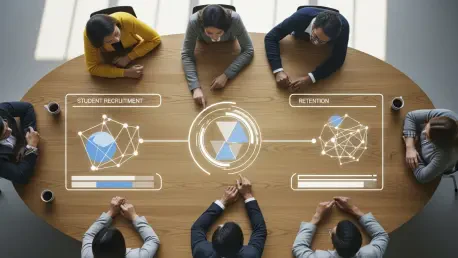

Sofia Khaira is a distinguished strategist in higher education growth, dedicated to helping institutions modernize their student engagement frameworks and talent management practices. With a deep background in driving inclusive and equitable digital environments, she serves as a key resource for universities looking to bridge the gap between traditional recruitment and the new frontier of artificial intelligence. This dialogue examines the shifting search behaviors of prospective students, the critical need for AI visibility, and how institutions can leverage existing data to significantly boost student retention and overall digital performance. The discussion centers on the transformative power of AI in the higher education lifecycle, specifically focusing on the “visibility gap” that many institutions currently face as students move away from university homepages toward platforms like ChatGPT. We delve into the necessity of AI Visibility Audits for capturing student interest and examine the integration of AI into student success initiatives, showing how automated insights can prevent dropouts and foster long-term institutional loyalty.
Many prospective students are now bypassing traditional university websites to use AI platforms like ChatGPT and Perplexity; how does this shift change the way institutions should approach their recruitment strategy?
The traditional path where a student lands on a university homepage as their first point of contact is rapidly becoming a relic of the past. Today, a high school junior is far more likely to prompt an AI platform to find the best mid-sized engineering programs in the Southeast than they are to browse individual school directories. If an institution does not appear in those AI-generated answers, it effectively vanishes from the student’s consideration set before the recruitment process even begins. This invisibility creates a silent gap where universities are losing potential applicants they never even knew were interested, which is why we emphasize the importance of showing up where the students actually are. Our focus at BinaryWorks is helping institutions close this gap by ensuring their data is accessible and recognizable to the algorithms that modern students trust.
For universities that are falling behind in these search results, what specific steps can they take to regain their visibility in an AI-driven market?
The first and most critical step is acknowledging that AI visibility is not a project for the distant future; it is a necessity for the current enrollment cycle. We encourage university marketing and enrollment teams to undergo a comprehensive AI Visibility Audit, which provides a focused review of how their institution currently appears across AI-powered search platforms. By identifying where gaps in visibility are quietly reducing their reach, schools can adjust their digital infrastructure to ensure their programs and culture are accurately represented. At the upcoming eduWeb Summit 2026 in Orlando, taking place from July 14-16, we will be offering these complimentary audits at Booth 29 to help leaders take immediate action. It is about moving from a passive web presence to an active, AI-optimized strategy that puts the university back into the conversation.
Beyond the recruitment phase, how can institutions use artificial intelligence to address the persistent challenges of student dropout and disengagement?
Retention is the second half of the enrollment equation, and it often hinges on catching the subtle, early signals of a student disengaging from their academic community. Usually, the data needed to predict a dropout or a “stop-out” already exists within a university’s internal systems, but it often sits dormant or siloed until it is too late to intervene. By implementing an AI-driven infrastructure, institutions can surface these risk indicators in real-time, allowing advisors to prioritize outreach to the students who need it most. This proactive approach transforms the student success model from a reactive one to a personalized support system that guides a learner all the way from their initial inquiry to their graduation day. AI makes it possible to act on data in time to make a difference, ensuring that students feel supported and seen throughout their entire journey.
What kind of measurable impact have you seen when universities successfully integrate these AI growth and retention strategies into their existing platforms?
When we look at the tangible impact of these strategies, the numbers reflect a significant shift in how institutions connect with and keep their student populations. On average, our partners have seen a 40% improvement in their overall digital performance and a 35% increase in conversion rates, which translates to a much more efficient enrollment pipeline. Maintaining a 98% client satisfaction rate demonstrates that these aren’t just technical upgrades but fundamental improvements to the institutional mission and the student experience. By optimizing platforms like Drupal, WordPress, and Adobe Experience Manager, we ensure that the digital experience is seamless and effective for every user. These results prove that when an institution aligns its technology with the actual behavior of its students, the return on investment is both immediate and sustainable.
What is your forecast for the role of AI in higher education over the next five years?
I anticipate that the distinction between traditional digital marketing and AI visibility will completely disappear, as AI becomes the primary lens through which all academic information is filtered. Universities will shift away from static, one-size-fits-all websites toward dynamic, data-responsive environments that adapt to an individual student’s needs and risk factors in real-time. We will likely see a move toward “total lifecycle automation,” where AI acts as a constant digital companion, ensuring a student has the resources to graduate and find career success. Ultimately, the institutions that thrive will be those that embrace these predictive capabilities to foster a more inclusive, supportive, and human-centric educational experience.