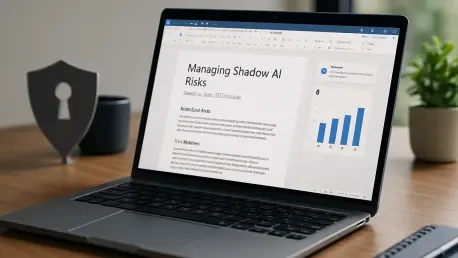

The phenomenon of oversharing is often a reflection of stale file governance rather than a technical failure of the artificial intelligence system itself. In the current landscape, the rapid adoption of artificial intelligence has outpaced traditional corporate security measures, giving rise to the pervasive issue of Shadow AI. Employees, driven by an intense desire to meet tight deadlines, frequently turn to unauthorized public chatbots for document summarization and data analysis. This informal adoption creates a massive gap between staff productivity and organizational oversight, as these tools are often utilized without regard for data sovereignty or corporate security standards. To mitigate this, businesses must transition from a reactive posture of simple prohibition to a proactive strategy that provides governed, approved environments for technological innovation. The primary danger of such unsanctioned usage lies in the potential for catastrophic data leakage and intellectual property loss through personal accounts.
Addressing Compliance: The Need for Governed AI
For organizations operating under strict legal frameworks like South Africa’s Protection of Personal Information Act, a basic policy document urging caution is no longer a sufficient defense. In high-pressure environments, the convenience of a tool almost always overrides abstract warnings, leading to accidental regulatory breaches. True compliance requires a functional infrastructure that physically prevents personal and sensitive information from being processed by unauthorized external services. By offering a concrete, secure alternative, businesses can satisfy the user’s need for efficiency while simultaneously meeting the legal department’s demands for data protection and auditability. The shift toward integrated AI solutions ensures that data remains within the corporate boundary, preventing the ingestion of proprietary information by public models. This approach transitions the responsibility from the individual to a robust, system-wide framework designed to handle modern privacy demands.
Microsoft 365 Copilot serves as a viable solution to the Shadow AI dilemma by integrating advanced capabilities directly into a controlled corporate perimeter. Because it operates within the existing Microsoft ecosystem, it ensures that prompts and responses are never used to train underlying foundation models, maintaining strict data privacy. Furthermore, the tool utilizes Microsoft Graph to respect current user permissions and access controls, ensuring that the AI only interacts with information the user is already authorized to see. This integration allows management to apply data loss prevention policies through tools like Microsoft Purview, bringing AI usage under the umbrella of administrative oversight. This technological alignment ensures that productivity gains do not come at the cost of security, providing a seamless experience that mirrors the public tools employees rely on, but with the necessary guardrails to protect corporate interests and sensitive data assets.
Preparing Data Architecture: Ensuring Secure AI Deployment
A critical hurdle in AI integration is the risk of oversharing, where the AI surfaces sensitive files that a user has permission to see but no longer has a legitimate business reason to access. This issue is rarely a fault of the AI itself but rather a reflection of stale permissions and poor file governance within SharePoint or OneDrive environments. Before a wide-scale rollout, organizations must undertake a rigorous review of their data architecture to identify redundant permissions and classify information correctly. This preparation phase is essential, as it forces a cleanup of the company’s digital landscape and closes hidden vulnerabilities that the generative engine would otherwise expose during normal operations. By addressing these legacy issues, IT departments can create a more secure foundation for all collaborative tools, not just artificial intelligence. This proactive cleaning process reveals just how much data has drifted out of proper control over time.
Effective data management requires the deployment of sophisticated tools such as Microsoft Purview to enforce data loss prevention policies and automate the classification of sensitive materials. When information is correctly tagged and permissions are limited to the principle of least privilege, the AI behaves as a secure assistant rather than a potential liability. This administrative oversight is crucial for tracking how data is utilized across different departments and ensuring that high-level security decisions are not left to untrained staff. The objective is to build a transparency layer where every interaction is logged and every piece of information is accounted for within a governed framework. This level of control is impossible with public chatbots, making the enterprise version the only logical choice for companies that prioritize confidentiality. Refining these architectural elements ensures that the AI respects internal hierarchy and the privacy standards vital for corporate integrity.
Strategic Phased Implementation: Moving Toward Enablement
Rather than an immediate, company-wide deployment, a strategic and phased approach allows leadership to observe how employees interact with AI under real-world conditions. By starting with a controlled pilot group, such as specialized programs designed for twenty-five users, IT departments can conduct a behavioral analysis to determine if current policies are practical or if employees require more specialized training. This testing phase is instrumental in refining governance rules and ensuring that information is being accessed appropriately before scaling. Ultimately, this method aligns technological growth with the company’s culture, framing AI policies as a support system that empowers the workforce rather than a set of restrictive hurdles. Monitoring these initial interactions provides invaluable data on which departments benefit most and where additional guardrails are necessary. It also allows for the adjustment of prompts to better suit specific business needs before the full release.
The decision to adopt a governed AI environment proved to be the most effective way to neutralize the risks associated with informal tool usage while maintaining high productivity levels. Organizations that implemented Microsoft 365 Copilot successfully transitioned from a defensive posture to an offensive strategy of technological enablement. By addressing the underlying issues of file governance and stale permissions, leadership established a secure perimeter that protected sensitive information without hindering the speed of work. The phased rollout provided the necessary insights to refine internal policies and ensure that the workforce was adequately trained for the new era of digital assistance. Moving forward, the focus remained on continuous auditing and the evolution of data classification strategies to keep pace with emerging threats. This proactive approach not only satisfied regulatory requirements but also fostered a culture of responsible innovation that valued both security and speed.