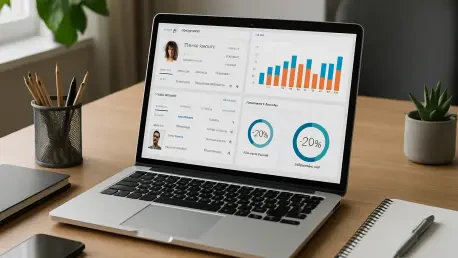

HiBob utilizes a connected record philosophy where Core HR and talent management draw from the same database to prevent the friction of acquired toolsets. This fundamental design choice represents a significant departure from the legacy architecture of many competing systems that have grown through disparate acquisitions, leading to a fragmented user experience and unreliable data synchronization. For organizations surpassing the fifty-employee threshold, reliance on a single source of truth becomes a non-negotiable requirement for sustainable growth. When a company experiences rapid expansion, the administrative burden of manually reconciling payroll records with performance data or benefits enrollments can lead to costly errors and employee dissatisfaction. By centralizing all employee information within a unified database, HR professionals can ensure that every action—from a promotion to a change in tax status—propagates through the entire system instantaneously. This level of technical cohesion allows leadership teams to focus on strategic initiatives and cultural alignment rather than the mundane tasks associated with data entry and record maintenance. As the workforce doubles or even triples in size, the ability to maintain a clear, real-time view of organizational health is what separates successful enterprises from those that struggle with operational silos.
Strategic Evaluation: Assessing the Core Benchmarks of Growth
Integrity of Core Records: Establishing a Single Source of Truth
Ensuring the absolute integrity of core records requires the consistent establishment of a definitive single source of truth across all organizational systems and data management frameworks.
A robust Human Resources Information System must serve as the primary engine for organizational data, allowing the core database to inform every other module without manual intervention. In the current landscape, the most effective platforms are those that support multiple legal entities and dynamic organizational charts that managers can update independently. When the core record is truly integrated, it eliminates the need for periodic data exports and imports, which are historically the primary source of data drift and reporting inaccuracies. For a scaling company, this means that an update to an employee’s department or reporting line automatically updates their permissions in external systems, their payroll cost center, and their eligibility for specific benefits. The integrity of this record ensures that the data used for executive decision-making is identical to the data used for processing the weekly pay run, fostering a culture of transparency and accountability throughout the company.
Beyond simple data storage, the sophistication of a modern core record lies in its ability to handle complex, nonlinear organizational structures common in agile environments. As companies grow, they often adopt matrix management styles where employees might report to different leaders for different projects. A top-tier HR platform must accommodate these nuances without breaking the underlying logic of the database or requiring a complete overhaul of the system architecture. This flexibility allows Human Resources teams to scale the organization’s structure in real time, reflecting the actual operational reality rather than a rigid, outdated hierarchy. Furthermore, by empowering managers to handle routine administrative changes through self-service portals, the HR department is freed from the role of data gatekeeper. This shift transforms the HR function into a strategic partner that can focus on workforce planning and talent optimization while the software maintains the precision of the underlying records.
Payroll and Benefits Architecture: Native Engines versus Partner Integrations
Distinguishing between native payroll engines and third-party integrations is a critical step in the vendor selection process, especially for organizations with a global footprint. A native payroll engine is built directly into the HR platform, ensuring that every deduction, tax withholding, and bonus is calculated using live data from the core record. This approach minimizes the risk of human error and ensures that the payroll run is always consistent with the latest updates in employee status. For global operations, understanding which countries are supported natively versus through a third-party aggregator is essential for long-term financial modeling. When a system relies on external partners for payroll, there is often a delay in data synchronization, which can lead to discrepancies during high-stakes periods such as monthly closings or annual tax filings. Choosing a platform with extensive native capabilities provides a higher level of control and a more seamless experience for the finance department.
The integration of benefits administration directly with the payroll cycle further enhances system reliability by eliminating the need to manually re-enter sensitive data. In many legacy setups, benefits providers operate on entirely different platforms, requiring HR staff to manually update enrollment changes across multiple portals. This manual process is not only time-consuming but also prone to significant errors that can jeopardize an employee’s health coverage or financial security. A platform where benefits and payroll share a single database ensures that updates, such as new hire enrollments or qualifying life events, are automatically reflected in the next pay cycle. This level of interconnectivity ensures that employer contributions and employee deductions are always accurate, reducing the burden of manual audits and reconciliation. As a company scales, the complexity of managing diverse benefit plans across different regions increases, making this level of automation a prerequisite for maintaining operational excellence and compliance.
High-Growth Platforms: Leading Solutions for the Mid-Market
HiBob: Connectivity and Global Expansion
The Bob platform by HiBob has established itself as a premier choice for companies scaling past fifty employees by focusing on the user experience and the “connected record” philosophy. Its primary strength lies in its ability to offer advanced analytics and an AI companion within the core package, enabling HR teams to derive actionable insights from workforce data without needing a separate business intelligence tool. The system is built to grow alongside the organization and currently supports thousands of companies in more than 170 countries. For international firms, HiBob’s commitment to GDPR compliance and its strategic EU data hosting are major advantages that simplify the complexities of regional data privacy laws. By providing a modern, consumer-grade interface, the platform ensures high employee adoption, which leads to more accurate and comprehensive data collection across the entire organization.
In the realm of payroll and talent management, HiBob offers a sophisticated mix of native and hub-based solutions to accommodate a global workforce. While it runs its own native payroll for the United States and the United Kingdom, it uses a dedicated Payroll Hub to provide seamless connectivity with local providers in other jurisdictions. This hybrid approach allows companies to centralize their global payroll oversight while still benefiting from the specialized knowledge of local experts. The talent management module is equally robust, allowing managers to conduct performance reviews with a clear view of compensation history and budget guardrails. This integration prevents the common problem of managers promising raises or promotions that fall outside the company’s financial planning. The result is a more disciplined and data-driven approach to talent development that supports the organization’s long-term growth objectives without sacrificing financial oversight.
BambooHR provides intuitive scaling solutions designed to enhance transparency and streamline management for mid-market organizations through a centralized platform
BambooHR remains a staple in the HR technology market, particularly for small- to mid-sized businesses that value simplicity and clear, tiered pricing. The platform is organized into Core, Pro, and Elite levels, allowing companies to start with essential functions and add more sophisticated features as their headcount increases. This transparency is a significant draw for startups that need to manage their burn rate while still providing a professional experience for their employees. However, growing organizations must be mindful of the specific limitations inherent in the BambooHR model, such as the fact that payroll and benefits administration are strictly U.S.-only add-ons. For companies looking to expand internationally, this requires forming additional partnerships with platforms like Remote, which can add a layer of complexity to the overall tech stack that some leaders might prefer to avoid.
The “plan ladder” approach used by BambooHR means that critical talent management features, such as performance reviews and salary benchmarking, are often locked behind higher subscription tiers. For instance, the Applicant Tracking System included in the platform imposes caps on the number of open roles based on the chosen plan, which can become a bottleneck during periods of aggressive hiring. Despite these considerations, the platform’s ease of use remains unmatched for U.S.-centric companies that prioritize a straightforward implementation process. The interface is designed to be intuitive for both HR administrators and general employees, reducing the need for extensive training sessions and technical support. This focus on accessibility ensures that the platform quickly becomes a central part of the company culture, helping to standardize processes and improve data accuracy from the very beginning of the scaling journey.
Rippling: The Convergence of HR and IT
Rippling distinguishes itself by positioning its software as a comprehensive “workforce platform” that transcends the traditional boundaries of Human Resources. By integrating HR functions with IT and finance, Rippling allows organizations to manage the entire employee lifecycle—including hardware and software provisioning—from a single dashboard. This unique approach is particularly valuable for tech-forward companies where onboarding a new hire involves not just signing a contract, but also shipping a pre-configured laptop and granting access to dozens of software applications. Rippling’s AI-driven automation can trigger these actions the moment a new record is created, significantly reducing the administrative workload for both the IT and HR departments. This level of cross-functional automation ensures that employees are productive from their first day, which is a vital metric for any company in a high-growth phase.
Despite the power of its unified management system, the modular nature of Rippling’s pricing requires organizations to conduct thorough financial modeling to understand the total cost of ownership. Because companies pay only for the specific modules they activate, the initial price point can be attractive, but the total cost can escalate as the organization adds global payroll, expense management, or Employer of Record services. This flexibility is a double-edged sword; it allows for a highly customized tech stack, but it demands careful oversight to ensure that the budget remains under control as more features are utilized. Nevertheless, for companies that prioritize automation and want to eliminate the silos between their administrative departments, Rippling offers a level of operational efficiency that is difficult to replicate with a collection of separate point tools. The platform’s ability to act as a central hub for all workforce-related tasks makes it a formidable contender for any scaling enterprise.
Industry Standards: Reliable Solutions for Established Organizations
Gusto and Paylocity: Administrative Reliability
Gusto has long been recognized as the gold standard for payroll-first HR, primarily serving U.S.-based startups and midsize firms that value compliance and simplicity. The platform excels at automating the filing of federal, state, and local taxes, a feature that is essential for companies operating in multiple jurisdictions within the United States. Beyond its payroll strengths, Gusto offers a robust contractor payment system that covers over 120 countries, making it an excellent choice for organizations that rely heavily on a global gig workforce. While it may lack the deep talent management features found in enterprise-grade HCM systems, its focus on payroll accuracy and ease of administration makes it a reliable foundation for companies that want to ensure their employees are paid correctly and on time without unnecessary complexity. The transparent, month-to-month billing model provides additional flexibility for firms that are still navigating their early growth phases.
In contrast, Paylocity positions itself as an all-in-one suite that leverages advanced AI agents under its “Ignite AI” brand to streamline complex administrative tasks. These AI agents are specifically designed to assist payroll administrators by providing plain-language explanations for payroll variances before a run is finalized, which significantly reduces the risk of errors. This modular system allows growing companies to add features like learning management systems and employee engagement surveys as their internal needs become more sophisticated. The emphasis on AI-driven insights helps HR teams identify trends in turnover or engagement before they become critical issues, allowing for a more proactive approach to workforce management. For companies that want a traditional, powerful payroll engine supplemented by modern, data-driven tools, Paylocity provides a comprehensive solution that can adapt to a wide variety of organizational needs and industries.
Workday and ADP: Enterprise Power
Workday HCM is widely considered the heavy hitter of the enterprise software world, frequently leading industry assessments for its capabilities in managing large, complex workforces. While historically associated with companies having more than a thousand employees, Workday has increasingly targeted the mid-market by introducing more flexible pricing and consumption-based models for its AI features. The introduction of Sana AI allows organizations to use “Flex Credits” for specific tasks like autonomous data retrieval or complex workflow automation, providing a high level of sophistication without requiring a massive upfront investment in every possible module. With its own native payroll engine in major global markets and an extensive network of partners for other regions, Workday remains the top choice for organizations that require deep, enterprise-level reporting and the ability to manage a highly diverse and distributed workforce from a single, powerful platform.
ADP Workforce Now represents the flagship offering for companies that have outgrown the basic payroll services typically used by very small businesses. One of ADP’s most significant advantages is its massive support network and the inclusion of compensation benchmarking as a standard feature, which allows HR leaders to ensure their salary offers remain competitive in a rapidly changing labor market. While some organizations find the interface and tiered restrictions on features like time tracking to be less modern than some of the newer market entrants, the reliability and reputation of the ADP brand continue to make it a safe choice for established organizations. The platform’s ability to combine payroll with high-level expert advice and advanced analytics provides a level of security that is highly valued by finance and HR executives who prioritize compliance and stability over cutting-edge UI design.
Global Specialties: Maintaining Comprehensive Global Records and Implementing Effective Shift Optimization Strategies
Deel HR has undergone a rapid transformation from a niche provider of Employer of Record and contractor management services into a full-scale Human Resources Information System. It is uniquely positioned to serve remote-first or globally distributed companies because it places every type of worker—direct employees, contractors, and EOR staff—on a single, unified record across more than 150 countries. This eliminates the need for separate systems to manage international teams, which is a common source of administrative headaches for scaling firms. While the entry price for the core record is highly competitive, companies must be aware that costs increase as they adopt advanced modules for performance management and compensation planning. For organizations that plan to hire talent wherever it exists in the world, Deel provides the most streamlined path to global compliance and centralized workforce management available today.
UKG Pro focuses on a “people-first” approach by blending traditional HR and payroll functions with sophisticated workforce management tools designed for industries with complex scheduling needs. Its “Bryte AI” is particularly effective at forecasting labor demand and optimizing employee shifts, making it an essential tool for sectors like healthcare, retail, and manufacturing. By ensuring that the right people are in the right place at the right time, UKG Pro helps organizations improve both operational efficiency and employee satisfaction. The platform also claims extensive global payroll support, though the balance between native engines and partner integrations varies by region. For companies where the management of hourly workforces and complex shift patterns is as critical as the core HR record, UKG Pro offers a level of specialized functionality that more generalist platforms often struggle to match, providing a robust solution for large-scale workforce optimization.
Technology Trends: Evolving Standards in Human Resources
The Rise of Agentic AI and Automation represents a significant shift in how intelligent systems interact with complex digital environments
The transition from basic chatbots to “agentic” AI represents the most significant technological shift in the HR software landscape as of 2026. Unlike the previous generation of AI that focused on drafting simple text or answering frequently asked questions, today’s agentic AI is capable of identifying payroll anomalies, forecasting future staffing needs, and automating multi-step approval workflows with minimal human intervention. Platforms such as Paylocity, UKG, and Workday have integrated these agents directly into their core processes, allowing the software to act as a proactive assistant rather than a passive tool. For example, an AI agent might notice that a specific department has a higher-than-average turnover rate and automatically generate a report for HR leadership, suggesting potential causes based on exit interview data and internal surveys. This level of automation reduces the mental load on HR professionals, enabling them to focus on high-impact cultural initiatives.
Despite the increasing autonomy of these systems, the industry consensus remains firmly rooted in the idea of the “AI copilot,” where human sign-off is required for any significant changes to employee records or company data. This safeguard ensures that a human remains at the center of human resources, preventing the dehumanization that could occur if administrative decisions were left entirely to algorithms. The best platforms in 2026 are those that use AI to surface critical information and suggest actions while leaving the final decision to a qualified professional. This partnership between human intuition and machine efficiency allows scaling companies to maintain a high level of administrative precision without hiring a massive team of coordinators. As these agentic tools continue to mature, they will become the primary differentiator for organizations looking to scale rapidly while maintaining a lean and efficient back-office operation.
Globalization and Strategic Consolidation
The globalization of the mid-market has fundamentally changed what is expected from a standard HRIS, as even companies with fewer than a hundred employees are now frequently hiring talent across international borders. This shift has forced software providers to either build their own native international payroll engines or form deep, strategic partnerships with Employer of Record services. The ability to manage a global workforce from a single dashboard is no longer a luxury for large enterprises; it has become a core requirement for any business that wants to remain competitive in a global talent market. This integration allows companies to tap into specialized skills in different regions without the traditional administrative overhead of setting up local legal entities or navigating foreign tax laws. By centralizing this data, HR leaders can maintain a consistent company culture and provide a uniform experience for all employees, regardless of their geographic location.
Furthermore, the strategic consolidation of HR tools has become a top priority for leadership teams looking to avoid the burnout and errors associated with managing a fragmented tech stack. The era of using separate “point tools” for every individual HR task is coming to an end, as the data reveals that these silos are the primary cause of administrative inefficiency. The most successful organizations are moving toward platforms that can act as a “single source of truth,” connecting every aspect of the employee lifecycle from recruitment to retirement. This consolidation not only improves data accuracy but also provides a better experience for employees, who no longer have to navigate multiple portals to check their paystubs, request time off, or complete a performance review. For a scaling company, this simplicity is essential for maintaining momentum and ensuring that the administrative infrastructure does not become a bottleneck for growth.
Financial and Operational Analysis: Making the Final Decision
Pricing Models: Transparency versus Customization
The human resources software market is currently divided into two distinct pricing philosophies: transparent tiers and quote-based customization. Vendors like BambooHR, Gusto, and Deel represent the transparent model, providing clear, per-employee costs that allow for straightforward budgeting and financial planning. While this approach is highly attractive for its simplicity, companies must be wary of “feature gating,” where essential functions are locked behind higher price points that may not be immediately obvious. For instance, a basic plan might cover core records and payroll but require an upgrade to an “Elite” tier to access talent analytics or compensation planning. This model requires HR leaders to conduct a careful audit of their projected needs to ensure that the chosen tier will remain cost-effective as the organization grows and its requirements become more complex.
On the other hand, providers like HiBob, Rippling, and Workday favor a quote-based, customized pricing structure that reflects the specific needs and scale of the organization. While this can lead to a more optimized and tailored feature set, it necessitates a more rigorous evaluation process, including thorough demonstrations and detailed financial modeling. The “all-in” per-employee cost in a quote-based model often includes base fees, module add-ons, and headcount-based scaling, making it more difficult to compare directly with tiered competitors. However, for complex organizations with unique requirements or global footprints, this customization can prevent paying for unnecessary features and ensure that the software perfectly aligns with their operational reality. Ultimately, the choice between these two pricing philosophies depends on the company’s internal budgeting preferences and the degree of complexity they expect to manage during their scaling journey.
Global Payroll Models: Native versus EOR
Understanding the nuances of global payroll coverage was a defining challenge for HR professionals as they evaluated their platform options in the mid-2020s. Native payroll, where the software vendor manages the actual movement of funds and tax filings directly, offered the highest level of integration and data security, though it was often limited to major markets like the United States and the United Kingdom. Organizations that required broader coverage often turned to “Hub” models, which connected their central HRIS to local payroll experts in various countries. While this provided the necessary regional compliance, it sometimes resulted in a slightly different user experience and slower data updates compared to native solutions. The decision between these models often came down to a trade-off between the desire for a unified global interface and the need for deep, localized expertise in specific international jurisdictions.
For companies without a legal entity in a foreign country, the Employer of Record model provides a vital legal framework for hiring local talent quickly. While the per-employee cost of an EOR service is significantly higher than standard payroll, it eliminates the massive upfront costs and legal complexities of setting up a local subsidiary. As organizations reach a certain headcount in a specific region, they often transition from an EOR model to a native or hub payroll system to reduce costs and gain more direct control over their workforce. This strategic progression allows scaling companies to remain agile and compliant while keeping their administrative expenses under control. Selecting a platform that supports both EOR and direct payroll models offers a significant advantage, providing a clear path for international expansion that evolves alongside the company’s maturity and financial resources.
The strategic shift toward unified Human Capital Management systems has proven to be the defining characteristic of successful organizational scaling in recent years. Organizations that moved away from fragmented point tools toward a single source of truth consistently reported higher levels of administrative efficiency and employee satisfaction. By prioritizing the integrity of the core HR record and the seamless integration of global payroll, these companies established a foundation that could withstand the complexities of a distributed workforce. Looking ahead, the next phase of maturity involves the deeper integration of agentic AI to handle the nuances of labor law compliance and predictive talent development. For those navigating the growth phase between fifty and five hundred employees, the path forward requires a meticulous audit of current software capabilities against future headcount projections. Selecting a platform is not merely a matter of purchasing software; it is a commitment to an operational philosophy that values data accuracy and administrative agility as core competitive advantages.