
Logistical changes, such as placing deliveries closer to the point of use, can significantly reduce the physical toll on a workforce without requiring new equipment. This shift in perspective is becoming increasingly vital as organizations recognize that the standard approach of relying on worker posture and lifting technique is no longer sufficient for managing modern industrial demands. Manual handling tasks—encompassing lifting, pushing, pulling, and carrying—remain the primary source of non-fatal workplace injuries across the United States. While safety protocols traditionally emphasized behavior, the persistent rates of back and shoulder strain suggest that the problem is not a lack of training but a failure of environmental design. By treating these tasks as engineering challenges rather than behavioral ones, companies can address the cumulative fatigue that often precedes a major workers’ compensation claim. The focus must transition from the individual’s physical endurance to the deliberate planning of the work environment itself.
The Risk Profile: Challenging Traditional Safety Paradigms
The 2025 Liberty Mutual Workplace Safety Index highlighted that overexertion from outside sources continues to be the leading cause of debilitating workplace injuries, costing billions in direct expenses. These injuries are rarely the result of a single, catastrophic incident but are instead the culmination of repetitive tasks that are slightly too heavy, frequent, or performed in restricted spaces. For risk managers and claims adjusters, these musculoskeletal disorders present a unique difficulty because they often lead to extended periods of restricted duty or long-term disability. The traditional mantra of “lift with your legs, not your back” has proven to be an incomplete solution because it places the entire burden of safety on the worker’s ability to maintain perfect form under imperfect conditions. Even the most athletic employee cannot safely compensate for a load that is positioned too far from the center of gravity or requires an awkward reach above the shoulders.
When examining the hierarchy of hazard controls, behavioral changes—such as training videos and posters—sit at the very bottom, yet they are often the first tools used by safety departments. This reliance ignores the physical realities of modern logistics where speed and volume often override a worker’s focus on posture. Professional safety experts now argue that focusing solely on technique is a form of victim-blaming that fails to account for the systemic issues driving injury rates. Effective risk reduction requires a granular assessment of task variables including weight, reach, vertical height, and the quality of the grip provided on the object. By utilizing international standards like the Manual Handling Operations Regulations and OSHA guidelines, supervisors can begin to see that the risk is inherent in the task rather than the person performing it. Shifting the responsibility to the planning phase ensures that the physical demands of a job do not exceed the baseline of human capability.
Targeted Interventions: Implementing Engineering and Process Controls
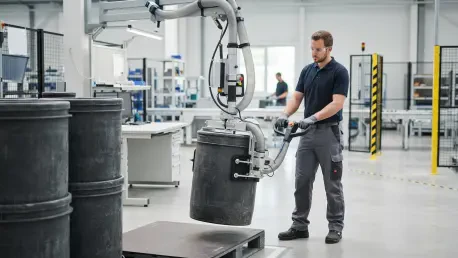
The most robust strategy for eliminating manual handling risk involves mechanical intervention and systemic logistical changes that remove the human element from hazardous movements. Introducing automated conveyors, pallet trucks, and vacuum lifters can transform a high-risk loading dock into a controlled environment where the physical strain on the human body is virtually non-existent. Beyond heavy machinery, organizations are finding success by negotiating with suppliers to deliver goods in smaller, more manageable units that fall within safe lifting limits. For instance, reducing a standard package weight from fifty to twenty-five pounds can dramatically lower the cumulative load a worker handles during an eight-hour shift. These engineering controls provide a permanent safety solution because they do not rely on a worker’s constant vigilance or the need for perpetual supervision. When a task is designed to be physically easy, the likelihood of a mistake leading to a chronic injury is significantly diminished.
In scenarios where manual handling cannot be entirely eliminated, the optimization of the work environment becomes the primary defense against overexertion. High-risk actions such as lifting from floor level or twisting the spine to place a load on a high shelf can be engineered out of the process by implementing adjustable height workstations and pallet positioners. Ensuring that all heavy loads are kept within the “power zone”—between the knees and the chest—allows the human body to utilize its strongest muscle groups without overextending vulnerable joints. Additionally, the use of structured assessment tools like the Manual Handling Assessment Charts (MAC) allows supervisors to implement a data-driven approach to risk. These tools use a traffic-light system to pinpoint whether the frequency of the lift or the distance of the carry is the primary driver of danger. This level of specificity enables targeted interventions, such as rerouting a path to allow for a direct pivot of the feet rather than a spinal twist.
Strategic Planning: Building a Future of Ergonomic Resilience
Long-term risk mitigation is often determined months before a worker ever touches a specific load through the decisions made regarding facility layout and task rotation. When managers move safety oversight out of the corporate office and onto the active floor, they gain the ability to recognize “scope creep”—the gradual increase in product weight or seasonal volume that often goes unnoticed until an injury occurs. Proactive management involves constant evaluation of whether the available tools, such as trolleys or lift tables, are actually being used or if they are gathering dust due to poor placement or lack of maintenance. Training should also evolve from generic classroom sessions to contextual, on-the-job instruction that uses the actual equipment and loads encountered daily. By involving employees in the design of their own workspaces, companies can uncover hidden bottlenecks that lead to rushed, unsafe movements. This collaborative approach turns the workforce into a primary source of ergonomic innovation rather than just a group of individuals to be monitored.
The transition from a behavioral safety model to a design-centered approach represented a fundamental shift in how organizations protected their human capital. By prioritizing the ergonomics of the job over the physical endurance of the employee, leadership teams successfully lowered both the frequency and severity of musculoskeletal claims. This strategy involved the implementation of early reporting systems where minor discomfort was addressed through immediate task modification rather than being ignored until it required clinical intervention. Such transparency simplified the claims process and allowed for a much faster return to work by removing the adversarial nature of injury reporting. Managers found that investing in adjustable racking and mechanical assists provided a higher return on investment than repetitive training cycles. Moving forward, the most resilient organizations were those that treated manual handling as a dynamic engineering problem that required constant reassessment. These deliberate interventions ensured that the workplace adapted to the human.