
The high-altitude political landscape of Colorado is currently witnessing a intense legislative surge as lawmakers attempt to bridge a perceived gap in worker safety left by a retreating federal administration. As the final weeks of the legislative session approach, the state capitol has become a battleground for two pivotal bills, House Bill 26-1054 and House Bill 26-1272, which seek to reclaim regulatory authority from federal hands. This movement is not merely a local policy shift but a calculated response to what many state Democrats describe as the systematic dismantling of the Occupational Safety and Health Administration (OSHA) at the national level. With federal enforcement metrics showing a significant downturn, Colorado is positioning itself as a sovereign guardian of its workforce, even as it grapples with a staggering $1.5 billion budget shortfall that threatens the viability of any new state-run programs. The tension between fiscal austerity and the urgent demand for labor protections has created a high-stakes environment where legislative creativity is the only path forward for survival.
Establishing a State-Level Safety Framework
Legislative Tools for Enforcement and Prevention
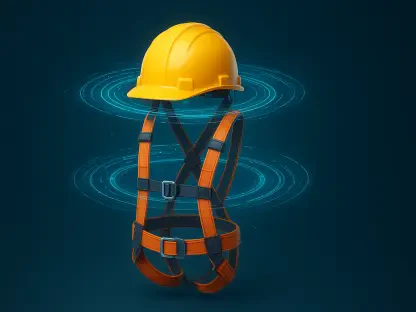
House Bill 26-1054 functions as a sophisticated legal mechanism designed to prevent any degradation of safety standards within the state, regardless of shifting political winds in Washington D.C. By granting the Colorado Attorney General’s Office the specific authority to codify and enforce workplace-safety regulations, the bill essentially creates a state-level mirror of federal protections. Historically, Colorado has lacked the jurisdiction to interfere in matters where federal OSHA holds primary oversight, leaving state officials sidelined during periods of federal deregulation. This new framework would establish a “general duty” clause under state law, mandating that employers maintain an environment free from recognized hazards that are likely to cause death or serious physical harm. Furthermore, the legislation empowers the state to issue stop-work orders in instances of immediate danger, providing a rapid-response capability that bypasses the often-sluggish federal bureaucracy. This shift ensures that if federal rules are rescinded or weakened, the state can instantly transition those requirements into enforceable Colorado statutes.
Building upon this regulatory foundation, the state is also addressing the specific physiological risks posed by Colorado’s increasingly volatile climate through House Bill 26-1272. While the initial version of this bill sought to impose rigid mandates for any work conducted in temperatures exceeding 80 degrees or falling below 30 degrees, the current iteration focuses on data-driven infrastructure and voluntary compliance. The Colorado Department of Labor and Employment is tasked with the creation of a comprehensive model for a Temperature-Related Injury and Illness Prevention (TRIIP) plan, which serves as a blueprint for businesses to mitigate the effects of extreme heat and cold. This approach emphasizes the collection of granular data regarding workplace injuries, which advocates believe will provide the empirical evidence necessary to justify more stringent mandates in the coming years. By prioritizing the health of outdoor laborers in the construction and agricultural sectors, the bill seeks to address a growing category of workplace hazards that federal standards have often struggled to regulate effectively at a localized level.
Addressing the Scope of State Jurisdiction
The implementation of HB 1054 represents a fundamental departure from the traditional reliance on federal primacy in labor law, setting a precedent for state-level autonomy in industrial oversight. For decades, the division of labor between state and federal authorities was clearly defined, with the state deferring to OSHA for the vast majority of safety inspections and fine assessments. However, the current legislative push seeks to create a dual-jurisdictional environment where the Colorado Attorney General can act independently when federal oversight is deemed insufficient. This move is particularly significant for industries that have seen a rollback in specific federal safety protocols, such as those involving specialized machinery or high-risk chemical handling. By creating a state-level cause of action, the bill allows employees and state prosecutors to pursue remedies in state courts, potentially leading to faster resolutions than the federal administrative law system currently provides. This proactive stance is intended to send a clear message to the business community that Colorado will not tolerate a race to the bottom in safety standards.
In contrast to the broad enforcement powers of HB 1054, the framework established by HB 1272 introduces a specialized focus on environmental health that has been largely overlooked by federal regulators. By mandating the reporting of temperature-related illnesses, the state is effectively building a first-of-its-kind database that tracks how Colorado’s unique geography and weather patterns impact worker productivity and physical well-being. This focus on environmental factors is a direct response to the increasing frequency of extreme weather events that threaten the lives of those in the most vulnerable labor sectors. Even though the TRIIP plan is currently voluntary, its existence provides a standard of care that can be used in civil litigation to determine whether an employer acted reasonably under hazardous conditions. This strategy of “soft regulation” allows the state to influence corporate behavior without immediately triggering the massive administrative costs associated with a mandatory inspection regime. It represents a tactical compromise that keeps the conversation about worker safety alive while respecting the current fiscal limitations of the state treasury.
Evaluating the Efficacy of Federal Protections
Divergent Narratives on OSHA and Administrative Burdens
The debate over these bills is largely centered on a fundamental disagreement regarding the current state of federal enforcement and whether a vacuum truly exists for Colorado to fill. Labor advocates and organizations like Good Jobs First present a bleak picture of the national landscape, citing a 35% decrease in completed OSHA investigations and a 47% drop in penalties over the past several months. In Colorado, the statistic of 92 job-related fatalities in 2024 serves as a grim focal point for those arguing that federal oversight is no longer a sufficient deterrent for negligent employers. Proponents argue that the federal government’s focus has shifted away from proactive prevention and toward reactive, narrow investigations that do not address systemic safety failures. From this perspective, the state has a moral and economic imperative to intervene, as the cost of workplace injuries and deaths ultimately falls on the state’s healthcare systems and social safety nets. For these advocates, the proposed state bills are not redundant but are essential fortifications against a failing federal infrastructure.
Conversely, the Colorado Chamber of Commerce and various legal experts contend that the narrative of a “dismantled” OSHA is a political exaggeration used to justify an unnecessary expansion of state government. Critics argue that many of the federal changes cited by proponents are highly technical adjustments or exemptions for very specific, niche industries that have no meaningful impact on the general workforce in Colorado. They warn that layering state regulations on top of existing federal rules will create a “moving target” for compliance, where businesses must navigate two different sets of standards and face the prospect of double jeopardy in enforcement actions. This dual-track system could lead to a scenario where a company is cleared by federal inspectors but sued or fined by state authorities for the exact same incident. For small and medium-sized businesses, the administrative burden of tracking divergent state and federal rules could become a significant barrier to growth, potentially driving investment out of the state in favor of regions with a more predictable and unified regulatory environment.
Potential Risks of Regulatory Duplication
The prospect of state agencies and federal inspectors operating in the same workspace raises significant concerns about jurisdictional conflicts and the efficiency of safety audits. When two different entities have the power to mandate safety protocols, the likelihood of contradictory requirements increases, which can paradoxically make a workplace less safe as managers struggle to comply with conflicting orders. For instance, a federal inspector might approve a specific type of fall-protection equipment that the Colorado Attorney General’s office later deems insufficient under new state-specific rules. This type of regulatory friction creates a climate of uncertainty that discourages long-term capital investment in industrial facilities. Opponents of the bills emphasize that the existing federal framework already includes mechanisms for state input and that the current push for independence is a reactionary measure that ignores the benefits of a uniform national standard. They argue that the focus should remain on improving federal cooperation rather than building a redundant and expensive state-level bureaucracy from scratch.
Furthermore, the introduction of private rights of action and state-level stop-work orders could be weaponized in labor disputes, leading to a surge in litigation that has little to do with actual safety improvements. Legal analysts suggest that if the bar for state intervention is set too low, it could lead to a flurry of “speculative” safety claims used as leverage during contract negotiations or as a means of disrupting competitors. The potential for the Attorney General’s office to be drawn into hundreds of localized disputes could quickly overwhelm the department’s resources, regardless of how the bills are funded. Critics also point out that the Department of Labor and Employment has expressed its own skepticism about the hybrid system proposed in HB 1054, fearing that it will lead to administrative chaos rather than a safer work environment. Without seeking official “state primacy” from the federal government—a process that takes years and significant funding—Colorado’s attempt to run a parallel safety program may result in a legal quagmire that benefits trial lawyers more than it protects the average construction worker or farm laborer.
Fiscal Strategies and the Path Forward
Budgetary Maneuvers and the Future of State Oversight
Navigating a $1.5 billion budget deficit required the sponsors of these bills to engage in sophisticated fiscal maneuvering to prevent their legislation from being killed in the Appropriations Committee. For House Bill 26-1054, the strategy involved a “delayed fiscal impact” approach, where the bill was stripped of its initial $1.4 million price tag by stipulating that no new rules would be written or enforced within the current fiscal cycle. This maneuver allowed the bill to advance as a “policy-only” measure, with the understanding that the Attorney General must return to the legislature to request specific funding once a regulatory need arises. While this saved the bill from immediate defeat, it has drawn sharp criticism from Republican lawmakers who view it as a deceptive way to pass massive government expansions without accounting for their inevitable costs. They argue that passing the bill now effectively commits the state to future expenditures that it cannot currently afford, creating a “fiscal time bomb” that will explode in the next budget cycle when the state is forced to hire the nine new employees originally projected.
The path for House Bill 26-1272 was similarly adjusted to fit the “no new costs” mandate, resulting in a significantly scaled-back version of the original environmental safety proposal. By removing mandatory enforcement and focusing on voluntary TRIIP plans and injury data collection, the sponsors reduced the immediate financial requirement to a relatively modest $91,400. This funding is primarily intended for the Department of Labor and Employment to manage the new database and develop the educational materials for businesses. Even this small amount faced scrutiny, with some legislators suggesting that the department should absorb the cost through its existing operational budget, especially given the lack of vocal support from the department’s own leadership. The survival of these bills in a deficit year demonstrates a high degree of political will among the Democratic majority, but it also highlights the precarious nature of state-level labor initiatives when economic conditions are unfavorable. The success of these maneuvers will likely determine the template for future progressive legislation in an era of tightening state resources and limited federal support.
Practical Steps for Implementation and Compliance
As Colorado moves toward a more independent role in workplace safety, the immediate focus for businesses and labor advocates must shift toward proactive adaptation and technical readiness. For employers, the most effective strategy will be the early adoption of the voluntary TRIIP plans outlined in HB 1272, as these documents will likely serve as the “gold standard” for safety during future state inspections or legal proceedings. Companies should begin auditing their current environmental safety protocols and integrating heat and cold stress prevention into their standard operating procedures to avoid being caught off guard by future mandatory shifts. Additionally, businesses must prepare for a more active Colorado Attorney General’s Office by ensuring that their internal safety records are meticulously maintained and easily accessible. Establishing a clear line of communication between corporate safety officers and state labor officials will be essential for navigating the potential overlaps between state and federal audits. This proactive engagement can help mitigate the risks of dual-track enforcement and demonstrate a commitment to safety that may prevent more aggressive state intervention.
Moving forward, the state legislature should prioritize the creation of a clear jurisdictional roadmap to minimize the administrative chaos feared by the Department of Labor and Employment. This involves setting specific triggers for when state rules will supersede or supplement federal OSHA standards, providing much-needed clarity for the business community. Legislators could also explore the possibility of incentive-based compliance, where companies that meet high state safety marks receive tax credits or preferential status for state contracts, thereby encouraging safety without the need for heavy-handed enforcement. For labor unions and advocacy groups, the next phase involves active participation in the data collection process established by HB 1272, ensuring that every temperature-related injury is documented to build a robust case for future protections. The evolution of Colorado’s safety landscape will depend on the state’s ability to balance these new regulatory powers with a transparent and predictable implementation process. By focusing on evidence-based rulemaking and fostering a collaborative relationship between the public and private sectors, Colorado can serve as a national model for state-led worker protection in a post-federal-primacy era.