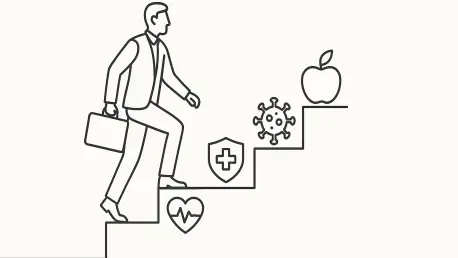

While the United Kingdom has maintained a robust National Health Service for nearly eighty years, a glaring systemic gap has persisted regarding the health of individuals specifically within the context of their employment. Every year, approximately 300,000 people disappear from the workforce due to various health conditions, many of which are entirely manageable with the right support. This exodus has created a paradoxical economic landscape where record-breaking job vacancies exist alongside a ballooning population of individuals who are economically inactive because of illness. Instead of viewing these people as a lost segment of society, the current economic climate demands that human potential be treated as a vital driver of national growth rather than a disposable commodity.
Addressing this crisis requires a structural evolution that matches the scale of the public health system. For decades, the absence of a dedicated infrastructure for workplace health has forced individuals to navigate a fragmented landscape where the NHS, local governments, and private employers operate in isolation. This lack of coordination often leaves struggling workers stranded on waiting lists while their connection to the labor market slowly dissolves. By establishing a Workplace Health System, the goal is to provide the same level of systematic oversight and clinical priority to worker wellness that is traditionally reserved for general public health emergencies.
The Trillion-Dollar Leak: Why Losing Workers Is No Longer Just an HR Issue
The financial implications of workforce attrition have shifted the conversation from the human resources department to the highest levels of economic planning. When a skilled individual leaves a position due to a manageable health issue, the cost is not merely found in recruitment or training but in the total loss of productivity and the subsequent pressure on the welfare state. Economists now recognize that the steady stream of people falling into inactivity is a structural failure that undermines the stability of the entire national economy. Without a proactive mechanism to plug this leak, the country risks a long-term decline in its competitive edge and fiscal health.
Furthermore, the disconnect between public health initiatives and labor market participation has historically led to inefficient spending. Taxpayer funds are often directed toward treating the late-stage symptoms of occupational burnout or physical strain rather than preventing these conditions from occurring in the first place. By reframing workplace health as an economic priority, the focus shifts toward maintaining the existing labor force as a primary strategy for financial stability. This evolution acknowledges that a healthy workforce is the backbone of any sustainable growth model, necessitating a move away from reactive healthcare toward a model of constant, integrated support.
Beyond the Sick Note: Understanding the Shift from Welfare to Workforce Retention
For too long, the government has viewed health-related unemployment primarily through the lens of the welfare system, focusing on benefits rather than reintegration. A radical reframing is now underway, positioning worker retention as the most attainable opportunity for national growth. This shift involves breaking down the silos between the healthcare sector and the business world. When an individual develops a condition that affects their ability to work, they should not be shuffled into a benefits application process; instead, they require a fast-track pathway that keeps them tethered to their professional life.
The timing of this intervention is the most critical factor in determining whether a worker will ever return to their desk. Statistics from 2026 suggest a stark reality: an employee who is absent for four weeks has a 96% chance of returning to their role, but if that absence extends to a single year, the probability of reintegration drops below 50%. This timeframe highlights a narrow window where proactive management can save a career. The Workplace Health System aims to bridge this gap by providing an infrastructure that acts within those first few weeks, ensuring that the transition from a sick note to a long-term disability claim is no longer the default outcome.
The Pillars of the Workplace Health System: From Early Intervention to SME Support
To truly stem the tide of inactivity, the new system focuses heavily on preventative work design rather than just managing existing illnesses. This means moving toward a culture where jobs are intentionally structured to prevent burnout, repetitive strain, and mental fatigue before they take hold. Employers are encouraged to move beyond administrative checklists and toward creating inclusive environments where “good work” is a measurable standard. By focusing on the root causes of workplace illness, the system seeks to build a more resilient labor force that can withstand the pressures of a modern economy.
Immediate clinical intervention serves as a secondary pillar, offering “light-touch” treatments like physiotherapy and mental health talking therapies at the moment they are needed most. By bypassing traditional, lengthy waiting lists, the system allows workers to resolve minor physical or psychological issues before they escalate into chronic disabilities. This rapid-response approach ensures that the path to recovery is as short as possible, minimizing the time a worker spends away from their professional environment. Such interventions are designed to be practical and accessible, removing the barriers that often delay treatment in the standard public health model.
Supporting small and medium enterprises (SMEs) is also a fundamental component of this new framework, as these businesses often lack the internal resources of major corporations. The system introduces “pooled buying power” and insurance-based pathways to give smaller firms the same access to high-quality occupational health services enjoyed by global conglomerates. This leveling of the playing field ensures that a worker’s health support is not determined by the size of their employer’s balance sheet. By centralizing these resources, the Workplace Health System provides a universal standard of care that protects employees across all sectors of the economy.
Rehumanizing the Office: Closing the “Fear Gap” Between Managers and Staff
A significant psychological barrier often prevents successful returns to work, manifesting as a “fear gap” between leadership and employees. Managers frequently worry that initiating a conversation about health might lead to legal grievances or HR complications, while employees fear that admitting to a struggle will jeopardize their job security. This mutual apprehension leads to a breakdown in communication exactly when it is most needed. The Workplace Health System addresses this by introducing independent caseworkers who act as mediators, facilitating honest and realistic plans for reintegration without the pressure of rigid corporate procedures.
These third-party caseworkers serve as a bridge, helping to co-construct return-to-work plans that prioritize the stability of the employee over administrative convenience. Lessons from regional pilots in areas like South Yorkshire and Hull have shown that having human support embedded within the business environment is far more effective than remote oversight. When an employee feels that their health is being managed with empathy and expertise rather than through a series of legalistic checklists, they are much more likely to remain engaged and motivated. This “rehumanizing” of the workplace is essential for rebuilding the trust necessary for long-term retention.
A Data-Driven Recovery: Leveraging Intelligence to Measure Work Ability
A system is only as effective as the data that informs it, which is why the establishment of the Workplace Health Intelligence Unit (WHIU) is a cornerstone of this new paradigm. Historically, few employers had the tools to measure how well they were retaining staff following a health crisis or to identify which departments were seeing the highest rates of attrition. The WHIU provides nationally consistent metrics to measure “work ability,” allowing companies to see a clear picture of their performance. This data-driven approach enables businesses to move away from guesswork and toward evidence-based strategies for maintaining their workforce.
Through government-backed initiatives like WorkWell and Connect to Work, local regions are now testing these specialized plans to support hundreds of thousands of individuals with disabilities and long-term health conditions. These programs collect confidential benchmarking data, allowing employers to compare their retention rates against national standards and identify hidden flaws in their corporate culture. By leveraging this intelligence, the Workplace Health System creates a feedback loop where best practices are identified, shared, and implemented across the country. This regional testing ensures that the system is refined in the real world before being scaled to a national level.
The shift toward a comprehensive Workplace Health System represented a fundamental change in how the relationship between labor and wellness was understood. The initiative recognized that the economic health of the nation was inextricably linked to the physical and mental health of its workers. By moving away from reactive welfare models and toward proactive, data-driven support, the system provided the necessary tools to keep people in work. The integration of clinical support, independent mediation, and SME resources finally addressed the structural gaps that had previously allowed human potential to go to waste. Ultimately, these strategies focused on a future where professional longevity became a standard expectation rather than a fortunate exception.