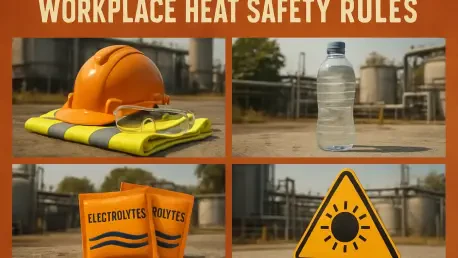

Across the American landscape, from the blistering asphalt of highway construction sites to the sweltering corridors of industrial warehouses, the fundamental legal expectations for worker protection are undergoing a historic transformation. For decades, the management of heat-related illness relied on a loose patchwork of voluntary guidelines and the broad General Duty Clause of the Occupational Safety and Health Act, leaving millions of laborers vulnerable to record-breaking thermal conditions. However, the paradigm is shifting as federal and state authorities transition toward prescriptive, enforceable mandates that treat extreme heat as a predictable occupational hazard. This regulatory evolution is no longer confined to traditional outdoor sectors like agriculture; instead, it encompasses indoor environments where climate control is insufficient, such as commercial kitchens and distribution centers. By codifying specific requirements for hydration and rest, lawmakers are signaling that the era of discretionary heat safety has officially ended.
Federal Oversight: National Emphasis Program and Enforcement Priorities
OSHA’s National Emphasis Program: Target-Based Inspection Strategies
Federal activity has ramped up significantly under the Occupational Safety and Health Administration, which recently revised its National Emphasis Program to target heat hazards with unprecedented precision. This initiative identifies dozens of high-risk industries for increased inspections, reflecting a twelvefold rise in heat-related enforcement actions over the last few years as the agency seeks to deter negligence. Rather than waiting for a complaint or a tragedy to occur, inspectors are now empowered to conduct proactive site visits whenever the National Weather Service issues a heat advisory or warning for a specific geographic area. This shift in strategy represents a move toward a more preventative enforcement model, where the mere existence of high temperatures triggers a legal scrutiny of a company’s safety protocols. By focusing on industries like roofing, landscaping, and mail delivery, federal authorities are making it clear that heat safety is a top-tier priority that carries significant financial risks.
Federal Rulemaking: The Drive Toward a National Safety Framework
In addition to these heightened inspections, the agency has introduced a proposed formal rule that would establish a national framework for heat illness prevention, signaling a permanent change in the American business landscape. This forthcoming regulation aims to provide a baseline of protection that applies uniformly across state lines, closing the gaps left by a fragmented system of local laws. The proposed rule is expected to mandate specific triggers for intervention, such as temperature thresholds that require employers to provide shade and cool drinking water without being asked. It also emphasizes the importance of a monitoring system to ensure that workers are never left alone when they are at risk of heat-overload. This federal move is a response to the limitations of existing standards, which often lacked the specificity needed for effective prosecution. As this rule moves toward final implementation, companies are being forced to re-evaluate their internal safety cultures to meet these more rigorous federal expectations.
State-Level Models: Prescriptive and Performance-Based Approaches
The Prescriptive Model: Maryland’s Tiered Safety Triggers
Maryland has emerged as a leader in the prescriptive model of regulation, implementing a tiered system that triggers specific safety measures based on the heat index rather than subjective observation. When temperatures hit 80°F, employers must provide access to water and shade, with even stricter requirements like mandated rest breaks and physiological monitoring kicking in once the thermometer reaches 90°F. This clear, data-driven roadmap provides businesses with certainty regarding their legal obligations while ensuring workers receive immediate relief as temperatures climb to dangerous levels. Such objective thresholds remove the guesswork for supervisors, who previously had to decide on their own when conditions were too hazardous for continued labor. By establishing these hard triggers, the state has created a blueprint that other jurisdictions are closely watching as they develop their own standards. This model prioritizes immediate physical intervention over administrative flexibility, ensuring that safety is the primary operational metric.
The Performance-Based Model: Nevada’s Flexible Safety Standards
In contrast, Nevada has adopted a performance-based standard that emphasizes flexibility but has faced significant criticism from labor advocates for being too reactive. Instead of using specific temperature triggers, Nevada requires certain employers to conduct hazard analyses and only mandates rest periods when a worker begins to show symptoms of distress. This approach places the burden on identifying illness after it has already started, highlighting a major philosophical divide in safety law between prevention and reaction. Proponents of this model argue that it allows businesses to tailor their safety measures to the specific physical demands of their unique work environments, rather than following a rigid state-wide mandate. However, the lack of objective thresholds can make enforcement difficult and may leave workers vulnerable if supervisors fail to recognize the early signs of heat exhaustion. This regional experimentation serves as a testing ground for what may eventually become standard national policy.
The Essential Pillars: Written Plans and Environmental Controls
Documentation Requirements: The Written Heat Illness Prevention Plan
Despite the differing legal structures between various states, several core requirements are appearing in almost every new regulation, with the written Heat Illness Prevention Plan serving as a central pillar. These documents force companies to move beyond verbal instructions and instead record exactly how they intend to handle extreme weather events before the heat season begins. A robust plan must outline the specific locations where shade will be provided, the methods used to ensure water is consistently available and cool, and the exact protocols for responding to medical emergencies. By requiring these plans to be site-specific, regulators are ensuring that safety measures are tailored to the actual conditions workers face, whether they are in a high-rise construction project or a cramped warehouse. Furthermore, these written plans are often the first thing an inspector asks for during a visit, making them a vital component of legal defense and proactive safety management.
Environmental Controls: Implementing Water, Rest, and Shade
The operational heart of these emerging regulations typically centers on the “water, rest, and shade” trio, which safety experts consider the most effective frontline defense against heat exhaustion and stroke. While these concepts seem simple, the new rules add a layer of mandatory precision that was previously missing from most workplace safety manuals. For example, water must be provided at a rate of at least one quart per hour per employee, and it must be maintained at a temperature that encourages consumption. Shade requirements are equally specific, often mandating that cooling areas must be open to the air or ventilated and large enough to accommodate the entire shift of workers during their rest periods. In indoor settings where shade is not applicable, employers are increasingly required to provide access to air-conditioned break rooms or use high-powered fans to lower the effective temperature. This shift from recommended to required means that businesses must integrate these human needs into their daily logistics.
Operational Standards: Acclimatization and Employee Training
Biological Adaptation: The Critical Role of Acclimatization
A critical component of these emerging laws is the focus on acclimatization, which is the biological process that helps workers gradually build up a tolerance to high temperatures over several days. Statistics show that the vast majority of heat-related fatalities occur within a worker’s first few days on the job, making it essential for employers to phase in workloads for new hires and returning staff. Mandatory acclimatization protocols typically require that new employees work only a fraction of a full shift in the heat on their first day, slowly increasing the duration over a week-long period. This slow introduction allows the body to adjust its sweating and heart rate mechanisms, significantly lowering the risk of sudden cardiovascular collapse. By institutionalizing these habits, companies can reduce the risk of acute medical crises and foster an environment where safety is shared. This practice is becoming a standard requirement for any business operating in high-temperature environments.
Emergency Response: Training and Symptom Recognition
Mandatory training for both staff and supervisors is becoming a standard requirement to ensure that everyone can recognize early warning signs such as dizziness, heavy sweating, or mental confusion. This education is designed to empower employees to speak up without fear of retaliation when they feel the effects of heat stress, creating a culture of mutual accountability. Supervisors must be trained not only to identify symptoms but also to implement emergency protocols, including the correct procedures for cooling a victim while waiting for medical professionals to arrive. Effective training programs often include drills and clear communication chains to ensure that response times are minimized during a crisis. As regulations tighten, the failure to provide comprehensive training is being treated with the same severity as the failure to provide physical cooling resources. This focus on human factors ensures that the technical aspects of safety plans are supported by a knowledgeable and vigilant workforce.
Strategic Adaptation: Data Collection and Future Compliance
Data Collection: Building the Case for Mandatory Standards
In states where mandatory rules have faced political pushback, lawmakers turned to data collection as a strategic compromise to build a case for future legislation. Colorado and Arizona focused on gathering empirical evidence of heat-related injuries and providing non-binding guidance to industries while they monitored the impact of rising temperatures on their workforces. This trend suggested that even in regions without current mandates, the groundwork was being laid for more formal requirements as the connection between heat and labor productivity became better documented. The overall trajectory of workplace safety pointed toward a future defined by structured, mandatory heat protocols rather than voluntary best practices. While some legislative efforts in states like Illinois stalled, the success of rules in Maryland and the pending federal standards indicated that the momentum was irreversible. This proactive shift ensured that companies were ready for the next era of labor protection laws.
Moving Forward: Integrated Safety Management Systems
Organizations that proactively integrated these standards into their core operations found themselves better positioned to maintain productivity during extreme weather events. By the time federal mandates were fully realized, the industry had already moved toward a culture of prevention rather than reaction. These steps successfully bridged the gap between basic survival and high-performance safety management in a warming world. Employers across the nation prepared to transition toward formalized heat safety management as these regional experiments refined their regulatory approaches. This shift required businesses to invest in better cooling technologies and more sophisticated scheduling software to manage rest periods effectively. Ultimately, the transition to mandatory heat rules resulted in a more resilient workforce and a clearer legal framework for all stakeholders involved. The adoption of these protocols was not merely a compliance exercise but a strategic evolution that defined the modern American workplace and protected its most valuable assets.