
As record-breaking heatwaves continue to reshape the American landscape, laborers on the front lines of construction, delivery, and agriculture are finding themselves in a perilous battle against rising mercury levels without a federal shield to protect them. The current regulatory environment remains fragmented, as the Occupational Safety and Health Administration has yet to finalize a comprehensive federal heat standard that would mandate rest breaks and shade for all outdoor employees. This administrative gap has created a high-stakes scenario where safety is determined by zip code rather than by universal human rights. While a draft rule was proposed during previous administrative cycles, the bureaucratic process has slowed to a crawl, leaving millions of individuals vulnerable to heatstroke and exhaustion. Consequently, the focus has shifted toward grassroots movements and state-level initiatives that attempt to fill the void left by national oversight, turning local worksites into the primary battlegrounds for climate-related labor reform.
The Regulatory Vacuum: Labor Organizing and Peer Education
With the federal government unable to provide immediate relief, labor unions have stepped into the breach to transform individual employees into active safety monitors. Organizations like the Teamsters have pioneered a peer-to-peer education model where veteran workers utilize handheld thermometers to document extreme conditions in real-time. These organizers do not wait for a periodic inspection from an understaffed government agency; instead, they conduct regular safety huddles in parking lot environments and loading docks to discuss hydration protocols. By teaching workers how to identify the early signs of heat exhaustion in their colleagues, these unions have established an internal defense mechanism that operates independently of official mandates. This approach emphasizes that while laws are pending, the immediate preservation of life depends on collective knowledge and the courage to demand breaks when the heat index reaches dangerous levels. This cultural shift has effectively redefined the role of the modern laborer.
Significant strides have also been achieved through the rigorous negotiation of labor contracts that specifically address the realities of a warming planet. For instance, the recent inclusion of air-conditioning requirements in new delivery vehicle fleets represents a monumental victory for logistics workers who spend their days in metal ovens. However, these successes are often incremental, as the technology frequently fails to reach the cargo areas where packages are sorted under intense solar radiation. To mitigate these specific risks, safety committees have implemented “heat-day” protocols that mandate increased staffing during peak temperatures to allow for more frequent rotation of duties. These contractual wins provide an enforceable framework that protects workers even when the political climate remains hostile to new regulations. By embedding these protections into the fabric of employment agreements, unions have created a stable set of expectations that employers must follow or face immediate legal and operational consequences.
Municipal Strategies: Localized Responses to Extreme Heat
New York City has emerged as a leader in municipal intervention by officially recognizing extreme heat as a public health crisis that requires the same level of urgency as a natural disaster. Through executive actions, local officials have moved beyond simple weather advisories to implement enforceable mandates that protect outdoor workers from the deadliest effects of the sun. These policies often include the deployment of mobile outreach teams that monitor high-risk construction sites and provide immediate medical assistance to those showing signs of distress. By shifting the perspective from individual responsibility to city-led oversight, the municipal government has created a safety net that captures those who fall through the gaps of private-sector standards. This initiative also involves significant investments in infrastructure, such as the expansion of urban cooling systems designed to lower the ambient temperature in industrial districts. This multi-layered approach demonstrates that cities possess the tools to safeguard residents.
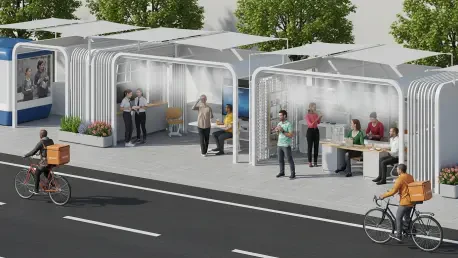
The success of these municipal efforts often hinges on the active collaboration between city agencies and local community organizations that possess deep roots in specific neighborhoods. These partnerships have resulted in the establishment of hundreds of pop-up cooling centers located strategically near major transportation hubs and active worksites. These stations offer more than just air conditioning; they serve as critical hubs for the distribution of water, electrolytes, and educational materials printed in multiple languages. By placing these resources in areas where workers naturally congregate, the city removes the logistical barriers that often prevent individuals from seeking relief during a busy shift. Furthermore, these centers provide a safe space for laborers to report unsafe working conditions without the fear of immediate employer retaliation. This collaborative model transforms public spaces into life-saving infrastructure, proving that community-based initiatives are essential for managing health risks in 2026.
Economic Realities: Navigating Financial Risks and Safety
While institutional support is growing, the economic realities of street vendors and app-based delivery couriers present unique hurdles that standard safety advice fails to address. For a street vendor, leaving a cart to find shade often means risking the theft of their inventory or losing a full day of essential income that their family relies on for survival. Similarly, delivery couriers are frequently governed by sophisticated algorithms that prioritize speed and efficiency over the physical well-being of the human driver. These automated systems do not account for the physical toll of climbing stairs or navigating asphalt during a heatwave, often penalizing workers who take the necessary time to cool down. This creates a dangerous paradox where the very workers most exposed to the heat are also the ones least likely to feel they have the agency to stop. Addressing these issues requires a fundamental restructuring of how gig work and small-scale commerce are regulated during emergencies.
Effective safety communication must bridge linguistic and cultural divides to reach the diverse populations that make up a significant portion of the outdoor workforce. In many urban centers, construction and delivery roles are filled by immigrant workers who may not be fluent in English or fully aware of their legal rights in the workplace. Consequently, safety campaigns that are only available in a single language often fail to reach those who are most at risk of heat-related illness. To counter this, local organizers have developed multilingual toolkits that use clear, visual icons to explain how to identify heat stroke and how to request emergency assistance. These materials are distributed directly on the ground, bypassing traditional media channels that might not be accessible to every demographic. This approach recognizes that information is a form of personal protective equipment that must be tailored to the specific needs of the community to ensure that safety remains accessible.
Strategic Adaptations: The Legacy of Localized Protection
The transition toward a decentralized safety framework proved to be the most effective response to the absence of federal heat protections during this era. Laborers and municipal leaders recognized that waiting for national standards was no longer a viable option as environmental conditions worsened from 2026 to 2027. The implementation of community-led monitoring systems and the integration of climate resilience into local labor contracts established a new standard for workplace safety. These efforts were successful because they prioritized the lived experiences of those on the front lines, moving beyond theoretical policies to practical, site-specific solutions. Stakeholders found that investing in localized infrastructure, such as accessible cooling stations and multilingual emergency resources, significantly reduced the incidence of heat-related fatalities. This period demonstrated that the path to a safer workforce was paved through the cooperation of unions, cities, and grassroots organizers who acted decisively.
Moving forward, the primary recommendation for stakeholders involved the mandatory integration of real-time environmental sensors into wearable worker gear. This technological shift allowed for automated alerts that triggered mandatory rest periods whenever individual core body temperatures reached critical thresholds. Furthermore, policy experts emphasized the necessity of creating “heat-compensation funds” to offset the lost wages of gig workers and independent contractors who paused operations during extreme weather. These proactive measures were complemented by the widespread adoption of urban greening initiatives, which focused on planting high-density shade canopies in industrial corridors to permanently lower local heat indexes. By prioritizing these structural changes, organizations successfully moved away from reactive emergency responses toward a sustainable model of occupational health. The lessons learned from this decentralized approach provided a vital blueprint for future environmental justice.