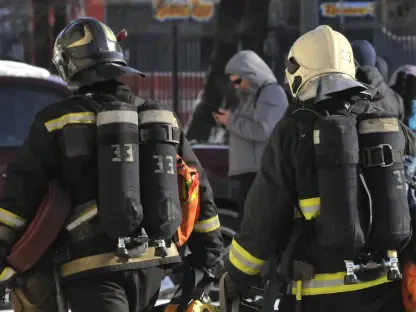

Despite the inherent challenges of rotating shifts, the cumulative workload and lack of recovery time appear to be the most damaging factors for sleep health. This realization comes at a pivotal time in 2026, as South Korea continues to refine its public safety frameworks in response to evolving urban and regional demands. The professionals tasked with maintaining order and ensuring national security—ranging from police officers to military personnel—operate within high-stakes environments that leave little room for error. The physical and psychological toll of this labor is increasingly manifesting as chronic sleep disruption, a condition that threatens both individual well-being and broader operational efficiency. As the nation moves forward, understanding the underlying causes of this exhaustion is essential for preserving the resilience of the workforce. The intersection of professional duty and biological necessity has created a challenge that requires an investigation into how career choices dictate rest quality.
High Prevalence: Disrupted Sleep Patterns
The magnitude of the sleep crisis within the public safety sector is evidenced by staggering statistics revealed in recent comprehensive assessments. In a large-scale evaluation involving over 1,400 professionals, including firefighters and police, an overwhelming 90.1 percent of participants were classified as having poor sleep quality. This classification was determined using the Pittsburgh Sleep Quality Index, a standardized tool where a score higher than five signifies significant impairment in restorative rest. The research utilized a robust methodology, incorporating an online survey platform to capture a diverse cross-section of the workforce. By establishing this data, researchers were able to quantify the severity of the issue, showing that the vast majority of those on the front lines are operating in a state of persistent fatigue. This high prevalence suggests that sleep disruption is not merely a byproduct of the job but is a nearly universal characteristic of public safety careers.
When examining specific branches of public service, the data indicated that police officers face the most acute challenges regarding rest. This group recorded the highest average scores on the sleep index, highlighting a level of disruption that far exceeds that of their peers in other emergency or military roles. The necessity for constant vigilance and high-frequency exposure to stressful, unpredictable encounters contributes to this disparity, making law enforcement a grueling vocation for maintaining a healthy circadian rhythm. In comparison, a group of over five hundred office workers served as a control, and while they also reported sleep difficulties, the severity and frequency were notably lower than those seen in the public safety cohort. This distinction underscores the fact that environmental and psychological pressures inherent in emergency services create unique barriers to rest that go beyond the typical stressors found in traditional corporate or administrative settings.
Workload Dynamics: Demographic and Shift Factors
A common assumption in occupational health is that the primary culprit behind poor sleep in emergency services is the reliance on rotating shift schedules. However, detailed statistical analysis has provided a more complex narrative that challenges this singular focus. While initial comparisons showed that shift workers did indeed have higher scores on sleep disturbance scales than those on fixed daytime schedules, these differences became less significant when other variables were introduced into the multivariable models. This suggests that the timing of the work—whether one is on a night shift or a morning rotation—is perhaps less impactful than the broader context of the occupational burden. The data pointed toward the idea that the sheer intensity of the work environment and the resulting psychological carryover are what truly prevent a worker from transitioning into restorative sleep. This shift in perspective is crucial for developing interventions that address the root causes of exhaustion.
The most consistent predictor of poor sleep health was the actual volume of work performed, measured by the number of monthly duty days assigned to an individual. Specifically, the study identified that for each additional duty day a professional worked per month, the odds of experiencing poor sleep quality increased by approximately 13 percent. This finding places the emphasis on the cumulative effect of prolonged engagement without adequate intervals for recovery. When the workload reaches a certain threshold, the body and mind are unable to fully reset, leading to a state of chronic sleep debt that persists even on days off. This relationship was confirmed using Firth penalized logistic regression models, which allowed for the adjustment of confounding factors like age and lifestyle habits. By isolating the impact of workload, the research highlighted that the primary driver of the sleep crisis is the lack of time available for the biological processes of repair that occur during rest.
Napping Strategies: Improving Operational Readiness
One of the most practical findings regarding sleep management involved the strategic use of daytime rest. The data demonstrated that napping serves as a powerful compensatory mechanism for those who cannot achieve sufficient nighttime sleep due to demanding schedules. Specifically, napping for longer durations proved to be far more beneficial than short, fragmented rest periods. Participants who engaged in naps lasting between 30 and 60 minutes saw a 58 percent reduction in the odds of poor sleep quality, while those who rested for more than an hour experienced an even more dramatic 72 percent reduction. This indicates that for public safety professionals, longer naps are essential for mitigating the neurological fatigue that accumulates during extended duty cycles. For those operating in 2026, integrating these extended rest periods into the daily routine may be one of the most effective ways to preserve cognitive function and overall health while maintaining high performance.
The analysis concluded that addressing the systemic sleep crisis among public safety workers was a vital prerequisite for maintaining high levels of operational effectiveness. It was determined that fatigue did not just impact the individual worker; it significantly impaired the critical judgment and reaction times necessary for protecting the public. Consequently, experts recommended that administrative bodies in South Korea implement policy changes that prioritized the reduction of monthly duty days and the formal integration of sanctioned rest periods. These findings suggested that by providing personnel with more opportunities for recovery, organizations could reduce the risks associated with burnout and errors in the field. The historical reliance on high-volume work hours was viewed as a liability that required immediate attention through modernized scheduling protocols. By shifting the focus toward a culture of recovery, the public safety sector aimed to ensure that its members remained mentally prepared.