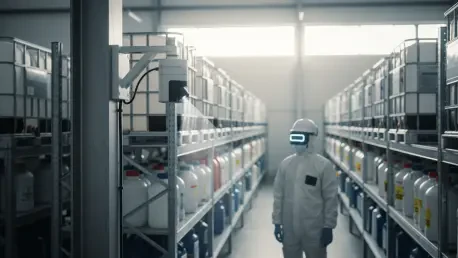

The persistent gap of 32 percent in injury rates between chemical manufacturing and general industry sectors highlights a critical failure in traditional safety management systems. While the Globally Harmonized System and Occupational Safety and Health Administration regulations provide a necessary foundation, they often lack the agility required to address the dynamic nature of modern industrial environments. Recent statistics indicate that worker fatalities linked to hazardous chemical exposure are not merely a legacy issue but a pressing contemporary crisis that demands a shift in operational philosophy. The fundamental problem is not a lack of safety information, but rather the overwhelming volume of it, which exceeds the cognitive capacity of human safety managers. Processing thousands of pages of hazard data manually leads to inevitable oversights and delayed responses to emerging risks. As production facilities become more complex, the inability to synthesize massive datasets into actionable safety protocols has become the primary bottleneck in protecting the workforce from preventable harm.
1. Structural Obstacles: The Complexity of Traditional Management
Safety Data Sheets serve as the primary source of hazard information, yet their sheer volume creates a significant structural obstacle for effective safety management. A single facility might manage thousands of these documents, each containing intricate details on flammability, toxicity, and reactive properties that must be updated frequently. Manual review processes are notoriously slow and prone to errors, particularly when safety professionals are tasked with identifying subtle changes across a vast library of active substances. This administrative burden often results in industrial hygiene programs that are reactive rather than proactive, as the information contained within these sheets remains trapped in static formats. When incident reports are filed, they often contain “free-text” descriptions that are difficult to categorize or analyze for long-term trends using traditional spreadsheet methods. Without a way to systematically parse this unstructured data, organizations struggle to identify the underlying patterns that precede major accidents or chronic health issues.
The “Mixture Problem” presents an even more daunting challenge for traditional safety management because most regulatory documentation focuses on individual substances rather than complex combinations. In practical industrial applications, chemicals are rarely used in isolation, yet there is a significant lack of research and documentation regarding how these substances interact when mixed or stored in close proximity. This creates a dangerous knowledge gap where the combined hazard profile of a mixture is unknown, leading to inadequate protective measures and unforeseen chemical reactions. Industrial hygiene professionals often lack the necessary tools to predict these interactions accurately, relying instead on broad generalizations that may not account for specific environmental factors. Because manual reviews cannot possibly calculate every potential permutation of chemical interactions within a facility, high-risk scenarios often go undetected until a near-miss or actual injury occurs. This structural limitation necessitates a shift toward computational models that can simulate and predict risks before they manifest on the factory floor.
2. Modernizing Systems: Automated Inventory and Regulatory Tracking
Natural Language Processing technology is currently revolutionizing how industrial facilities manage their vast inventories by automating the extraction of data from various Safety Data Sheet formats. This transition from manual annual reviews to continuous regulatory scanning allows organizations to maintain an up-to-date understanding of evolving exposure limits and classification changes. AI-driven systems can monitor global regulatory databases in real time, ensuring that any modifications in chemical safety standards are immediately reflected in the local inventory management system. This level of automation significantly reduces the administrative time spent on substance substitution reviews, allowing safety professionals to focus on high-level strategy rather than data entry. By digitizing the information extraction process, companies can ensure that the most current hazard information is always available to the workers who need it most. This modernization not only improves regulatory compliance but also creates a more responsive safety culture that adapts to new scientific findings as soon as they are published by regulatory bodies.
Efficient management of Tier II reporting and other mandatory environmental disclosures is another area where artificial intelligence provides substantial operational benefits. Traditional methods for compiling these reports involve labor-intensive data aggregation from multiple disparate sources, which increases the likelihood of reporting errors and non-compliance penalties. AI systems can streamline this process by automatically tracking chemical quantities, locations, and hazard categories throughout the calendar year, providing a consolidated view of the facility’s chemical footprint. This capability ensures that reporting is both accurate and timely, reducing the risk of legal complications and enhancing the transparency of industrial operations. Furthermore, these systems can identify opportunities for substance substitution by highlighting chemicals that carry high regulatory burdens or pose significant health risks. By providing a clear overview of the inventory’s risk profile, AI enables safety managers to make informed decisions about which substances to phase out or replace with safer alternatives. This proactive approach to inventory management shifts the focus from simple compliance to a strategic reduction of the overall chemical hazard profile.
3. Primary Enhancements: Advanced Identification of Chemical Hazards
Machine learning models are now capable of predicting hazards in chemical combinations with a degree of accuracy that was previously unattainable through manual methods. These models analyze vast datasets of known chemical properties and historical interaction data to identify potential risks that may not be documented in standard safety literature. This predictive capability is crucial for managing inventory accuracy and ensuring that incompatible substances are never stored or processed in a way that could lead to hazardous reactions. Simultaneously, computer vision technology is being utilized for high-accuracy monitoring of personal protective equipment compliance on the shop floor. These systems can identify in real time whether employees are wearing the correct gear for specific tasks, providing immediate feedback and reducing the likelihood of exposure-related injuries. By integrating these advanced monitoring tools, facilities can move beyond periodic audits to a state of continuous safety oversight. This combination of predictive analytics and real-time visual monitoring creates a robust safety net that addresses both environmental hazards and human error.
Historical analysis of safety records has been transformed by the ability of AI to rapidly scan years of “free-text” incident reports and identify hidden injury patterns that human reviewers might miss. By applying advanced algorithms to these records, organizations can uncover subtle correlations between specific operational conditions and the frequency of minor incidents or near-misses. This insight allows safety professionals to rank high-risk zones within a facility and prioritize resources like air monitoring or specialized training where they are needed most. For example, if the data suggests a trend of respiratory complaints in a specific area during high-humidity periods, the system can recommend localized ventilation improvements or increased air quality testing. This data-driven approach to resource allocation ensures that safety interventions are targeted and effective, rather than based on anecdotal evidence or general assumptions. The ability to translate years of dormant data into actionable safety intelligence represents a significant leap forward in the quest to eliminate workplace hazards. Ultimately, these technologies empower safety teams to intervene before minor issues escalate into major industrial accidents.
4. Strategic Implementation: Roadmap and Operational Safeguards
Integrating artificial intelligence into safety workflows requires a strategic roadmap that begins with a thorough evaluation of information integrity and the establishment of clear operational goals. Organizations must first clean their Safety Data Sheet libraries to ensure that AI-driven insights are based on accurate, non-duplicate records. Following this, safety teams should identify specific practical outcomes, such as optimizing air monitoring schedules or targeting teams for enhanced training. Conducting trial runs in familiar environments allows for the calibration of the system against human expertise before a full-scale rollout. However, it is essential to address the risks of over-reliance and data bias, particularly when dealing with rare or specialty chemical mixtures that might be underrepresented in training models. To maintain transparency, AI findings must be “explainable,” providing workers and regulators with the underlying logic for hazard classifications. This transparency builds the necessary trust for AI to function as a collaborative partner in the workplace while maintaining a focus on rigorous independent verification.
The successful transformation of chemical safety management was achieved by positioning artificial intelligence as a supportive tool that augmented, rather than replaced, professional human judgment. Qualified safety experts maintained the ultimate power of approval, ensuring that final regulatory and safety calls were grounded in real-world experience and ethical accountability. Ongoing feedback loops were established to refine system accuracy, allowing the models to learn from current outcomes and adapt to changing industrial processes. This approach bridged the significant gap between the overwhelming volume of available hazard data and the practical implementation of preventative measures on the shop floor. Moving forward, industrial leaders should prioritize the development of explainable AI systems that empower workers with clear, actionable information about their environment. By focusing on data integrity and the continuous refinement of predictive models, the industry can move toward a future where chemical injuries are virtually eliminated through proactive detection. This evolution represents a fundamental shift toward a more intelligent, responsive, and safer industrial landscape for all employees.