
The sudden collapse of a massive industrial storage vessel at a Washington paper mill sent shockwaves through the local community, claiming lives and discharging corrosive white liquor into the sensitive ecosystem of the Columbia River. This tragedy, coupled with a simultaneous near-explosion at an aerospace facility in Southern California that prompted the mandatory evacuation of fifty thousand residents, reveals a deeply unsettling reality about the precarious state of domestic industrial infrastructure. These events did not happen in isolation but instead emerged as a troubling pattern within a single week, sparking intense national scrutiny over the invisible risks buried in national manufacturing corridors. While the engineering community often points to the statistical rarity of such failures, the sheer scale of the environmental contamination suggests that existing safety margins may no longer be sufficient to protect the public. The juxtaposition of these two disparate industrial accidents highlights a critical intersection where aging hardware, hazardous chemical storage, and urban sprawl collide with devastating consequences for modern society.
Structural Integrity: The Technical Limits of Modern Containment
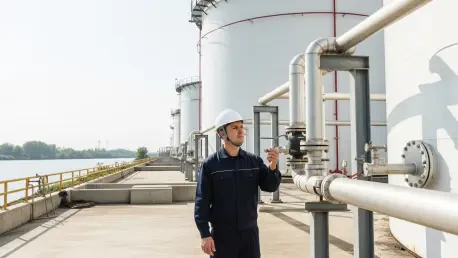
Engineers often emphasize that industrial storage tanks are designed with significant redundancy, boasting a failure rate estimated at only one per million units annually across the United States. However, this impressive statistic masks the reality that reliability is a dynamic state rather than a permanent feature, requiring meticulous maintenance and rigorous physical inspections to remain valid. For vessels containing corrosive agents like white liquor or high-pressure gasses, the internal environment is one of constant chemical warfare against the structural integrity of the metal. When infrastructure surpasses the ten-year mark, the risk profile shifts dramatically, making deep-dive ultrasonic testing and structural modeling indispensable rather than optional. Current progress from 2026 to 2027 involves a national audit of all vessels exceeding fifteen years of service to categorize the most critical vulnerabilities. Without standardized life-cycle management protocols, the industry remains vulnerable to the inevitable decay that time and chemistry exert on steel.
The framework meant to prevent these disasters relies on a complex hierarchy involving federal oversight from the Environmental Protection Agency and the Occupational Safety and Health Administration. While the EPA focuses on environmental stewardship and public transparency, OSHA enforces strict process safety management standards designed to protect workers from hazardous chemical releases during production. However, the actual implementation of these federal mandates frequently devolves into a fragmented system where state-level agencies and local fire marshals bear the primary responsibility for physical inspections. This patchwork of jurisdiction creates significant variability in how safety codes are interpreted and enforced from one region to another. In many instances, the effectiveness of these regulations is hindered by the lack of specialized training for local inspectors who may not fully grasp the intricacies of chemical engineering or the early warning signs of metal fatigue. Consequently, the disconnect between high-level policy and boots-on-the-ground enforcement remains a primary weakness.
Monitoring the Gaps: Systemic Issues in Public Protection
A significant disparity exists between the sprawling inventory of high-risk industrial facilities and the limited personnel available to conduct meaningful oversight on a regular basis. Many state regulatory bodies find themselves overwhelmed by the volume of permits and mandatory reporting documents, leading to a culture of reactive management where inspections are triggered by accidents rather than prevention. This management by failure approach ensures that deteriorating equipment is only addressed after it has already caused harm, leaving proactive maintenance to the discretion of individual corporate entities. In some jurisdictions, the ratio of industrial sites to qualified inspectors is so high that a facility might only receive a comprehensive audit once every decade, if at all. This lack of oversight is particularly concerning for smaller operators that may lack the internal safety departments of larger multinational corporations. Until funding for regulatory agencies matches the pace of industrial expansion, the public remains reliant on a system that is fundamentally built to respond to crises.
The final hurdle in addressing industrial safety is the absence of standardized, health-based exposure guidelines designed specifically for the diverse physiology of the general public. Existing safety thresholds for chemical exposure are largely derived from occupational studies involving healthy adult workers and do not adequately protect children, the elderly, or those with chronic respiratory conditions. When a release occurs, local health officials are often left without peer-reviewed data to determine when an area is truly safe for re-entry, leading to inconsistent guidance that can erode public trust. This lack of clarity was evident during the recent evacuations, where residents received conflicting information about the toxicity of the smoke and the duration of the threat. Developing robust, science-backed recovery protocols is essential for managing the aftermath of industrial accidents and ensuring that environmental cleanup efforts are truly effective. Without a centralized database of toxicological impacts tailored to civilian populations, the recovery process remains a subjective exercise.
Strengthening the Shield: Actionable Steps for Industrial Reform
Addressing the systemic failures revealed by these recent incidents required a fundamental shift toward real-time monitoring and standardized state-level enforcement of containment protocols. Policymakers and industry leaders recognized that relying on manual inspections alone was no longer a viable strategy for managing the complexities of 2026 industrial operations. Instead, the integration of smart sensor networks and automated leak detection systems became a primary focus for facilities seeking to mitigate the risks of aging hardware. These technological investments were coupled with a renewed commitment to transparency, where real-time safety data was shared directly with local emergency responders. Furthermore, the adoption of universal health-based exposure standards ensured that the most vulnerable citizens were prioritized during post-incident assessments. By moving toward a proactive model of safety, the sector worked to restore the bond of trust between manufacturing hubs and the neighborhoods that surround them. These actions established a new precedent for corporate accountability.
The evolution of safety management also necessitated a significant overhaul of how zoning laws and industrial expansion are handled by municipal governments in 2026. Urban planners realized that the historical separation of industrial and residential zones had been eroded by rapid development, creating new risks not present when many facilities were originally constructed. To address this, the implementation of mandatory buffer zones and the enhancement of community-wide digital alert systems became standard practice. Furthermore, the creation of regional industrial safety task forces allowed for better resource sharing among smaller municipalities that lacked specialized response units. By fostering a collaborative environment where industry experts and public safety officials worked in tandem, the nation began to close the gaps that had previously allowed catastrophic tank failures to threaten public health. These changes reflected an understanding that industrial safety is a fundamental social contract that must be maintained for the long-term viability of the community.