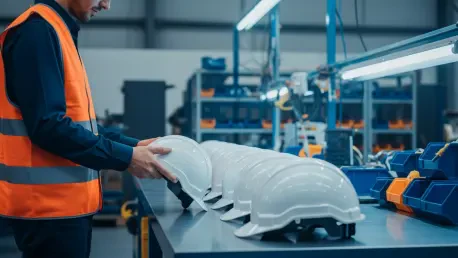

The landscape of industrial head protection is undergoing a rapid and necessary transformation as construction firms across the continent shift their focus toward Type 2 safety helmets. While the standards governing these advanced protective devices have been established for over two decades, recent changes in job site requirements and insurance mandates have spurred a massive increase in demand. The fundamental distinction between traditional hard hats and the newer Type 2 variants lies in the ability of the latter to mitigate lateral impacts, offering protection for the front, back, and sides of the head in addition to the top. This shift is driven by a growing awareness of the long-term consequences of traumatic brain injuries that occur during slips or trips, where a worker’s head might strike an object from an angle. As safety managers navigate this transition, they face the dual challenge of ensuring adequate supply while vetting the technical specifications of gear that must withstand the harsh realities of modern construction.
1. Distinguishing Genuine Certification From Manufacturer Self-Claims
Official third-party certification represents a gold standard of quality assurance that separates legitimate safety equipment from products that only appear to provide protection. Organizations like the CSA Group perform quarterly audits of manufacturing facilities and conduct annual reviews of the production processes to ensure that every unit meets strict mechanical benchmarks. These certifying bodies also engage in unannounced market draws, where representatives purchase helmets directly from retail shelves or distributors to verify their performance against laboratory standards. This rigorous oversight ensures that the helmet a worker buys in the store is identical in quality to the model that was originally tested. To confirm authenticity, safety professionals should look for the official logo of the certifying body prominently displayed next to the standard number on the helmet’s shell. This mark serves as a recognized guarantee that the product has undergone independent verification and found to be effective.
In contrast to these verified products, the marketplace is increasingly flooded with helmets that carry vague claims such as designed to meet or compliant with specific safety standards. These self-reported claims are often made by manufacturers without any independent oversight, meaning that no external lab has verified the helmet’s ability to absorb impacts or resist penetration. Without the pressure of third-party audits, a manufacturer might choose to alter the density of the internal foam or use cheaper plastic polymers during the production run to increase profit margins. This lack of transparency places a significant burden on employers and distributors, who may unknowingly distribute gear that fails during a critical safety event. When a product lacks an official certification mark, there is no way to guarantee that the materials used in the final product are the same as those used in the prototype, leaving the worker vulnerable to injuries that a certified helmet would have prevented.
2. Evaluating The Efficacy Of Suspensions And Chin Straps
Building on the importance of external verification, the internal suspension system of a safety helmet is the most critical component for dissipating the kinetic energy of an impact before it is transferred to the wearer’s skull. High-performance ratchet suspensions allow for a precise and secure fit that keeps the helmet centered and stable, even when the worker is leaning over or moving through confined spaces. Many safety experts have observed that a well-engineered ratchet system provides enough retention to pass stringent safety tests without the absolute necessity of a chin strap in many common work scenarios. These systems utilize a mechanical dial to tighten the suspension against the occipital bone, creating a reliable platform that resists dislodgment. Conversely, older pinlock suspensions are increasingly viewed as inadequate for Type 2 protection because they lack the fine-tuning capabilities needed to secure the heavier, foam-lined shells. Replacing pinlock systems with modern ratchets is a fundamental step in ensuring the helmet remains functional.
While the addition of a chin strap is often seen as a universal safety improvement, its real-world effectiveness is frequently hindered by human error and improper adjustment. Workers often wear these straps too loosely to avoid discomfort or skin irritation, which renders the strap completely ineffective during a fall or a sudden impact. If a strap is not tightened correctly, the helmet can still rotate or fly off the head entirely, exposing the brain to direct trauma. Furthermore, some workers may buckle the strap behind their head or leave it hanging loose, creating a snag hazard rather than a safety feature. To address these issues, safety leads are encouraged to evaluate whether a high-performance ratchet suspension can provide the necessary stability on its own. If a strap is deemed necessary for specific high-risk tasks, it must be integrated into a training program that emphasizes proper tensioning. This ensures that the equipment provides a genuine safety benefit rather than a false sense of security that fails when needed.
3. Strategic Steps For Employers To Ensure Site Compliance
The first step toward establishing a robust head protection program is the implementation of a strict procurement policy that favors products with official third-party certification. Safety managers should avoid the temptation to purchase equipment based solely on price or aesthetic appeal, as these factors rarely correlate with the mechanical integrity of the helmet. Instead, the focus must be on verifying that the chosen models are listed in the public databases of certifying organizations like UL or the CSA Group. This level of due diligence protects the company from liability and ensures that the workforce is protected by gear that has been proven to function under duress. By demanding verified performance metrics, employers can drive the market toward higher standards and discourage the production of substandard, uncertified equipment. This approach establishes a culture where every piece of equipment is viewed as a life-saving tool that must meet the highest possible criteria for engineering.
Following the selection of certified gear, safety professionals must conduct and document a comprehensive site risk evaluation to determine the specific protection requirements for various roles. This assessment should go beyond identifying general hazards and instead focus on the unique mechanical risks present in different zones of the construction site. For instance, workers operating at heights or in areas with significant lateral impact risks may require the added retention of a chin strap, while those in more controlled environments might be better served by a high-quality ratchet suspension alone. Documenting these risk-based decisions provides a clear rationale for equipment choices and helps to justify the investment in higher-grade protection to stakeholders. This methodical approach ensures that the level of protection is precisely matched to the actual hazards on the site, optimizing both worker safety and comfort while maintaining compliance with current industry standards.
4. Future Regulatory Transitions And Practical Next Steps
The regulatory landscape for head protection underwent a significant shift as authorities prepared for the July 2027 mandate that required Type 2 helmets on all major industrial projects. This upcoming change prompted many organizations to begin the transition through methodical hazard assessments, rather than waiting for the legal deadline to force their hand. Employers who initiated these changes early discovered that a gradual rollout allowed for better inventory management and provided ample time to educate workers on the technical advantages of the new equipment. By moving away from reactive procurement, these companies established themselves as leaders in workplace safety, prioritizing the long-term health of their employees over short-term cost savings. The transition was marked by a collaborative effort between safety leads and workers to identify the most effective certified options, ensuring that the new gear was embraced rather than resisted by the crew on the ground.
As the industry adapted to these new requirements, the focus moved toward maintaining the integrity of the equipment through regular inspections and the elimination of uncertified gear from the workplace. Safety professionals realized that the most effective way to sustain these gains was to integrate head protection reviews into daily safety briefings, ensuring that every worker understood how to inspect their ratchet suspension for wear and tear. The move toward Type 2 protection ultimately served as a catalyst for a broader discussion about the science of impact protection and the importance of verified engineering in personal protective equipment. Moving forward, the lessons learned from this transition period provided a clear blueprint for how to handle future regulatory updates with minimal disruption to operations. By fostering a culture that valued third-party verification, the construction industry successfully elevated the standard of care for its workers.