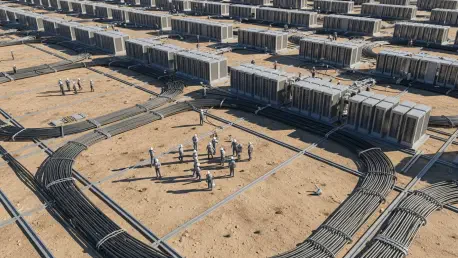

The landscape of Abilene, Texas, has been fundamentally altered by the rising steel skeletons of the Stargate data center, a project whose half-trillion-dollar price tag signifies the desperate scramble for global artificial intelligence supremacy. This colossal undertaking is not merely a private venture; it is a strategic collaboration involving the United States federal government, OpenAI, and Oracle, designed to provide the massive computational power required to sustain American leadership in the AI sector. While politicians and tech executives celebrate this project as a symbol of domestic reindustrialization and technological dominance, the reality on the ground tells a much more harrowing story. Beneath the narrative of progress lies a workforce of thousands who are operating under conditions that many describe as perilous and exploitative. The pressure to complete the facility at an unprecedented pace has resulted in a significant number of workplace injuries, creating a stark contrast between the high-tech future being built and the primitive safety standards being applied. As this race for technological supremacy accelerates, the industry must confront the reality that the physical foundation of the digital age is being constructed at a profound human cost that often goes unacknowledged in corporate boardrooms.
Physical Hazards and Systemic Negligence
The Consequences of Accelerated Construction
The construction site of the Stargate project has frequently been described by those on the ground as an environment defined by a “Wild West” mentality, where the traditional rules of workplace safety are often viewed as obstacles to progress. Laborers tasked with erecting the massive structures and installing the intricate cooling systems report that the drive for “unprecedented scale and speed” has created a high-pressure atmosphere where accidents are almost inevitable. Reports of severe physical trauma, including compound bone fractures, deep lacerations, and concussions from falling debris, have become disturbingly common as teams work around the clock to meet aggressive milestones. This culture of urgency is fueled by the immense financial stakes involved, as every day of delay represents millions of dollars in potential lost revenue and a perceived setback in the global technological arms race. Consequently, the physical well-being of the construction crews is frequently subordinated to the needs of the project schedule, leading to a systemic erosion of the safety protocols that are typically standard in industrial developments of this size and complexity.
Furthermore, when accidents do occur, the response from management often reflects a troubling tendency to shift blame onto the individual workers rather than addressing the structural issues that lead to such events. Investigations have highlighted instances where management characterized serious injuries as the result of employees being “in a rush,” effectively ignoring the fact that the project’s own leadership mandated the frantic pace of work. This top-down culture creates a dangerous feedback loop where workers feel compelled to skip safety checks or use improper equipment to stay on schedule, knowing that any delay might result in their termination or replacement. The lack of adequate communication between different crews and the insufficient number of safety supervisors on-site further exacerbate these risks, leaving laborers to navigate a labyrinth of heavy machinery and high-voltage electrical systems with minimal oversight. By treating the workforce as a disposable resource in the pursuit of technological goals, the project developers are establishing a precedent that values speed and output over the fundamental right to a safe working environment.
Discrepancies Between Safety Claims and Emergency Records
While the corporate partners involved in the Stargate initiative maintain that their safety records are superior to industry averages, an examination of public emergency call logs reveals a much more volatile and dangerous reality. Since the end of the previous year and continuing through the current period of 2026, dozens of emergency calls have detailed major medical events occurring at the Abilene site, including reports of crushed limbs, falls from significant heights, and cardiac emergencies. These logs provide an objective and grim counterpoint to the polished safety narratives presented by lead contractors and technology firms in their annual reports and public relations materials. The frequency and severity of these emergency interventions suggest that the internal tracking of injuries may not be capturing the full extent of the trauma occurring on the ground. When public emergency services are required to intervene on a near-daily basis, it indicates a failure of the on-site medical and safety infrastructure to adequately protect the thousands of individuals employed at the facility.
The lack of transparency regarding these incidents is compounded by the refusal of major technology companies to share their internal safety data with independent auditors or labor advocacy groups. This opacity makes it extremely difficult to verify official injury rates and suggests a concerted effort to maintain a clean public image regardless of the actual conditions on-site. Federal regulators have expressed concern that corporate safety logs may be intentionally underreporting incidents by categorizing them as non-work-related or by encouraging workers to seek private medical care rather than reporting through official channels. Without clear, verifiable data, the true scope of the hazards associated with building AI infrastructure remains hidden from public view, preventing any meaningful accountability for the firms leading the project. The discrepancy between the marketed image of a clean, high-tech revolution and the bloodied reality of the construction site highlights a deep-seated issue in the governance of large-scale infrastructure projects where corporate interests often supersede public safety.
Environmental Strain and Cultural Suppression
Neglecting Fundamental Needs in Extreme Environments
The environmental conditions in West Texas present a lethal challenge to the construction workforce, particularly during the brutal summer months when temperatures regularly exceed one hundred degrees. Despite the well-known risks of heat exhaustion and heatstroke, workers claim that project leadership has been inconsistent, and at times negligent, in providing the basic resources necessary to survive the climate. Testimonies from the site suggest that cooling equipment and temporary shade structures have been removed from active work areas to make room for construction materials, forcing laborers to spend hours in direct sun without relief. Access to cold water, which should be a non-negotiable right in such environments, is reportedly treated as a luxury, with some crews being forced to walk long distances to reach hydration stations that are frequently empty. These conditions have led to a surge in medical emergencies, with reports indicating that ambulances were a constant presence during the hottest periods of the year as workers collapsed under the strain of the heat.
In addition to the lack of heat mitigation, the basic hygiene standards at the Stargate site have been criticized as being woefully inadequate for a population of eight thousand workers. Reports of insufficient handwashing stations, a lack of soap in portable restrooms, and a general failure to maintain sanitary facilities reflect a systemic prioritization of building materials over human dignity. For many of those on the ground, these omissions are not merely administrative oversights but clear signals that their health and comfort are of no concern to the corporations funding the project. The focus remains entirely on the installation of servers, fiber optics, and power grids, while the biological needs of the people installing them are treated as an afterthought. This neglect creates a demoralizing environment where workers feel like extensions of the machinery they are building rather than human beings contributing to a national achievement. When the most basic requirements for health and safety are ignored, it undermines the claim that these projects are a benefit to the local and national economy.
Silencing Dissent Through Secrecy and Vulnerability
A pervasive culture of silence is maintained at the Stargate site through the aggressive use of non-disclosure agreements and the constant threat of professional retaliation. Many laborers are only willing to discuss their experiences under the condition of strict anonymity, fearing that any public criticism of the site conditions will lead to them being blacklisted from future projects in the sector. This atmosphere of fear is an intentional management strategy designed to prevent a true accounting of the safety failures and labor violations from reaching the public or federal regulators. By forcing workers to sign broad legal documents that prohibit them from speaking about their daily work lives, the lead developers have created a barrier that shields them from the consequences of their administrative decisions. This lack of a feedback loop means that dangerous conditions are allowed to persist because the people most affected by them are too intimidated to report them to the authorities or the media.
This environment of suppression is further exacerbated by the deliberate use of a vulnerable and fragmented workforce, including a high percentage of undocumented laborers and workers hired through multiple layers of subcontractors. These individuals often lack the legal protections and collective bargaining power afforded to unionized labor, making them particularly susceptible to exploitation and wage theft. When safety failures occur, the complex hierarchy of subcontractors allows the lead developers to distance themselves from any legal responsibility, pointing to the smaller firms as the parties at fault. This diffusion of responsibility ensures that while the technological giants reap the benefits of the completed infrastructure, they are shielded from the liabilities associated with the human suffering that occurred during its construction. For the most vulnerable workers on the project, the lack of legal status or job security means that complaining about a lack of safety gear or extreme heat is not an option, leaving them trapped in a system that values their labor but ignores their survival.
Regulatory Oversight and Global Stakes
The Weakening of Federal Enforcement and Responsibility
Federal oversight of the Stargate project through the Occupational Safety and Health Administration has been remarkably inconsistent, leading to accusations that the agency is being pressured to prioritize project completion over worker safety. In several documented instances, significant safety citations and fines issued to contractors at the Abilene site have been vacated or substantially reduced following private negotiations. This pattern of leniency signals to the construction industry that the financial penalties for safety lapses are negligible when compared to the vast profits associated with meeting AI infrastructure deadlines. When the very government agency tasked with protecting workers appears to be facilitating the rapid pace of construction by loosening enforcement, it leaves the labor force without a meaningful advocate. This shift in regulatory behavior suggests that the national interest in winning the AI race has created an “emergency” status that justifies a departure from established safety laws and ethical labor practices.
Furthermore, the influence of the federal government as a primary stakeholder in the AI infrastructure race complicates its role as a neutral regulator of labor conditions. When the state has a direct strategic interest in the rapid deployment of a technology, there is a natural incentive to minimize any bureaucratic or safety-related delays that might hinder progress. This conflict of interest has resulted in a regulatory environment where the burden of proof for safety violations is shifted onto the workers, while contractors are given the benefit of the doubt. The precedent being set at the Stargate site is one where the safety of the individual is negotiable in the face of national security objectives, a dangerous trajectory that could define the next several years of industrial development. If federal enforcement continues to be weakened for the sake of technological speed, the protections that have been built over decades of labor advocacy could be permanently eroded in the name of innovation and global competition.
The Human Element in the National Security Strategy
The human cost of the AI infrastructure race is most tragically represented by the unresolved deaths and life-altering injuries that have occurred within the walls of the Stargate facility. While some of these fatalities have been attributed by project officials to pre-existing medical conditions or unrelated events, the circumstances surrounding them often suggest a high degree of workplace stress and isolation. Reports of workers being found alone in unmonitored sections of the site highlight a failure of the safety-check systems that are supposed to ensure no individual is left in a vulnerable position. These losses are not merely statistics in a construction report; they represent the ultimate sacrifice made by individuals who were tasked with building the future of American technology under extreme and often inhumane conditions. The moral weight of these tragedies challenges the narrative that the AI race is a purely technological or economic endeavor, revealing it instead as a project that is literally built on the backs of a strained and suffering workforce.
In the final assessment, the Stargate project demonstrated that the pursuit of technological dominance required a reevaluation of the ethical standards governing the nation’s industrial capacity. The development of artificial intelligence was viewed as a critical component of national security, but the path taken to achieve that security involved the systematic neglect of the very citizens the technology was meant to protect. Moving forward, it became clear that the sustainable expansion of the digital economy necessitated a commitment to transparency, rigorous federal oversight, and the implementation of robust labor protections that could not be bypassed for the sake of speed. The industry eventually recognized that the long-term success of American innovation depended on a workforce that was valued as much as the algorithms they helped to house. By integrating independent safety audits and empowering workers to speak without fear of retaliation, the project leaders took the first steps toward ensuring that the infrastructure of the future would not be a monument to preventable human suffering. Building on these lessons allowed for a more resilient and ethical approach to the massive construction projects that continued to define the technological landscape between 2026 and 2030.