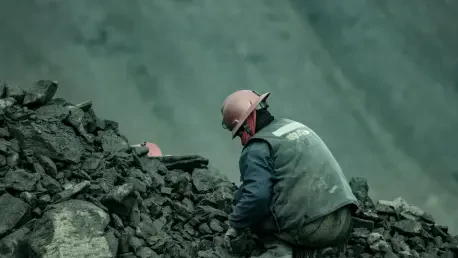

The enduring presence of silicosis within the international mining sector represents a profound failure of modern public health initiatives, especially considering the disease is entirely preventable through established engineering controls. A landmark study conducted by researchers at National Jewish Health, recently published in the journal BMC Public Health, provides the most extensive systematic review and meta-analysis to date regarding this global threat. By synthesizing data from more than 200,000 miners across 30 different nations, the research serves as a critical evaluation of the prevalence, exposure assessment protocols, and occupational hazards associated with respirable crystalline silica. This panoramic view of the industry highlights how silica dust continues to devastate workers in stone, metal, and non-metal mining sectors. Despite centuries of knowledge regarding the dangers of dust inhalation, the findings suggest that the gap between theoretical safety and the reality on the ground remains dangerously wide for millions.
The Mechanics of Lung Damage and Geographic Disparities
Understanding Pathophysiology: The Permanent Impact of Silica
Silicosis is a progressive and irreversible respiratory condition caused by the chronic inhalation of fine crystalline silica particles that are small enough to reach the deepest parts of the lungs. When these microscopic dust particles are inhaled, they bypass the upper respiratory defenses and settle within the alveolar regions, where they cannot be easily cleared by the body. This triggers a persistent inflammatory response as the immune system attempts to neutralize the foreign particles, leading to the formation of fibrotic nodules. Over time, this extensive scarring, known as fibrosis, stiffens the lung tissue and severely restricts the ability of the lungs to transfer oxygen to the blood. The study emphasizes a grim reality: once the fibrotic process has begun, there is no medical cure to reverse the damage. Because the damage is permanent and often continues to worsen even after a worker is removed from the source of exposure, primary prevention is the only effective solution.
The research highlights that the uniquely dangerous nature of this disease distinguishes it from other occupational ailments that might respond to clinical treatment or medication. Since medical intervention cannot restore scarred lung tissue, the focus of the mining industry must remain entirely on rigorous exposure monitoring and the implementation of advanced dust suppression technologies. The study advocates for a shift in perspective, moving away from viewing silicosis as a manageable condition and toward treating it as a total failure of safety systems. This involves not only utilizing water sprays and ventilation but also ensuring that engineering controls are maintained with the same level of priority as production equipment. Without a commitment to ensuring that miners never inhale the dust in the first place, the cycle of respiratory failure will continue unabated. This necessitates a culture of safety where dust management is not an afterthought but a fundamental requirement of the mining process.
Economic Inequality: Disparities in Global Worker Safety
The meta-analysis reveals that while silicosis remains a pervasive threat across all types of mineral mining, the severity and prevalence of the disease vary significantly by sector and geographic region. Miners involved in stone extraction are at a particularly high risk due to the mechanical disruption of silica-rich rock, which generates high concentrations of respirable dust. Interestingly, the study indicates that even in high-income countries with sophisticated regulatory frameworks and advanced occupational health standards, silicosis continues to be detected among the workforce. While the prevalence rates in these developed nations are lower than in decades past, the continued presence of the disease suggests that current protective measures may still be insufficient or inconsistently applied. This finding challenges the assumption that wealth and technology alone are enough to eliminate the risks associated with silica exposure in modern industrial environments.
In contrast, the situation in lower- and middle-income countries is described as alarmingly severe, where miners face significantly higher health risks while performing the same fundamental labor as their counterparts in wealthier nations. In these regions, the lack of robust occupational health infrastructure and the inconsistent enforcement of dust control measures contribute to devastating incidence rates. This disparity underscores a global inequality in worker protection, where the economic status of a nation often determines the life expectancy of its industrial laborers. The research highlights that the burden of silicosis is being shifted toward developing economies that provide the raw materials for global supply chains. Addressing this imbalance requires international cooperation and a shared responsibility to ensure that safety standards are universal. Without a global effort to harmonize regulations, the most vulnerable miners will continue to pay the highest price for the materials that drive the global economy.
Navigating Data Gaps and Proactive Health Strategies
Standardizing Measurements: Addressing the Global Data Patchwork
One of the most significant hurdles identified by the National Jewish Health study involves the inconsistency and heterogeneity of silica dust sampling methodologies used across different nations. The researchers identified a “patchwork” of data quality caused by variations in how different countries and mining operations measure respirable dust. These inconsistencies stem from the use of non-standardized sampling equipment, differences in the specific size fractions of dust collected, and varying analytical techniques used in laboratories. For example, some regions may focus on total dust mass, while others specifically measure the respirable fraction, making it nearly impossible to conduct accurate global comparisons or establish universal safety benchmarks. This lack of uniformity prevents health officials from identifying specific operations that may be falling behind and hinders the development of evidence-based policy interventions.
The study calls for an urgent international harmonization of silica dust monitoring protocols to ensure that every miner is protected by the same data-driven standards. By standardizing how exposure is measured, the global community can generate more reliable data, which is essential for creating a baseline of safety that transcends national borders. Such a framework would allow for the identification of high-risk mining practices and facilitate the sharing of successful dust suppression techniques between different regions. Furthermore, standardized data would empower labor organizations and regulators to demand more transparency from mining corporations regarding the air quality within their facilities. In an era of globalized trade, the health of the worker should not be a variable dependent on the local measurement technique. Establishing a consistent methodology is the first step toward a coordinated international response that can finally address the root causes of silica exposure.
Medical Surveillance: Implementing Proactive Detection Models
Because silicosis often has a long latency period—where internal damage occurs for years without visible symptoms—systematic medical surveillance is a cornerstone of any effective prevention strategy. The study advocates for integrated health monitoring programs that include regular radiographic imaging, such as chest X-rays interpreted via international standards, and comprehensive pulmonary function testing. These surveillance programs serve a dual purpose by allowing for the early identification of at-risk workers and providing critical data for epidemiological research. Early detection is vital because it enables the removal of employees from high-exposure environments before they reach the point of irreversible lung failure. When these health checks are systematically embedded into the daily operations of mining companies, they act as an essential safety net that can catch failures in dust control systems.
The authors of the study argue that these medical interventions must be treated as mandatory operational components rather than optional or periodic checks. The data collected through regular health screenings creates a feedback loop that helps mining companies and regulators refine their preventive strategies in real time. If a cluster of early-stage silicosis is detected in a specific mine, it provides immediate evidence that the existing engineering controls are failing. This proactive approach shifts the focus from reacting to a diagnosis to actively managing the health of the entire workforce. Furthermore, the integration of digital health records and standardized imaging can help bridge the gap in regions where specialized medical expertise is scarce. By utilizing modern technology to monitor lung health, the industry can move closer to a zero-harm environment where the transition from exposure to illness is interrupted at the earliest possible moment through swift intervention.
Future Challenges in the Mining Industry
The Transition Challenge: Mineral Extraction in the Modern Era
As the global community accelerates its transition toward green energy, the demand for critical minerals like lithium, cobalt, and various rare earth elements has reached unprecedented levels. This surge in demand is driving a rapid expansion of mining activities, often in remote regions where occupational health regulations are still developing or are poorly enforced. The National Jewish Health study issues a prescient warning that this expansion could inadvertently trigger a massive resurgence of silicosis if it is not accompanied by stringent dust control and medical monitoring policies. The drive for a more sustainable and environmentally friendly energy grid must not come at the cost of the respiratory health of the miners who extract the necessary materials. This highlights a critical contradiction where the pursuit of environmental health could potentially lead to a new wave of occupational disease.
To prevent this outcome, the researchers emphasize that sustainable mining practices must prioritize human health alongside environmental objectives from the very beginning of a project’s lifecycle. New mining operations being established from 2026 to 2030 should integrate advanced dust suppression technologies into their core designs rather than retrofitting them later. This proactive design philosophy ensures that safety is built into the infrastructure, reducing the reliance on personal protective equipment, which is often the last and least effective line of defense. Policymakers must also ensure that the global supply chains for green technology are transparent, allowing consumers and manufacturers to verify that the minerals used in batteries and wind turbines were extracted under safe conditions. By linking market access to worker safety standards, the international community can create a powerful economic incentive for mining companies to invest in the health of their employees.
Systemic Solutions: Building a Resilient Safety Framework
The study concluded that the persistence of silicosis was a systemic failure that necessitated a multi-layered and multisectoral response. It was determined that identifying the biological risks was insufficient without active collaboration between policymakers, mining corporations, and labor organizations. Effective prevention required the implementation of advanced engineering controls, such as enclosed machinery cabs and high-efficiency particulate air filtration systems, to minimize the amount of dust that reached the worker. Furthermore, the research suggested that strengthening and enforcing occupational exposure limits was essential to providing a legal framework that held companies accountable for air quality. This approach ensured that safety was treated as a non-negotiable requirement of doing business rather than a voluntary guideline that could be ignored in favor of increased production speeds.
The findings also highlighted the importance of education and international support in bridging the safety gap between different economic regions. Providing miners with comprehensive training on the hidden risks of silica dust and the proper use of high-quality respiratory protection was identified as a key factor in reducing disease prevalence. Additionally, facilitating knowledge transfer from high-income countries to developing regions helped provide the technical expertise needed to manage complex dust environments. By treating silicosis as a global challenge rather than a localized issue, the industry began to see the development of more resilient safety frameworks. The transition toward a safer mining sector was ultimately driven by a commitment to the idea that no mineral is worth the life of a worker. This shift in industry priorities provided a path forward for protecting the millions of individuals who continue to supply the raw materials for the modern world.