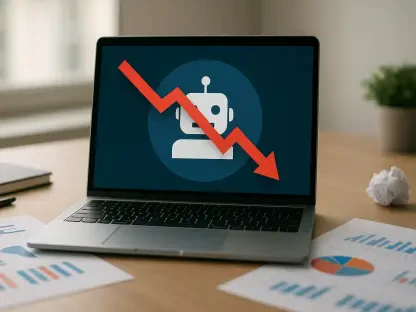

The paradox of contemporary business lies in the fact that as computational power reaches unprecedented heights, the most valuable asset in any organization remains the unpredictable and irreplicable nature of human consciousness. While automated systems now handle complex calculations and administrative workflows with flawless precision, they have yet to master the subtle art of strategic intuition that defines market leaders. This shift has forced a fundamental reevaluation of productivity metrics, moving the needle away from sheer output volume toward the qualitative impact of human ingenuity. Organizations that once viewed staff as mere components of a production engine are now recognizing them as the primary catalysts for innovation in an increasingly algorithmic world. This evolution suggests that the current era is not defined by the replacement of the workforce, but by a sophisticated integration where technological resources serve to amplify the inherent creative strengths of individuals, ensuring that the human element remains at the very center of every successful enterprise.
Redefining Performance through Holistic Management
Recent industry shifts indicate that business owners are moving away from traditional monitoring software in favor of comprehensive professional development programs that prioritize long-term growth. Investment in training and specialized skill acquisition has become a cornerstone of organizational strategy, reflecting a widespread belief that a well-equipped employee is naturally more efficient. This transition is evident in the way firms are allocating budgets, with a significant increase in funds dedicated to workshops, mentorship, and continuous learning platforms. By providing these opportunities, leaders are effectively bridging the gap between current capabilities and future needs, ensuring that their teams remain adaptable in the face of rapid technological changes. Furthermore, this approach fosters a sense of loyalty and commitment, as workers perceive a direct correlation between their personal advancement and the success of the company. The result is a more resilient workforce that views professional challenges as opportunities for growth rather than obstacles to be avoided.
Beyond technical skills, there is a growing emphasis on the psychological and emotional well-being of the workforce as a prerequisite for high-level operational performance. Modern executives are increasingly implementing wellness initiatives that address stress management, work-life balance, and mental health support, recognizing that a burnt-out employee cannot contribute effectively to the mission. This cultural shift acknowledges that productivity is not a static state but a dynamic outcome of a supportive environment where individuals feel safe to take risks and voice original ideas. By establishing clear goals and transparent communication channels, organizations are eliminating the ambiguity that often leads to frustration and stagnation. When employees understand their role within the broader strategic framework and feel valued as individuals, their engagement levels rise significantly. This heightened engagement translates into higher quality work and a more collaborative atmosphere, proving that the most effective way to drive performance is to nurture the human spirit that powers the entire organizational engine.
Leveraging Human Nuance in an Algorithmic World
Although modern software can process vast datasets and execute repetitive tasks with remarkable speed, it remains fundamentally incapable of replicating the nuanced social intelligence that humans bring to the table. The ability to read a room, interpret subtle non-verbal cues, and adjust a negotiation strategy in real-time based on an emotional shift is a purely human trait that provides a significant competitive edge. In high-stakes client interactions, the difference between success and failure often hinges on empathy and the capacity to build a genuine relational connection that transcends transactional logic. Machines operate on precedent and historical data, but they cannot account for the irrationality or the sudden flashes of inspiration that characterize human decision-making processes. Consequently, roles that require deep interpersonal skills and the management of complex stakeholder expectations are becoming more valuable, as they represent a domain where technology serves only as a supporting tool rather than a replacement for human judgment.
Innovation thrives on the ability to think beyond established protocols and create something entirely new, a feat that remains outside the current capabilities of precedent-based artificial intelligence. While generative tools can synthesize existing information into coherent formats, they lack the creative spark required to challenge conventional wisdom or envision disruptive market strategies. Human professionals possess the critical thinking skills necessary to question data and identify unique opportunities that a standard algorithm might overlook or dismiss as statistically insignificant. This capacity for different thinking is what allows a brand to stand out in a saturated market and establish a unique identity that resonates with consumers on a personal level. As businesses continue to integrate automated solutions for efficiency, the premium on original thought and complex problem-solving continues to rise. Companies that prioritize these human-centric abilities are better positioned to navigate the complexities of a changing economic landscape, ensuring that their growth is driven by vision rather than just repetition.
Cultivating Authenticity for Sustainable Advantage
Encouraging employees to bring their whole selves to the workplace has emerged as a vital strategy for fostering a resilient and adaptable corporate culture. By moving away from rigid, one-dimensional professional personas, organizations are enabling individuals to leverage their unique backgrounds, perspectives, and personal traits in their daily tasks. This authenticity leads to a higher degree of job satisfaction and a more profound sense of ownership over one’s work, as employees feel their contributions are a true reflection of their capabilities. When a person is allowed to operate in a manner that aligns with their natural strengths, they are more likely to find creative solutions to problems and maintain a high level of motivation over the long term. This focus on individuality also serves as a robust defense against automation; while a machine can be programmed to follow a job description, it cannot replicate the specific character or the personal flair that a dedicated individual brings to their professional role.
The transition toward a people-powered productivity model demonstrated that the most effective path forward involved a deliberate synthesis of technological speed and human empathy. Leaders who successfully navigated this period shifted their focus from mere metrics to the cultivation of a high-trust environment where every team member felt empowered to innovate. This strategic pivot required organizations to invest heavily in emotional intelligence training and to redesign workflows so that automated tools handled the mundane, leaving complex creative tasks to the staff. These proactive steps ensured that the workforce remained relevant and highly valued, even as computational capabilities expanded across all sectors of the economy. Businesses that prioritized clear communication and genuine support systems achieved a sustainable competitive advantage that was impossible to duplicate through software alone. By treating technology as a catalyst rather than a replacement, these firms established a new standard for excellence that defined the operational landscape, proving that human insight was the ultimate driver of lasting success.