
Engaging in goalball requires players to track a ball containing internal rattles, a task described by participants as both intimidating and rewarding. This specific athletic challenge serves as the centerpiece for the Para Tough Cup, a national corporate initiative organized by Paralympics Australia to foster a deeper understanding of adaptive sports. By shifting corporate professionals from the role of passive observers to active competitors, the event creates a rare platform where the physical realities of elite competition are experienced firsthand. The recent finale held at Brisbane’s Nissan Arena served as a critical milestone, particularly as the region prepares for the cultural shift required for the Brisbane 2032 Games. This initiative operates as more than just a charity fundraiser; it is a fundamental redesign of corporate engagement that prioritizes empathy over observation. Through this framework, participants contribute to the financial support of Australian athletes while gaining a profound respect for their immense skill.
Immersive Challenges and Competitive Dynamics
The recent iteration of the challenge at Nissan Arena brought together over one hundred participants from twelve distinct corporate sectors, creating a melting pot of competitive spirit and instructional learning. Teams such as the Medal Masters from the Brisbane 2032 organizing committee and the RACV squad faced a rigorous rotation of sports including wheelchair basketball and sitting volleyball. Unlike traditional team-building exercises that often rely on superficial communication drills, these activities forced players to confront immediate physical limitations and sensory shifts. While the scoreboard provided a formal structure to the day, the underlying objective was the experiential education of the participants, many of whom had never encountered adaptive sports equipment. This competitive framework ensured that every player, regardless of their professional seniority, entered a learning phase that leveled the playing field and prioritized collective problem-solving.
As the teams progressed through the various stations, the atmosphere shifted from curious excitement to a focused appreciation for the sheer athleticism required to move effectively. These sports were specifically curated to highlight different facets of physical adaptation, ranging from the mechanical synchronization needed for mobility to the core stability essential for floor-based play. The instructional nature of the gameplay allowed participants to receive direct coaching from experts, ensuring that the experience was both safe and technically accurate. By emphasizing the tough aspect of the cup, organizers successfully dismantled the misconception that Para sports are merely modified versions of standard disciplines. Instead, participants realized that these are entirely different athletic systems that require unique neuro-muscular pathways. The resulting transformation in perspective became the day’s primary achievement, overshadowing the final rankings of the corporate podium.
Mastering the Technical Demands of Para Sports
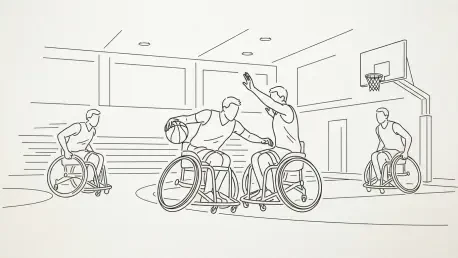
One of the most significant realizations for participants involved the intricate technical demands of wheelchair basketball, where manual dexterity is tested to its absolute limit. Players found that the simple act of propelling a chair while simultaneously dribbling or passing a ball required a level of coordination that few had ever practiced. This discipline effectively neutralized traditional physical advantages such as height; a notable instance involved a team that expected a tall member to dominate the hoop, only to find that being seated eliminated their reach advantage. This forced the group to rely on tactical positioning and speed rather than physical stature alone. The mechanical complexity of navigating a court while maintaining ball control provided a tangible lesson in the precision required by Paralympic athletes. It illustrated that mastery in this field is not about overcoming a deficit but about perfecting a highly specialized set of athletic skills that are largely distinct from standing sports.
In a similar vein, sitting volleyball presented a unique physical puzzle that challenged the participants’ understanding of balance and momentum without the use of their legs for verticality. Because players must keep at least one buttock in contact with the floor at all times, the sport demands exceptional core strength and rapid arm speed to move and react to the ball. Participants had to recalibrate their spatial awareness to a much lower center of gravity, which often resulted in a humbling experience for even the most fit corporate employees. This shift in perspective highlighted how Para athletes make extraordinary maneuvers look deceptively simple through years of specialized training. By the time the final whistle blew, the corporate teams had moved beyond the initial novelty of the equipment and were fully engaged in the strategic depth of the sport. The physical toll of the day served as a permanent reminder of the grit required to compete at a high level within the Paralympic movement.
Cultivating Trust Through Sensory Deprivation
Goalball stood out during the finale as the most psychologically demanding discipline, stripping players of their sight and forcing a total reliance on auditory cues. Participants were required to wear blackout goggles, which leveled the playing field completely but also introduced a significant sense of vulnerability and disorientation. The task of tracking a ball filled with internal rattles solely by sound demanded an intense level of focus and a quiet environment, creating a stark contrast to the noisy cheering of other sports. This environment fostered a unique form of non-visual communication where players had to trust their intuition and the presence of their teammates to protect the goal. Many participants described the initial moments as intimidating, yet as the game progressed, they found a rewarding sense of connection that transcended visual feedback. This sensory deprivation served as a masterclass in active listening and environmental awareness, skills that are often overlooked in standard office settings.
The profound impact of goalball on team dynamics cannot be overstated, as it necessitates a level of trust that few other activities can replicate. Without the ability to see the ball or their colleagues, players had to surrender their individual control and rely on the collective’s ability to interpret sound and movement. This shared vulnerability acted as a catalyst for camaraderie, breaking down corporate hierarchies and replacing them with a singular, unified goal of defense and coordination. The experience of navigating a pitch in total darkness while anticipating a fast-moving object created a bond among teammates that was both visceral and lasting. By the end of the sessions, participants frequently noted that their respect for goalball players had increased exponentially, recognizing the immense mental fatigue that comes with such heightened sensory processing. This specific segment of the Para Tough Cup redefined team building by demonstrating that true collaboration often begins when traditional methods of communication are removed.
Expert Insights and the Athlete Perspective
The presence of elite athletes like double gold medalist Chris Bond provided a vital bridge between the corporate participants and the reality of professional Para sports. Bond remarked that even for a high-level professional, switching to an unfamiliar Para-discipline remains a humbling and difficult endeavor. His insights helped the corporate teams understand that the fluidity they see on television is the result of thousands of hours of dedicated practice and technical refinement. By sharing his own journey and the rigors of wheelchair rugby, he humanized the competition and shifted the focus from the equipment to the individual athlete’s mastery. This perspective was crucial in ensuring that participants viewed their own struggles not as a failure of ability, but as a testament to the high entry barrier of these sports. Such interactions transformed the event from a simple corporate outing into a profound educational experience that challenged the very definition of what it means to be an elite athlete on the world stage.
Paralympic powerlifter Hani Watson further enriched the event by discussing the social implications of adaptive sports and the importance of early-intervention awareness. She expressed a deep appreciation for the corporate teams’ willingness to embrace these challenges, noting that such visibility is key to changing societal attitudes toward disability. Watson highlighted that many athletes spend a lifetime perfecting these skills in relative obscurity, and events like the Para Tough Cup provide a much-needed spotlight on their resilience. Her reflections on the lack of such diverse sporting opportunities during her own childhood resonated with many leaders in attendance, sparking conversations about inclusivity within their own organizations. This interaction emphasized that the cup is not just about physical activity, but about fostering a culture where diversity is viewed as a source of strength and specialized expertise. The athlete perspective ensured that every participant walked away with a more sophisticated understanding of the Paralympic movement’s global impact.
Strategic Impact on Corporate Culture and the Future
Looking beyond the immediate physical demands and the aching shoulders mentioned by many, the Para Tough Cup exerted a significant strategic influence on corporate culture. By engaging the business community directly, Paralympics Australia is successfully cultivating a knowledgeable and empathetic fan base long before the world gathers for Brisbane 2032. This long-term cultural preparation ensures that when the Games arrive, the local corporate sector will not just be sponsors, but informed advocates who understand the technical nuances of the competition. The event successfully transitioned corporate reputations into a shared appreciation for the resilience and skill inherent in every adaptive discipline. This initiative serves as a model for how sports can be used to drive social change and institutional empathy within large organizations. As these professionals return to their offices, they carry with them a renewed perspective on accessibility and the untapped potential that exists within diverse and adaptive environments.
The 2026 Para Tough Cup finale concluded with an overwhelming endorsement from the participating businesses, setting a high bar for future engagement initiatives. Organizers finalized the schedule for the 2027 series, which included planned events across Sydney, Brisbane, and Melbourne to accommodate the growing demand for these immersive experiences. The program successfully demonstrated that the most effective way to build respect for Para athletes was to put corporate leaders in the same seats and situations they occupy. Participants left the Nissan Arena not just with medals, but with actionable insights into how resilience and trust can be fostered through shared physical challenges. The event solidified its place as a cornerstone of the Paralympic movement’s strategy to integrate adaptive sports into the broader national consciousness. By the end of the series, the focus had shifted entirely from the difficulty of the tasks to the incredible nature of the athletic mastery displayed by those who compete in these disciplines every single day.