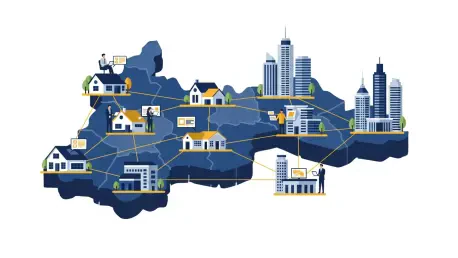

The global labor market is currently navigating a period of profound structural adjustment, moving away from the temporary fixes of the early 2020s toward a permanent architecture of hybrid work. While policymakers in Washington often find themselves bogged down in partisan rhetoric regarding the utilization of federal office space, a comprehensive inquiry from the United Kingdom’s House of Lords has emerged as a vital roadmap for sustainable economic growth. This investigation suggests that hybridity is no longer a peripheral employee benefit but a core driver of modern industrial efficiency and labor market resilience. By moving the conversation away from cultural preferences and toward quantifiable economic outcomes, the inquiry provides the United States with a necessary framework to address chronic issues such as stagnant productivity and labor shortages. American leaders have a unique opportunity to pivot from reactive mandates to a strategy that treats flexible work as a foundational element of the national infrastructure.
Economic Stability: Strengthening National Market Resilience
Current research indicates that widespread adoption of hybrid work models serves as a powerful stabilizer for the national economy, particularly when facing demographic shifts and a tightening job market. Analysts have observed that these flexible arrangements can effectively expand the total labor supply by approximately 2% by drawing in individuals who would otherwise remain outside the workforce. This surge in participation is critical for maintaining economic momentum and ensuring that essential industries remain staffed despite an aging population and changing social expectations. By providing a structural cushion, hybridity allows the economy to absorb shocks more effectively, preventing the kind of labor bottlenecks that lead to inflation and service disruptions. The ability to distribute work across varied locations and schedules ensures that the machinery of commerce remains operational even when traditional centralized hubs face logistical or financial pressures.
Beyond the macro-level benefits, the financial advantages for individual employers are increasingly evident in the significant reduction of staff turnover and recruitment expenses. Organizations that have embraced flexible policies report that employees now value the option to work remotely for a portion of the week as much as they would a substantial double-digit salary increase. In an era where the cost of replacing a skilled professional can reach double their annual salary, the retention power of hybrid work translates into billions of dollars in saved operational costs. This shift allows businesses to reallocate capital from constant recruiting and training cycles into research, development, and competitive compensation. Furthermore, the competitive advantage gained by offering flexibility attracts top-tier talent from a national pool, rather than being limited to local candidates. This democratization of opportunity ensures that the most capable individuals are matched with the right roles.
Social Mobility: Advancing Inclusivity and Workforce Diversity
One of the most transformative aspects of the hybrid shift is its role as an engine for inclusivity, particularly for individuals with disabilities who were previously excluded by rigid office requirements. Historical data often highlighted the physical and logistical barriers of the daily commute as a primary deterrent to full-time employment for this demographic, but the rise of remote options has changed that narrative. Recent statistics show a notable increase in the labor participation rate among workers with disabilities, a trend that directly correlates with the availability of home-based professional roles. By leveraging assistive technologies and the comfort of controlled environments, these employees are contributing their specialized skills at record levels across various sectors. This transition not only reduces the societal reliance on government support programs but also enriches the workforce with diverse perspectives and problem-solving approaches that were previously untapped.
The geographical liberation afforded by hybrid work models is simultaneously revitalizing rural communities and lowering the barriers to entry for individuals living in high-cost urban fringes. Families are no longer forced to choose between a high-paying career and an affordable quality of life, allowing for a more balanced distribution of economic wealth across the country. This decentralization of the workforce helps to mitigate the housing crises in major metropolitan areas while injecting new spending power into local economies that were once struggling with brain drain. For parents and caregivers, the ability to eliminate hours of commuting each week provides the necessary time to balance professional responsibilities with family needs without sacrificing career progression. This flexibility creates a more resilient and diverse workforce, ensuring that professional success is determined by merit and output rather than the proximity of one’s residence to a central business district.
Performance Standards: Redefining Productivity in a Hybrid Era
The persistent skepticism regarding home-based productivity is increasingly being refuted by a growing body of rigorous academic studies and large-scale randomized control trials. These findings consistently demonstrate that hybrid workers maintain, and in many cases exceed, the output levels of their traditional full-time office-based counterparts. The gains are often attributed to the reduction of workplace distractions and the elimination of the psychological and physical exhaustion associated with long daily commutes. When employees are granted autonomy over their environments, they tend to report higher levels of focus and job satisfaction, which translates into a more dedicated and reliable workforce. The data suggests that the old metric of desk time is a poor proxy for actual value creation in a modern, knowledge-based economy. Transitioning toward a results-oriented management style allows organizations to focus on tangible deliverables rather than the visual performance of being present at a specific desk.
To maximize the benefits of this new arrangement, many successful organizations are adopting a hybrid design that utilizes anchor days to facilitate essential face-to-face collaboration. These scheduled periods of in-person interaction are dedicated to team-building, brainstorming, and complex problem-solving that benefit from immediate social cues and spontaneous dialogue. Outside of these designated times, employees are encouraged to perform deep, focused work from their home offices, where they can control their schedule and environment for maximum efficiency. This nuanced approach avoids the pitfalls of both fully remote and fully in-office models by intentionally pairing the right tasks with the right locations. It requires a shift in leadership mindset from passive observation to active coordination, ensuring that every hour spent in the office is purposeful and high-value. This strategic alignment of physical presence with specific functional needs represents the next evolution of professional management.
Modern Governance: Improving Management and Infrastructure Oversight
The current friction within the United States federal government regarding telework policies is largely a symptom of antiquated management structures rather than a failure of the hybrid model itself. Much of the political backlash has been fueled by inconsistent data tracking and a lack of clear accountability mechanisms that have left taxpayers questioning the efficiency of a distributed workforce. Addressing these concerns requires a rigorous modernization of oversight tools, including the implementation of objective performance metrics and real-time project management platforms. Rather than reverting to 2019 standards as a default reaction, government leaders should focus on refining the administrative processes that govern remote and hybrid arrangements. This involves training managers to lead distributed teams effectively and ensuring that performance issues are addressed with the same rigor regardless of where an employee is physically located. Modernizing these systems is essential for a competitive civil service.
Successful hybrid policy also necessitates a significant investment in the digital and physical infrastructure that supports a distributed workforce. For the federal government and private sectors alike, this means upgrading cybersecurity protocols to protect sensitive data across a variety of home-based networks and portable devices. It also requires the physical transformation of traditional office buildings into flexible hubs that are optimized for technology-integrated meetings rather than rows of individual cubicles. By focusing on mission-driven results and the technological tools required to achieve them, the United States can build a public sector that is both efficient and attractive to the next generation of digital-native talent. This modernization ensures that the country’s administrative and economic centers are not just maintaining old habits but are actively preparing for the complex demands of a globalized economy. Strategic infrastructure planning is the bridge between current challenges and a more resilient future.
Strategic Planning: Developing a Forward-Looking Policy Framework
Establishing a long-term strategic framework for hybrid work required a fundamental shift in how the government and private sector viewed the concept of a workplace. Instead of relying on rigid, one-size-fits-all mandates, successful organizations moved toward a policy of flexibility with intentionality, where the specific needs of the project dictated the location of the worker. This approach necessitated a collaborative effort to redefine labor laws, ensuring that remote employees were protected by the same safety and privacy standards as those in a physical office. Financial institutions and government agencies worked together to create a secure digital environment that supported seamless, distributed operations. By focusing on mission-driven outcomes rather than simple clock-watching, this policy environment fostered a culture of trust and high performance. These changes provided the legal and operational certainty necessary for businesses to commit to hybrid models as a permanent feature of their long-term growth strategies.
The decision to implement a national hybrid work blueprint ultimately revitalized the economic landscape by connecting talent with opportunity regardless of geography. Policymakers who prioritized investments in rural broadband and digital literacy saw an immediate return in the form of higher employment rates and more balanced regional development. The transition also spurred a wave of innovation in project management software and cybersecurity, making the nation’s digital infrastructure the most resilient in the world. Organizations that successfully integrated anchor days and results-oriented management reported a significant boost in both employee morale and total productivity. By moving beyond the limitations of the traditional office, the country created a more inclusive and flexible economy that was better equipped to handle global challenges. These strategic actions transformed the nature of professional life, ensuring that the labor market remained competitive, sustainable, and prepared for any future disruptions.