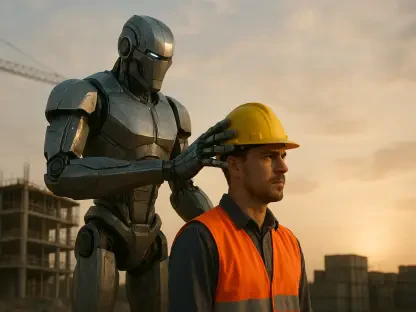

The common narrative that automation leads to flattened organizational structures is being countered by evidence of a widening capacity gap in leadership. For years, the prevailing theory suggested that the proliferation of advanced algorithms and automated decision-making frameworks would effectively strip away the need for middle management, creating a streamlined, self-governing workforce. However, the reality of the mid-2020s has proven far more complex. Instead of the anticipated obsolescence, the corporate world is witnessing a dramatic intensification of the managerial role, as these individuals become the essential human filters for a relentless stream of technological updates and organizational shifts. Business leaders now recognize that the human element is not a vestige of a bygone era but a critical stabilization mechanism in an increasingly volatile market. The promise of AI-driven efficiency has, in many cases, actually increased the cognitive load on supervisors, who must now bridge the gap between machine-generated data and human-centric strategy. This phenomenon has created a situation where the demand for nuanced leadership far outstrips the current systemic capacity to support it, leading to a precarious state for those at the helm of modern teams.
The Rapid Expansion of Managerial Duties
Assessing the Growing Weight: The Evolution of Leadership Roles
The scope of a manager’s job has grown significantly over the last three years, with a vast majority of business leaders noting an increase in both complexity and volume. Today’s supervisors are expected to move far beyond simple administrative oversight, taking on the roles of strategic talent architects and primary change agents. This expansion includes a shift toward personalized coaching and mentorship, reflecting a move away from traditional command and control styles toward a model focused entirely on employee development. As the labor market becomes more competitive, the responsibility for talent retention and career growth has fallen squarely on the shoulders of middle management. They are now required to curate individualized career paths for their subordinates while simultaneously ensuring that the team remains aligned with rapidly shifting corporate objectives. This dual pressure of being both a technical supervisor and a career counselor has redefined the baseline expectations for anyone in a leadership position, making the role more emotionally and intellectually demanding than at any point in recent history.
Furthermore, the integration of generative AI into daily operations has added a specialized layer of oversight that did not exist in previous organizational models. Managers are now tasked with supervising AI-enabled workflows, which requires a deep understanding of how these tools interact with human creativity and output. This oversight is not merely technical; it involves the ethical and strategic governance of how automated systems are utilized within a team. Instead of reducing the manager’s workload, these tools have created a new category of “digital stewardship” where the leader must continuously audit the quality and reliability of machine-generated work. The expectation is that a manager will act as the final arbiter of truth and quality, ensuring that the speed of AI does not come at the cost of brand integrity or operational accuracy. This evolution suggests that the modern manager is becoming a hybrid professional, one who must master the nuances of human psychology while simultaneously serving as a sophisticated supervisor of high-tech automated processes.
Expanding Spans of Control: The Quantitative Pressure
Beyond the qualitative shift in duties, managers are also dealing with a quantitative increase in team sizes that strains their ability to provide meaningful direction. Nearly half of modern leaders report overseeing more people than they did just a few years ago, compounding the pressure of their expanded task lists. This expansion of the span of control is often a side effect of corporate restructuring efforts that aimed to trim “middle-level fat” but ended up overloading the remaining supervisors. When a single manager is responsible for a dozen or more direct reports, the ability to engage in high-value activities like one-on-one coaching or strategic planning becomes severely compromised. The administrative burden of managing larger groups—ranging from performance reviews to conflict resolution—leaves very little room for the deep thinking required to navigate the current technological landscape. Consequently, many managers find themselves in a reactive cycle, simply putting out fires rather than building the future-ready teams that senior executives claim to prioritize.
This “more tasks, more people” environment creates a bottleneck that threatens to stifle strategic execution across the entire enterprise. When managers are spread too thin across coaching, talent planning, and change management, they struggle to provide the high-value leadership that organizations desperately need to stay competitive. The result is a paradox where the very people responsible for driving innovation are the ones most hindered by the sheer volume of their responsibilities. As organizational charts continue to expand horizontally, the lack of proportional support systems means that many managers are operating at their absolute capacity limits. This structural imbalance not only impacts the quality of work produced but also diminishes the manager’s ability to act as a mentor. Without a radical reconsideration of how many direct reports a human leader can effectively guide in a high-complexity environment, companies risk creating a management layer that is broad in scope but shallow in impact, ultimately undermining the long-term health of the organizational culture.
The Complex Relationship Between AI and Productivity
Navigating the Human-AI Collaboration Trap: The Quality Gap
Contrary to the belief that AI will automate management away, the vast majority of executives believe that human oversight will remain as important—if not more so—to future business success. While AI is unparalleled at processing data and generating reports, it lacks the human context, empathy, and nuanced judgment required to lead a diverse workforce through periods of disruption. The consensus is clear: AI is a tool to be managed, not a replacement for the person doing the managing. However, the current deployment of these tools often adds to the managerial burden rather than relieving it. The primary issue lies in a productivity trap where AI-generated output requires significant human intervention to ensure quality and accuracy. Employees often spend hours each week correcting low-quality AI work or refining generic outputs to meet specific professional standards. This burden ultimately rolls up to the manager for final governance and quality assurance, essentially adding a new layer of “output auditing” to an already full schedule.
This dynamic creates a deceptive sense of efficiency where the quantity of output increases, but the human effort required to make that output usable remains constant or even grows. If AI is used merely to generate more content without removing low-value manual tasks, it becomes just another layer of responsibility for the manager to supervise. For AI to truly assist in a meaningful way, it must be used as a capacity creator that frees up time for human-centric activities like conflict resolution and ethical decision-making. Currently, many organizations are seeing a trend where the “speed” of AI generates a volume of work that overwhelms the “capacity” of the human leaders responsible for its oversight. The challenge for the modern enterprise is to find a way to integrate these tools so that they truly offload the cognitive burden rather than simply shifting it from one type of task to another. Without this distinction, the introduction of AI risks becoming a net negative for managerial productivity, as the time saved in drafting is lost in the rigorous checking and correction of automated errors.
The Myth of Automated Oversight: Why Empathy Still Matters
The limitations of artificial intelligence become most apparent when dealing with the intricate web of human emotions and interpersonal dynamics that define a workplace. While an algorithm can track progress toward a key performance indicator, it cannot sense the subtle signs of burnout in a top performer or navigate the political sensitivities of a cross-departmental conflict. Effective management in 2026 relies heavily on the ability to provide empathy and context, two things that machines are fundamentally incapable of replicating. Managers often serve as the emotional stabilizers for their teams, providing the psychological safety necessary for employees to take risks and innovate. As AI takes over the more routine aspects of project management and data analysis, the human manager’s role is being distilled down to its most essential human elements. This transition requires a level of emotional intelligence that was perhaps undervalued in the past but has now become the primary differentiator between a functional team and a high-performing one.
Furthermore, the strategic context provided by a human leader is what gives meaning to the data generated by AI systems. A machine might identify a drop in productivity, but only a manager can understand the underlying causes—be it a shift in market sentiment, a personal crisis for a key employee, or a misalignment of values within the team. This ability to synthesize disparate pieces of human information into a coherent strategy is what makes the traditional manager indispensable. As organizations lean more heavily on automated systems, the value of human judgment only increases, as it provides the necessary “sanity check” for machine-led conclusions. The most successful teams are those where the manager uses AI to handle the quantitative “what” while they focus on the qualitative “why” and “how.” This division of labor allows for a more human-centric workplace where technology serves human goals, rather than humans serving the needs of an automated system, but it requires a manager who is highly skilled in both domains.
Addressing the Crisis of Managerial Burnout
Closing the Preparedness Gap: The Cost of Under-Equipped Leaders
The relentless expansion of the managerial role has led to a documented surge in stress and burnout across the corporate world, creating a silent crisis within the middle-management tier. Many supervisors regularly consider quitting because the emotional weight of managing people through layoffs, AI-related anxiety, and workplace conflicts has become overwhelming. These “people problems” are inherently complex and cannot be solved by an algorithm, yet many managers feel they are expected to handle these dynamics without the proper emotional or structural support from senior leadership. The transition from a technical contributor to a people leader is already difficult, but doing so in an environment where the rules are constantly being rewritten by technological change adds an unbearable level of pressure. When managers are not given the tools to manage their own stress, their ability to support their teams diminishes, leading to a cascade of disengagement throughout the organization that can be difficult to reverse.
Compounding this stress is a glaring lack of adequate training for the modern era, as many companies focus their professional development budgets on technical upskilling at the expense of leadership soft skills. While organizations are quick to invest in teaching their staff how to use the latest AI interface, they often underskill their people leaders when it comes to navigating sensitive human issues. Only a minority of managers feel truly prepared to address the specific anxieties brought about by AI integration or the complexities of managing a hybrid, multi-generational workforce. This gap in preparedness means that many supervisors are forced to learn through trial and error, a process that is both inefficient and damaging to team morale. Without a strategic focus on managerial wellbeing and specialized training that addresses the realities of 2026, organizations risk a total breakdown of their middle-management tier. The human backbone of the company is fraying, and without immediate intervention, the very people responsible for implementing a company’s vision will be too exhausted to see it through.
The Struggle with Digital Anxiety: Leading Through Uncertainty
Managers are currently operating as the primary shock absorbers for the anxiety that often accompanies technological disruption. When employees fear that their roles might be automated or their skills rendered obsolete, they turn to their direct supervisors for reassurance and clarity. However, managers are often navigating the same uncertainties themselves, creating a situation where they must project confidence while simultaneously learning how to adapt to the same new tools. This “double burden” of managing both their own professional evolution and the emotional states of their teams is a significant contributor to the burnout mentioned previously. The ability to communicate transparently about the future of work while maintaining a focus on current performance is a delicate balancing act that requires a high degree of psychological resilience. Organizations that fail to provide their managers with clear roadmaps for technological adoption are essentially leaving them to navigate a storm without a compass.
Furthermore, the expectation that managers should be the ones to “fix” AI-related anxiety is often an unfunded mandate, added to their plates without any reduction in other responsibilities. This lack of dedicated time to focus on team health means that these critical conversations are often rushed or avoided altogether, leading to a lingering sense of unease. To address this, leadership training must move beyond basic administrative skills to include “technological change management” as a core competency. Managers need to be taught how to help their teams find their place in an AI-assisted world, focusing on the human-unique skills that will remain relevant. When supervisors are empowered with the knowledge and the time to address these anxieties head-on, they can transform a period of disruption into an opportunity for growth and re-skilling. However, this requires a top-down recognition that the “people work” of management is not a secondary task but the most important job a manager has in a digital age.
Strategies for Organizational Redesign
From Friction Audits to Real-Time Coaching: Building Capacity
To sustain the management tier, organizations must look beyond traditional seminars and focus on fundamental role redesign that addresses the root causes of capacity overload. A “friction audit” is an essential first step in this process, identifying redundant bureaucratic hurdles and inefficient reporting systems that slow managers down and drain their cognitive resources. By stripping away unnecessary administrative tasks—such as repetitive data entry or overly complex approval chains—companies can create the breathing room necessary for managers to focus on high-impact leadership. The goal is to simplify the architecture of the role so that the primary mission of translating strategy into results through people remains the central focus. This is not about doing more with less, but about doing the right things with the right amount of focus. When the “noise” of corporate bureaucracy is reduced, managers can re-engage with their teams in a way that is proactive rather than reactive.
Furthermore, the traditional model of annual or semi-annual training is no longer sufficient in a fast-moving, tech-driven environment where skills can become outdated in months. Organizations need to provide real-time coaching and support that exists within the “flow of work,” allowing managers to handle emerging issues as they arise with the help of embedded digital guidance. This shift toward “just-in-time” learning ensures that the advice and tools provided are directly applicable to the challenges at hand, whether it is a difficult performance conversation or the integration of a new automated tool. By leveraging internal communication platforms to provide instant access to leadership resources and peer networks, companies can foster a culture of continuous development. When technology is used to “give back time” and provide instant support, managers can double down on the human elements of their roles. Ultimately, linking managerial effectiveness to tangible business outcomes like team productivity and internal mobility provides a clear metric for success, proving that well-supported leaders are the ultimate driver of a company’s bottom line.
Redefining Success: Aligning AI Strategy with Management Support
The final stage of this organizational redesign involves a fundamental shift in how technology is valued within the management hierarchy. Instead of viewing AI purely as a means of reducing headcount or increasing the volume of output, forward-thinking organizations are beginning to view it as a capacity-enhancing strategy for their leadership teams. This involves prioritizing AI use cases that specifically target the low-value, high-effort tasks that currently plague the managerial workday, such as meeting summarization, schedule coordination, and progress tracking. When these administrative burdens are lifted, the manager is finally able to dedicate their full attention to the “human-unique” aspects of the job—such as cultural stewardship, ethical governance, and long-term talent strategy. This approach recognizes that the value of a manager is not found in their ability to process information, but in their ability to inspire and direct human effort toward a common goal.
This strategic alignment also requires a change in how performance is measured at the managerial level. In an AI-integrated workplace, the metric of a “good manager” should shift away from basic task completion toward deeper indicators of team health and strategic alignment. Success should be measured by the team’s ability to adapt to change, the rate of internal promotion, and the successful integration of new technologies without a loss of morale. By rewarding managers for their ability to build resilient, AI-literate teams, organizations send a clear message that the human leader is the most vital component of their technological future. This creates a virtuous cycle where managers are incentivized to invest in their people, knowing that their own success is inextricably linked to the growth and wellbeing of those they lead. In this model, AI serves as the foundation of efficiency, but the human manager remains the architect of success, ensuring that the organization moves forward with both speed and soul.
The Path Toward Sustainable Modern Leadership
The exploration of these trends revealed that the path forward required a fundamental shift in how organizations viewed their management tiers. It became clear that the traditional model of the manager as a “task-checker” had finally reached its expiration date, replaced by a much more complex role that demanded both technological fluency and deep emotional intelligence. The data indicated that those companies which proactively conducted friction audits and redesigned roles were the ones that saw the highest returns on their AI investments. By identifying the specific bottlenecks that prevented leaders from engaging with their teams, these organizations were able to create a more sustainable and effective management structure. The research also highlighted that the most successful leaders were those who successfully transitioned from being “commanders” to being “coaches,” using technology to support their human efforts rather than compete with them.
In light of these findings, the next steps for any organization must involve a deliberate investment in the “human infrastructure” of management. This includes not only the deployment of capacity-creating AI tools but also a significant increase in the emotional and structural support provided to middle leaders. Moving forward, businesses should consider formalizing “real-time coaching” systems and ensuring that the span of control remains within a range that allows for genuine mentorship. The evidence showed that when managers were treated as strategic assets rather than administrative catch-alls, they were capable of navigating even the most turbulent technological shifts. The final takeaway was that the future of leadership did not belong to the most advanced algorithms, but to the organizations that best empowered their human managers to lead with empathy, context, and strategic vision in an increasingly automated world.