
Integrating heat safety into a project’s operational DNA helps resolve the natural tension between productivity demands and the necessity for mandatory cool-down periods. As temperatures across the United States reach unprecedented levels, the American construction industry is undergoing a fundamental transformation in how it perceives environmental hazards. Historically, extreme heat was often dismissed as a seasonal nuisance or an inevitable rite of passage for seasoned laborers, but today, it is being reclassified as a primary occupational threat on par with structural collapses or high-voltage electrical risks. This paradigm shift is driven by a sobering realization of the human toll recorded in recent years. In 2024, the U.S. Bureau of Labor Statistics documented forty-eight occupational fatalities specifically related to environmental heat exposure, with the construction sector accounting for half of those deaths despite representing only a small fraction of the total workforce. When these figures are combined with thousands of heat-related fatalities in the general population reported by health authorities, it becomes clear that construction sites are at the epicenter of a public health crisis that demands a proactive, data-driven response rather than reactive measures.
The Rising Pressure of Federal Oversight
Regulatory Shifts and Enforcement Standards
While a formal federal heat hazard regulation continues to move through the legislative pipeline, the Occupational Safety and Health Administration has significantly escalated its enforcement protocols to address the immediate danger. Through the National Emphasis Program for Heat Hazards, the agency has prioritized the inspection of high-risk industries, specifically targeting how employers identify and mitigate thermal risks before they escalate into emergencies. Under the “General Duty Clause,” companies are now frequently cited for failing to protect workers even in the absence of a finalized federal standard, effectively making the “ignorance of the law” defense entirely invalid in modern safety litigation. Inspectors now look for comprehensive evidence of heat illness prevention programs that are actively practiced rather than just stored in a binder. This heightened oversight means that contractors must treat heat with the same level of rigorous documentation and procedural discipline as fall protection or trench safety, as the legal and financial consequences of negligence have never been higher in the current regulatory environment.
Shifting Defensive Strategies for Employers
To navigate this increasingly strict regulatory climate, construction firms are moving away from passive safety cultures and adopting established guidelines from the National Institute for Occupational Safety and Health. The focus of modern defensive strategies has shifted toward the use of site-specific data and meticulous record-keeping to prove compliance during unexpected inspections. Employers are now expected to follow best practices that treat heat as a predictable and preventable danger, utilizing wearable technology and localized weather monitoring to trigger safety protocols. This transition requires a move from generic company-wide policies to dynamic, project-specific plans that account for the unique geographical and architectural challenges of each site. By documenting every training session, daily safety briefing, and equipment adjustment, firms are not only protecting their workforce but also building a robust legal shield against potential citations. In this landscape, a contractor’s ability to demonstrate a proactive stance on thermal management has become a critical component of corporate risk management and long-term business stability.
Identifying Hidden Thermal Risks on the Jobsite
Beyond Direct Sunlight and Thermometers
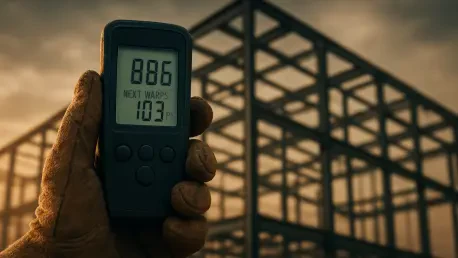
The most dangerous heat risks in construction are often the least obvious, extending far beyond the traditional image of workers standing under the direct midday sun. Indoor exposures in unfinished buildings, deep trenches, or poorly ventilated crawlspaces create stagnant heat zones where ambient temperatures can quickly exceed outdoor weather forecasts due to a lack of airflow. These micro-climates are particularly hazardous because they can lure supervisors into a false sense of security based on general regional weather reports that do not reflect the localized intensity of the workspace. Furthermore, the use of gas-powered tools and heavy machinery introduces “process heat,” which radiates directly toward operators and compounds the thermal load on the body. This combination of environmental and mechanical heat creates a cumulative effect that can overwhelm a worker’s cooling mechanisms much faster than sunlight alone. Consequently, modern risk assessments must involve measuring the Wet Bulb Globe Temperature or using Heat Index calculators at the specific point of work rather than relying on a distant thermometer at the site office.
The Paradox of Protective Equipment
A significant challenge in modern construction safety is the inherent conflict between traditional injury prevention and effective heat mitigation. While personal protective equipment is essential for preventing cuts, falls, and chemical exposures, it often acts as a heavy insulator that traps body heat and prevents the evaporation of sweat, which is the human body’s primary mechanism for cooling. When this insulation is combined with the high metabolic heat generated by heavy physical exertion, such as concrete pouring or structural steel assembly, a worker’s internal core temperature can reach dangerous levels even in relatively moderate external conditions. This “PPE Paradox” requires safety managers to rethink how gear is utilized during heatwaves, potentially opting for moisture-wicking materials or integrated cooling vests where applicable. Balancing the need for physical protection against the risk of heat stroke has become a complex engineering problem that requires constant monitoring and a willingness to modify work sequences to ensure that the very equipment designed to save lives does not contribute to a life-threatening thermal emergency.
Field Reality and Corporate Coordination
Implementation and Supervisor Autonomy
A written heat safety plan is now considered merely a “license to start” rather than a completed task, as the true measure of safety is found in its active implementation in the field. Effective protocols hinge on the authority of site supervisors to adjust production schedules in real-time as local weather conditions fluctuate throughout the day. This often involves moving the most strenuous activities to the early morning hours and transitioning from optional breaks to mandatory, timed cool-down periods in shaded or climate-controlled areas. Successful contractors have recognized that supervisor autonomy is the bridge between a policy on paper and a safe worker on the ground. By empowering foremen to stop work when the heat index reaches critical thresholds, companies prevent the cognitive decline that often leads to secondary accidents. This integration of heat safety into the daily operational flow ensures that productivity is maintained through the prevention of incidents rather than through the dangerous pushing of human limits during peak thermal hours.
Managing Multi-Employer Jobsites
Construction projects involve a complex web of general contractors and subcontractors, all of whom may fall under the multi-employer citation policy of safety regulators. To manage this collective risk, general contractors must set baseline expectations for the entire jobsite, including the provision of centralized cooling stations and unified communication protocols for broadcasting heat alerts to every crew. Contractual clarity has become essential to ensure that safety responsibilities are explicitly outlined and that every subcontractor is held to the same high standard of thermal management. This coordination prevents “finger-pointing” after an incident occurs and ensures that a unified safety culture exists across the various trades working in tandem. By establishing clear authority over work-stop orders and hydration requirements, the lead firm protects not only the individuals on-site but also the overall project timeline and insurance profile. In the modern industry, heat safety is viewed as a shared responsibility that requires seamless communication and mutual accountability among all parties involved in the building process.
Strategic Resilience through Proactive Management
The most successful firms in the industry eventually recognized that a “wait and see” approach to federal heat regulations was a high-risk strategy that endangered both lives and financial stability. Leading organizations voluntarily adopted proposed federal standards well in advance of their formal codification, choosing to invest in sophisticated monitoring technology and comprehensive training for their entire workforce. These companies realized that protecting their most valuable resource—their people—required a fundamental shift in how project timelines were calculated and how budgets were allocated for safety equipment. By moving toward a culture of active, documented, and site-specific heat management, these firms ensured the safety of their employees while simultaneously improving their standing with insurers and clients. The transition from viewing heat as a nuisance to treating it as a critical business risk allowed these organizations to maintain high productivity levels even during extreme weather events. Ultimately, the industry moved toward a model where thermal safety was no longer an optional add-on but a core pillar of operational excellence that defined the health of the modern construction enterprise.