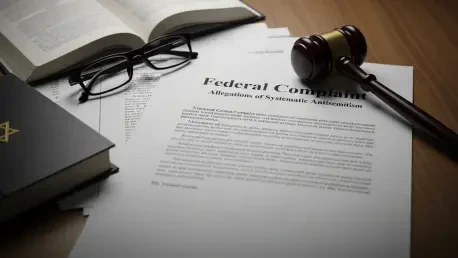

The halls of America’s largest labor union, once viewed as a sanctuary for the nation’s educators, are currently trembling under the weight of a massive 300-page federal complaint that alleges a culture of exclusion and fear. When the very organization tasked with protecting teachers is accused of fostering a hostile environment based on ancestry and religion, it signals a profound fracture in the foundation of American advocacy. This is not merely a localized dispute among colleagues; it is a landmark legal challenge that asks whether political activism has finally superseded civil rights protections in the classroom and beyond.
A Turning Point for America’s Largest Labor Union
The National Education Association (NEA) often champions itself as the ultimate “safe space” for the nation’s educators, yet this new legal filing suggests a much darker reality exists behind closed doors. This conflict reached a breaking point following the 2025 Representative Assembly in Portland, Oregon, where the Louis D. Brandeis Center alleges that Jewish members were subjected to a coordinated campaign of harassment. The implications are significant because the NEA represents millions of educators who shape the minds of the next generation, making any internal bias a matter of public concern.
If the nation’s largest union is found to have selectively enforced its conduct policies—allowing the vilification of one group while claiming to uphold inclusivity—it challenges the integrity of labor laws and the safety of the professional workplace. This case mirrors a broader national trend where educational institutions are struggling to navigate the volatile intersection of Middle Eastern geopolitics and federal anti-discrimination mandates. The outcome of this filing could redefine how unions manage the personal identities of their members alongside their political agendas.
Understanding the Gravity of the EEOC Filing
This formal complaint, submitted to the U.S. Equal Employment Opportunity Commission (EEOC), represents one of the most comprehensive documentations of alleged institutional bias in recent years. The Brandeis Center argues that the hostile atmosphere was not accidental but rather a result of leadership allowing political fervor to mutate into personal attacks. By bringing these grievances to a federal level, the complainants are seeking more than just an apology; they are looking for a structural overhaul of how the union handles “shared ancestry” protections.
The gravity of the situation is amplified by the fact that the NEA serves as a primary political powerhouse in Washington, D.C. If federal investigators determine that the organization violated civil rights, it could jeopardize the union’s standing and force a massive shift in its internal governance. This filing highlights a growing disconnect between the executive rhetoric of “belonging” and the visceral, day-to-day experiences of Jewish educators who claim they have been effectively pushed out of their own professional community.
Breaking Down the Systematic Allegations of Hostility
The documentation details a multifaceted breakdown of organizational culture that allegedly transformed the 2025 conference into a gauntlet for Jewish delegates. Central to the grievance is the “Symbolic and Verbal Hostility” experienced on the floor, where political symbols and apparel were reportedly used as tools for demonization rather than mere expression. Witnesses described a climate where any mention of Jewish identity or concerns was met with rehearsed opposition, turning a professional meeting into a theater of marginalization.
Furthermore, the filing highlights a “Fractured Safe Space,” arguing that the NEA’s failure to protect its Jewish members constitutes a direct violation of the trust required to maintain a professional union environment. The complaint points to “Institutional Neglect,” claiming that leadership remained passive while members expressed legitimate fears for their physical and emotional safety. One internal email included in the evidence, titled “What I Witnessed… Shook Me to My Core,” captures the shock of a member who felt the organization had abandoned its neutral, protective stance in favor of a specific political dogma.
Legal Frameworks and Expert Perspectives on Civil Rights
The Brandeis Center’s case rests on two major legal pillars: Title VII of the Civil Rights Act of 1964 and the D.C. Human Rights Act of 1977. These laws prohibit discrimination and harassment based on religion and shared ancestry in the workplace and by labor organizations. Legal experts note that while the NEA maintains it “does not tolerate antisemitism in any form,” the volume of evidence provided suggests a disconnect between official policy and reality. This gap is often the primary catalyst for federal investigations that lead to sweeping organizational reforms.
By invoking Title VII, the complainants are arguing that the NEA has a legal obligation to ensure that its activities do not create an environment that a reasonable person would find hostile or abusive. In contrast to simple political disagreements, these allegations suggest that the harassment was targeted and pervasive enough to interfere with the members’ ability to participate in the union’s governance. This legal strategy places the NEA in a position where it must defend its conduct as a neutral administrator of labor rights rather than a partisan advocacy group.
Navigating Political Expression and Workplace Protection
For organizations and unions currently facing similar internal divisions, this case provides a framework for addressing the intersection of advocacy and harassment. Effective strategies include the implementation of “Consistent Conduct Enforcement,” ensuring that rules regarding harassment are applied uniformly regardless of the political cause involved. Organizations must also prioritize “Neutral Dispute Resolution,” creating pathways for members to report hostility without fear of professional retaliation. By establishing clear boundaries between protected political speech and prohibited targeted harassment, institutions can uphold their legal obligations.
In the future, the resolution of this complaint will likely necessitate the adoption of more robust anti-bias training that specifically addresses the nuances of shared ancestry and religious identity. Organizations should consider drafting more explicit codes of conduct that define the line between advocating for a cause and alienating a demographic. Moving forward, the focus was placed on creating inclusive governance structures that prevented the majority from infringing upon the civil rights of the minority. This shift was intended to ensure that professional advocacy groups remained a home for all members, regardless of their background or personal beliefs.