
Failure to maintain a 35-foot safety distance from ignition sources during propane bus maintenance is at the heart of recent occupational health and safety charges. This legal scrutiny follows a serious incident in Red Deer where a technician suffered burns while working on a propane-fueled vehicle. In the current regulatory environment of 2026, Alberta authorities have emphasized that the ten charges against the bus company stem from multiple violations of the provincial Occupational Health and Safety Act. Specifically, the investigation pointed toward a failure to ensure the health and safety of a worker and a lack of proper equipment maintenance. This case serves as a pivotal reminder for the entire transportation sector regarding the volatile nature of alternative fuels. Industry experts suggest that the complexity of propane systems requires a more rigorous safety culture than traditional fleets. As the province continues to tighten oversight, companies must adapt to more stringent enforcement of safety codes and compliance.
1. Verify Specific Manufacturer Training: Essential Technical Competence
Technical proficiency in propane fuel systems is not a generic skill that can be transferred from one vehicle type to another without specialized instruction. The current Occupational Health and Safety requirements mandate that every staff member involved in the repair or maintenance of these systems must receive training directly based on the manufacturer’s specific fuel system handbook. This ensures that technicians understand the unique pressure ratings, valve configurations, and venting procedures associated with various propane brands. Without this precise knowledge, workers may inadvertently trigger a release of pressurized gas, leading to catastrophic flash fires. Fleet managers are now expected to audit their internal training programs to verify that every individual has been cleared for the exact equipment they are handling. This shift away from generalized mechanical training reflects a broader trend toward specialized certification in the alternative fuel market, where the margin for error is narrow.
Beyond the training itself, the administrative burden of proof lies with the employer to maintain a comprehensive repository of training documents within the facility. In the event of an inspection or a safety incident, these records serve as the primary evidence that the company exercised due diligence in preparing its workforce. These documents must clearly outline the dates of training, the specific manufacturer handbooks used, and the competency levels achieved by each employee. Failure to keep these records organized and accessible can lead to significant legal exposure even if the training was technically conducted. Modern digital management systems are increasingly being used to track these certifications in real-time, sending alerts when renewals are necessary. This systematic approach to documentation ensures that a safety supervisor can immediately verify if a technician is qualified to perform a high-risk task. Maintaining these files is a foundational element of daily safety management.
2. Perform a Documented Risk Evaluation: Systematic Hazard Mitigation
A written hazard assessment is a mandatory precursor to any maintenance activity involving pressurized fuel lines or propane components. This process requires a detailed walkthrough of the physical space and the specific task at hand to identify potential points of failure or environmental hazards. The evaluation must be documented in a way that is specific to the day’s conditions, accounting for variables like ambient temperature and ventilation performance. By formalizing this assessment, supervisors force a momentary pause in operations, allowing for a deliberate review of safety protocols. This prevents the “normalization of deviance,” where workers might become complacent with repetitive tasks and overlook subtle risks. The documentation serves as a living record that safety was prioritized over speed, providing a clear roadmap for the technician to follow throughout the repair process. This practice is now a central pillar of the Alberta OHS Code and a safety requirement for all fleets.
Identifying potential flash fire risks during the evaluation process requires a keen understanding of how propane behaves when released into the atmosphere. Because propane is heavier than air, it can pool in low-lying areas or service pits, creating invisible pockets of explosive gas. A documented risk evaluation must include checks for these accumulation points and verify that all nearby electrical equipment is rated for hazardous locations. When workers are forced to engage with the fuel system, the assessment must also specify the exact steps for depressurization and containment. Incorporating these findings into a pre-job safety meeting ensures that the entire team is aware of the boundaries of the safe work zone. This proactive identification of hazards significantly reduces the likelihood of unplanned ignition events. It also empowers workers to stop the job if they notice a change in conditions, fostering a culture of mutual accountability across the entire facility.
3. Relocate Vehicles to a Safe Exterior Zone: Environmental Safety Controls
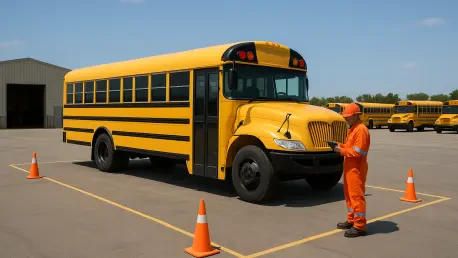
Moving propane-powered buses to a well-aired outdoor spot is a non-negotiable safety step before any fuel line work begins. The goal is to provide maximum natural ventilation that can quickly dissipate any accidental gas release, preventing the buildup of flammable concentrations. Indoor shop environments, regardless of their mechanical ventilation capacity, often lack the rapid air exchange needed to manage a sudden propane surge. By conducting this work outside, the technician removes the threat of gas being trapped under ceilings or within structural voids. This relocation must be handled with precision, ensuring the vehicle is positioned on level ground and secured against accidental movement. This outdoor strategy is recognized by safety regulators as the most effective engineering control for preventing large-scale industrial explosions. In the context of the recent charges, the failure to utilize an exterior workspace was highlighted as a primary factor that contributed to the harm.
Maintaining a minimum distance of 35 feet from any potential spark or ignition source is the critical spatial requirement defined by the CSA B149.5 standards. This buffer zone must be clear of all active machinery, open flames, and even electronic devices that could generate a static discharge. Establishing this perimeter requires physical markers or barriers to prevent unauthorized entry by other staff members who might be unaware of the danger. The 35-foot rule is based on the dispersion patterns of propane and provides a necessary margin of safety for the technician. During the relocation process, the safety supervisor must personally verify that the chosen exterior zone meets these distance requirements in every direction. This spatial management is not merely a suggestion but a strict legal obligation designed to isolate the work from the daily hazards of a busy maintenance facility. By strictly enforcing this clearance, companies can virtually eliminate the possibility of a stray spark event.
4. Distribute Fire-Rated Protective Gear: Protective Equipment Standards
The transition toward stricter compliance began with the overhaul of internal safety manuals to prioritize manufacturer-specific guidelines. Fleet managers implemented mandatory daily audits of all high-risk maintenance zones to ensure ignition sources remained isolated. The workforce adopted a culture of continuous monitoring, utilizing digital check-ins to verify the use of fire-rated protective gear before any fuel line was opened. Educational workshops focused on the physical properties of propane, specifically its tendency to accumulate in low-lying shop areas. Safety leads invested in upgraded ventilation systems and external service pads that facilitated safer repair environments. These measures significantly reduced the frequency of near-miss incidents and improved the overall emergency response capabilities of the team. By effectively aligning operational habits with the Alberta OHS Code, the organization secured its long-term viability. These proactive strategies provided a clear framework for other regional carriers to follow.
Providing flame-resistant outer clothing served as the final line of defense for employees who faced the risk of a flash fire. In the event of an ignition, standard cotton or synthetic uniforms could melt or catch fire, leading to devastating thermal injuries. Fire-rated gear, constructed from specialized materials like Nomex or treated cotton, was designed to withstand intense heat for a short duration, providing the wearer with vital seconds to escape the danger zone. Every employee working within the 35-foot perimeter had to be equipped with this protective gear, which was inspected regularly for wear and tear. Proper maintenance of this PPE was essential, as contaminants like oil or grease could compromise its flame-resistant properties. Employers were responsible for not only purchasing this equipment but also ensuring that it was worn correctly and fitted the technician properly. This emphasis on high-quality protective layers underscored the high-stakes environment of propane maintenance.