
While many executives worry about isolation, remote employees at a major healthcare firm reported a well-being average of 4.22 on a five-point scale. This statistic challenges the long-standing assumption that physical presence in a central office is the primary driver of organizational health and individual job satisfaction. Since 2026, the global workforce has undergone a seismic shift, moving away from rigid cubicle environments toward flexible arrangements that prioritize autonomy and trust. For many professionals, the transition has not merely been about location but about reclaiming time that was previously lost to traffic jams and unproductive water-cooler small talk. As technology continues to evolve with advanced asynchronous communication tools and immersive virtual collaboration spaces, the distinction between work and personal life has become more fluid, yet paradoxically more manageable for those with high levels of self-discipline. This evolution suggests that well-being is not a byproduct of proximity, but rather of the agency employees feel over their schedules and environments.
Psychological Shifts: The Value of Time Autonomy
Mitigating Stress: Workspace Personalization and Environmental Control
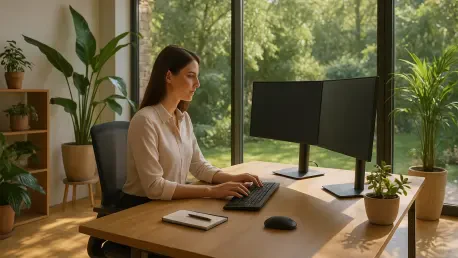
The elimination of the daily commute remains one of the most significant contributors to the improved mental health of the modern workforce. By avoiding the psychological tax of navigating rush-hour traffic or crowded public transit, employees are entering their professional tasks with a higher baseline of patience and mental clarity. Data from 2026 suggests that the average worker saves approximately six hours per week by working from home, time that is frequently reinvested into physical exercise, sleep, or family engagement. Furthermore, the ability to control one’s immediate sensory environment—such as lighting, temperature, and noise levels—allows for a level of deep focus that is often impossible to achieve in an open-plan office. This environmental agency directly counters the feelings of helplessness and sensory overload that frequently lead to burnout. Consequently, the home office has evolved from a temporary solution into a highly specialized sanctuary where professional output and personal comfort exist in a symbiotic relationship.
Building Trust: Evaluative Metrics and Professional Maturity
Beyond physical comfort, the psychological benefits of remote work are deeply rooted in the trust established between management and staff. When employees are evaluated based on their measurable output rather than their physical presence at a desk, a culture of accountability replaces the performative busyness that once plagued corporate life. This shift allows individuals to align their most demanding tasks with their natural circadian rhythms, whether they are early birds or night owls. As of 2026, organizations that have fully embraced this model report lower turnover rates and higher levels of engagement, as workers feel respected as adults capable of managing their own time. This newfound flexibility provides a buffer against the unexpected stresses of daily life, such as a sick child or a home maintenance emergency, which previously would have caused significant professional disruption. The resulting peace of mind is a critical component of a sustainable well-being strategy that prioritizes the human element over rigid, outdated traditions.
Future Directions: Strengthening the Hybrid Ecosystem
Social Connectivity: Bridging the Digital Divide with Intentionality
While the benefits of autonomy were clear, the challenge of maintaining a cohesive company culture in a decentralized environment required intentional effort and sophisticated digital infrastructure. To prevent the isolation that some critics feared, forward-thinking firms utilized high-fidelity video conferencing and persistent chat platforms to foster casual interactions that mimicked the serendipity of an office kitchen. These tools evolved to include virtual social hubs where employees discussed non-work topics, ensuring that professional relationships were built on more than just transaction-based task lists. In 2026, the most successful remote-first companies were those that scheduled regular virtual team-building exercises that focused on genuine connection rather than forced fun. By prioritizing quality over quantity in social interactions, managers helped employees feel like part of a collective mission without the need for constant physical supervision. This approach ensured that the mental health benefits of remote work were not undermined by social detachment.
Strategic Integration: Recommendations for Long-Term Success
Organizations that successfully integrated these practices recommended a tiered approach to remote management, starting with the establishment of transparent performance metrics. They suggested that the most effective way to combat potential isolation was through the creation of mentorship programs that paired senior leaders with remote recruits to ensure professional growth did not stagnate. It was also concluded that the periodic use of physical gathering spaces for strategic retreats served as a powerful catalyst for long-term loyalty and creative synergy. Managers were encouraged to conduct regular pulse surveys to monitor the evolving needs of their staff, allowing for agile adjustments to company policy as new challenges emerged. The ultimate takeaway from this period was that well-being flourished when employees were given the freedom to design a work-life integration that suited their individual circumstances. This shift established a new standard for the industry, proving that high performance and high satisfaction were not mutually exclusive goals in the modern era.