
Sofia Khaira is a distinguished specialist in diversity, equity, and inclusion, with a career dedicated to refining how organizations manage talent and develop their people. As an expert in HR initiatives, she focuses on the intersection of workplace environment and employee wellbeing, advocating for inclusive spaces that cater to the diverse neurological and physical needs of a modern workforce. In our discussion today, we explore the often-ignored auditory dimension of the office, examining how sound shapes our ability to think, the hidden cognitive costs of background noise, and why personalized audio technology is the next frontier in sustainable productivity.
How does the constant hum of an open-plan office, specifically the intelligible speech of colleagues, fundamentally change the cognitive experience for an employee trying to focus?
Modern workspaces are rarely silent, and while we often think of background noise as a minor annoyance, it is actually a significant neurological drain. Research from 2021 by Halin and colleagues shows that exposure to intelligible background speech—conversations you can actually understand—drastically reduces performance on tasks that require working memory or reading comprehension. This happens because our brains are hard-wired to prioritize human speech above almost all other sensory inputs, meaning your mind is constantly trying to process a nearby conversation even if it is completely irrelevant to your work. This constant redirection of focus increases your cognitive load, forcing you to expend much more mental energy just to stay on task. Over a full workday, this extra effort leads to deep fatigue and a noticeable drop in efficiency, particularly for knowledge-based professionals who rely on sustained concentration.
If silence isn’t necessarily the golden ticket for productivity, how can controlled audio or self-selected music transform a stressful environment into a high-performance zone?
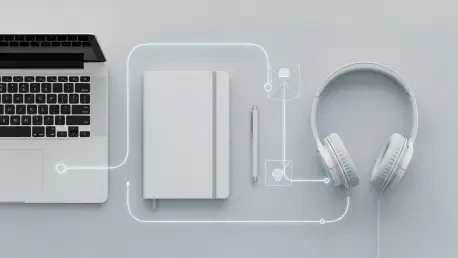
While unmanaged noise is a distraction, total silence can sometimes feel isolating or even heighten the impact of sudden sounds, whereas controlled audio provides a predictable environment. Studies, including those by Küssner in 2020, have demonstrated that listening to self-selected music can positively shift an employee’s mood and overall task engagement. When you choose your own soundtrack, it helps create a “focus zone” that encourages immersion, allowing you to dive deeper into complex projects without the jarring interruptions of the office floor. This emotional boost and predictability lead to more sustained concentration, proving that the goal shouldn’t be to eliminate sound entirely, but to give employees the power to manage it. By using headphones to curate their own acoustic landscape, workers can effectively shield themselves from the chaotic environment of a shared space.
The World Health Organization has pointed out that hearing is highly individual, yet most offices treat it as a universal experience. What are the hidden costs when we ignore these minor frequency sensitivities?
Hearing is a deeply personal sense, and the World Health Organization recently highlighted that subtle variations in how we hear frequencies are incredibly common across the global workforce. When we use standard audio equipment that treats every listener the same, the brain has to work significantly harder to fill in the gaps and interpret details that may be muffled or imbalanced for that specific individual. This phenomenon, known as listening fatigue, is especially prevalent in our “always-on” culture where employees spend hours each day on virtual meetings and video calls. The strain of trying to decode audio that isn’t optimized for your ears is physically and mentally exhausting, though many people don’t realize why they feel so drained by 3:00 PM. By ignoring these minor sensitivity differences, companies are unintentionally asking their employees to waste valuable cognitive energy on the simple act of listening.
Could you explain how personalized sound technology, like the systems developed in Sweden, moves beyond just turning up the volume to actually support a worker’s mental endurance?
True innovation in this space is coming from companies like Sweden-based Audiodo, which are moving away from the “one size fits all” approach to audio. Instead of simply increasing the volume—which can actually lead to more ear strain and long-term damage—this technology uses hearing profiling to create a unique audio calibration for the user. It fine-tunes specific frequencies to match the listener’s unique sensitivities in each ear, ensuring that every sound is crisp and clear without the need for excessive loudness. This individual calibration reduces the unnecessary mental effort required to process speech and sound, which preserves cognitive capacity for much higher-level tasks. When you aren’t struggling to hear, you have more energy available for creativity, complex analysis, and critical decision-making throughout the day.
When we look at the modern push for better workplace design, why do you think audio often takes a backseat to things like lighting or air quality, and how can companies fix this?
Organizations have historically invested heavily in ergonomic chairs, high-end lighting, and air filtration systems, yet they often overlook the acoustic dimension of the environment. However, research in workplace acoustics and cognitive psychology now shows that audio is just as vital to employee wellbeing and burnout prevention as any other physical factor. To fix this, companies need to treat sound as a strategic tool rather than an afterthought, recognizing that a “one size fits all” office plan will never work for everyone. This means embracing adaptive technologies that allow for individualization, much like we adjust the height of a desk or the brightness of a screen. By acknowledging the power of sound in cognitive performance, leaders can create a more inclusive culture where focus is supported and productivity feels sustainable.
What is your forecast for the future of auditory environments in the workplace?
I believe we are heading toward a future where “acoustic inclusion” becomes a standard part of the employee experience, driven by a shift from managing noise to personalizing sound. We will see more organizations moving away from basic acoustic panels and instead providing employees with sophisticated, hearing-calibrated devices that adapt to their specific neurological needs. As hybrid work continues to evolve, the ability to maintain a consistent focus zone regardless of location—whether at home, in a hub, or at a cafe—will be the hallmark of a high-performing team. Ultimately, the companies that thrive will be those that treat sound as a vital investment in their people’s mental endurance, ensuring that energy is preserved for the work that truly matters.