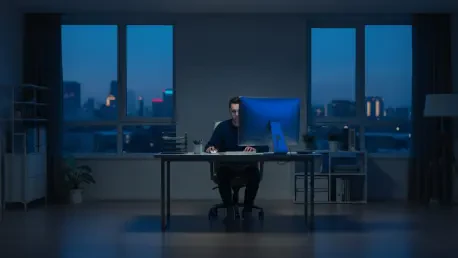

The silence of a home office was once heralded as the ultimate liberation from the chaotic hum of corporate life, yet for millions of Americans, this quietude has morphed into a distressing form of professional isolation. Recent data indicates that the initial surge of enthusiasm for fully remote work, which peaked during the global shifts of the early 2020s, has been replaced by a sobering realization regarding the necessity of human interaction. A massive research initiative involving half a million participants has unveiled a widening gap between the logistical advantages of working from home and the deteriorating state of employee mental health. While the elimination of a daily commute and the ability to control one’s immediate environment offered temporary relief, the long-term absence of a shared physical space has begun to erode the psychological resilience of the workforce. This shift suggests that the professional landscape is currently facing a crisis of solitude that could redefine the future of employment. Many professionals now find themselves struggling with a lack of boundaries and a sense of being perpetually tethered to their digital workstations without the relief of social presence. This environment creates a vacuum where the casual social cues that once defined the workday are absent, leading to a profound sense of disconnection from the broader organization.
Quantifying the Impact of Professional Solitude
Empirical DatThe “Home Alone” Study
Led by Professor Emma Harrington, the “Home Alone” study provides an extensive analysis of labor trends observed in the period leading into the current year of 2026, focusing on longitudinal data. By specifically excluding the anomalous data from the peak pandemic years, the researchers focused on identifying structural changes within the workforce that persist in a stable economy. The methodology meticulously categorized roles into “remotable” sectors, such as software engineering and digital marketing, and “non-remotable” industries, including healthcare and hospitality. This distinction allowed for a controlled comparison of mental health outcomes across different work environments. The data revealed that clinical distress and the demand for psychiatric services have risen significantly faster in industries where remote work is most prevalent. This trend highlights a systemic vulnerability within the digital-first economy that was previously obscured by the immediate convenience of telecommuting. It underscores the reality that physical presence serves as a primary pillar of emotional stability.
A particularly striking revelation from the study is the sheer volume of time remote workers spend in complete isolation compared to their on-site counterparts. According to the findings, roughly 84% of individuals working from home spend their entire professional day without any physical interaction, while only 23% of those in traditional office settings report similar levels of solitude. This disparity is even more pronounced for individuals who live alone, as they are thirteen times more likely to experience zero human contact during the entire work week. For these employees, the computer screen represents the only portal to the outside world, effectively turning their living spaces into digital silos. This lack of organic social engagement is not merely a social inconvenience but a fundamental change in the human experience of work. The data suggests that without the buffering effect of face-to-face contact, the psychological burden of professional responsibility becomes significantly heavier for the isolated worker, leading to higher levels of burnout.
Analyzing the Disparity: Office vs. Remote Socialization
The contrast between the “ghost town” atmosphere of modern offices and the bustling hubs of the past has created a ripple effect that touches even those who choose to work in person. When a critical mass of employees opts for remote work, the remaining staff often finds themselves in an environment that is socially stagnant and devoid of the spontaneous energy that drives collaboration. This phenomenon suggests that the social value of an office is dependent on collective participation rather than just physical presence. Even if an individual makes the effort to commute, the absence of colleagues prevents the formation of informal social buffers that traditionally protected workers from burnout. These micro-interactions, such as a brief conversation in a hallway or a shared moment in the breakroom, provided essential mental resets throughout the day. Without them, the work experience becomes purely transactional, stripped of the relational nuances that foster a sense of belonging and common purpose.
Furthermore, the study indicates that the psychological decline is not limited to those with a history of mental health challenges, suggesting that the environment itself is the primary driver. In industries where remote work has become the default, the lack of a shared social fabric has led to a widespread erosion of community. This systemic shift indicates that the problem is not merely an individual’s inability to adapt but a fundamental mismatch between remote work structures and human biological needs for connection. As professional interactions are increasingly funneled through scheduled video calls, the “porous” moments of the day are being eliminated. Traditionally, these moments allowed for emotional processing and social bonding, which are difficult to replicate in a virtual setting. The result is a workforce that is technically connected but emotionally detached, leading to a higher incidence of loneliness that persists even after the workday ends and effectively erodes the social fabric that once held professional teams together.
Balancing Accessibility with Social Connection
Flexibility as a Necessity: Management and Hybrid Models
While the data regarding isolation is concerning, it is important to acknowledge that remote work remains a vital tool for inclusivity and personal autonomy. For many employees, particularly those with physical disabilities or neurodivergent traits, the ability to control their environment is not a luxury but a prerequisite for successful employment. In these cases, the sensory stressors of a traditional office can be more detrimental than the isolation of a home office. Research into hybrid models, such as those implemented at major tech firms like Trip.com, demonstrates that flexibility can lead to higher job satisfaction and improved retention when managed with intention. These successful implementations suggest that the negative mental health outcomes observed in the “Home Alone” study are not an inevitable consequence of remote work but rather a result of poor management. When organizations prioritize clear communication and social integration, the benefits of flexibility can be maintained without sacrificing psychological well-being.
The key to a successful remote or hybrid strategy lies in the quality of leadership and the intentionality behind social interactions. Effective managers are now being trained to recognize the subtle signs of isolation and burnout in a digital environment, where visual cues are often missing. This proactive approach involves more than just checking on project progress; it requires a commitment to understanding the holistic experience of the employee. By fostering a culture where mental health is openly discussed, organizations can mitigate the risks of solitude while still offering the flexibility that modern workers crave. This balance is crucial for maintaining a competitive edge in 2026, as the workforce increasingly values well-being alongside compensation. Ultimately, the goal is to create a work environment that is adaptable enough to meet diverse needs while remaining robust enough to provide a sense of community. The challenge for modern leadership is to bridge this gap through innovative social strategies that emphasize connection.
Digital Burden: Actionable Solutions for Organizational Health
Beyond the physical isolation, the transition to digital-only environments significantly increased work intensity and the pressure of constant monitoring for many employees. The porous moments of a traditional office day, such as the short walk between meetings, were replaced by back-to-back video calls and a demand for immediate responsiveness on platforms like Slack or Teams. This always-on culture created a high-stress atmosphere where workers felt more scrutinized and rushed than they did in physical office settings. To address these challenges, experts increasingly advocated for a hybrid compromise that combined the focus of home with the social benefits of the office. Success in this model required leaders to be intentionally trained in recognizing signs of isolation and digital burnout in remote staff. Offices were also reimagined as social hubs rather than just rows of cubicles, prioritizing the types of breakout discussions and collaborative efforts that could not be effectively replicated through a screen.
Ultimately, the resolution of the remote work mental health crisis depended on a fundamental shift in how professional success was defined and measured. It was no longer enough to focus solely on productivity metrics; instead, the emotional and psychological health of the employee became a primary indicator of organizational health. Companies that prioritized the creation of social buffers and encouraged genuine human connection saw a marked improvement in overall morale and retention rates. The lessons learned from the vast data of the mid-2020s prompted a redesign of both digital workflows and physical office spaces to better serve human needs. By fostering environments where employees felt seen, heard, and supported, the professional world moved toward a future that valued the person as much as the product. This transformation ensured that the digital era did not come at the cost of the human spirit, providing a sustainable path forward for all workers. Moving forward, the emphasis remained on building communities that could thrive in any professional setting.