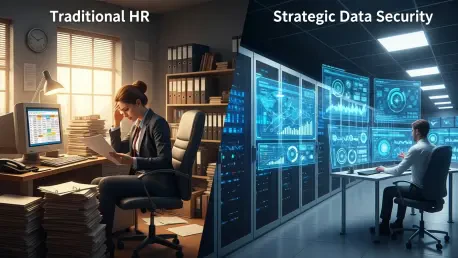

Modern human resources departments have undergone a fundamental transformation from being simple administrative hubs into the primary defenders of sensitive corporate and personal data assets. This shift defines the current era of personnel management, where the protection of medical records and personally identifiable information has become as critical as the recruitment process itself. While traditional structures prioritized the physical security of paper files and basic digital storage, contemporary frameworks must navigate a complex regulatory environment anchored by the UK GDPR and the recently established Data Use and Access Act 2025.
The evolving landscape necessitates a move away from viewing HR as a mere support function focused on payroll and performance reviews. Instead, practitioners now act as frontline gatekeepers of organizational resilience, utilizing advanced technologies to mitigate risks. Understanding the distinction between basic administrative oversight and strategic data security is essential for any organization seeking to maintain workplace trust and operational continuity in the face of sophisticated digital threats.
Core Differences in Operational and Security Frameworks
Risk Management and the Modern Cyber Threat Landscape
Traditional HR methodologies viewed personnel files primarily as internal administrative assets, but strategic data security recognizes these records as high-value targets for corporate espionage. This transition followed national security reports from 2025, which documented a record-breaking number of cyber incidents specifically targeting employee databases to facilitate identity theft and financial fraud. While older systems relied on basic filing protocols, modern security infrastructures utilize encrypted digital repositories to shield staff data from external actors.
In contrast to the passive nature of legacy personnel management, strategic security focuses on the active prevention of data exfiltration. The financial implications of a breach involving medical records or payroll details have moved beyond simple legal liabilities to become existential threats for many firms. Consequently, the focus shifted from managing employee behavior to securing the digital footprint of every individual within the organization.
Regulatory Compliance and Data Governance Standards
The regulatory environment has matured significantly, moving beyond the foundational requirements of the UK GDPR toward the more rigorous standards of the Data Use and Access Act 2025. Traditional compliance often involved periodic reviews of privacy policies, but current strategic mandates require proactive, continuous audits of access controls. This ensures that every piece of sensitive information, from legal documentation to performance evaluations, remains within a legally defensible framework.
Moreover, the governance of data retention has become more disciplined under new legislation. Organizations must now demonstrate a clear necessity for every byte of data they hold, replacing the casual management styles of the past. Implementing these standards required HR teams to develop a deep understanding of internal training programs that emphasize data hygiene and the specific compliance hurdles introduced by the latest national laws.
Remote Connectivity and Infrastructure Security
A major point of divergence between old and new models lies in how companies handle hybrid work environments and remote access. Traditional approaches often centered on employee engagement, whereas strategic security prioritizes the technical vulnerabilities inherent in remote connections. This has led to a critical evaluation of tools like the Virtual Private Network and the Proxy Server. A VPN provides a comprehensive solution by encrypting an entire internet connection, which is vital for accessing payroll platforms securely.
In contrast, a proxy server serves as an intermediary for specific applications or web traffic, offering a more localized form of security. For the modern HR professional, choosing between these technologies is not merely an IT decision but a strategic necessity to ensure that remote staff do not inadvertently expose the company to hackers. Maintaining workplace trust in 2026 relies heavily on the transparency and strength of these encryption protocols.
Navigating the Implementation Challenges of Strategic Security
Transitioning from an administrative role to a security-focused position presented a steep technical learning curve for many professionals. Moving away from legacy systems required significant financial investment and a complete overhaul of operational workflows to align with the Data Use and Access Act 2025. These costs were often difficult to justify until the reality of record-breaking cyberattacks made the alternative of inaction even more expensive.
Furthermore, balancing the need for rigorous internal data audits with the fundamental right to employee privacy remained a persistent obstacle. Organizations had to implement sophisticated monitoring tools that protected the company without creating an atmosphere of surveillance. Addressing the constant threat of identity theft meant that security measures had to be invisible yet impenetrable, ensuring that personnel records remained shielded while still being accessible for legitimate business needs.
Final Verdict: Transitioning to a Secure HR Infrastructure
The transition from traditional personnel management to a security-first HR infrastructure became the defining characteristic of successful organizations. Leaders recognized that technical concerns were no longer secondary to administrative duties but were central to organizational stability. Prioritizing comprehensive tools like VPNs over simpler proxies for payroll access ensured a higher level of protection for sensitive data. This strategic shift allowed companies to build a foundation of trust that supported the complexities of modern hybrid work.
Ultimately, the selection of compliance tools based on the Data Use and Access Act 2025 provided the necessary framework for long-term growth. HR departments that integrated robust technical protections and rigorous audits moved beyond simple record-keeping to become true guardians of corporate integrity. This evolution ensured that the management of human capital was inseparable from the management of data security, creating a resilient environment capable of withstanding the sophisticated threats of the digital age.