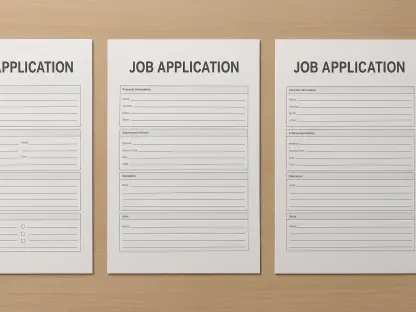

The digital architecture of the modern hiring process has evolved into a sophisticated network of algorithmic filters that prioritize structural precision over traditional aesthetic flourishes. In this environment, the curriculum vitae serves less as a personal narrative for human eyes and more as a data source for a digital gatekeeper. This evolution has transformed the recruitment sector into a landscape where technical compatibility often outweighs experience on the initial screening level. Companies now utilize high-level automation to manage the vast volume of digital applications, making it essential for any serious job seeker to understand the mechanics of the systems standing between them and a human recruiter.
The Evolution of Algorithmic Recruitment and the Digital Gatekeeper
Recruitment has shifted from a manual labor-intensive process into a centralized, data-driven operation dominated by high-performance software. Today, the majority of the global workforce interacts with some form of Applicant Tracking System when applying for roles. These systems have matured into comprehensive suites that handle everything from candidate sourcing to internal mobility. Major technological players have integrated advanced machine learning to help corporations sort through thousands of applicants in seconds, identifying the most relevant talent based on specific scoring parameters.
As organizations strive for greater efficiency, the significance of these systems has expanded beyond simple database storage. They now act as active decision-makers, ranking candidates and filtering out those who do not meet a predefined threshold of technical and professional qualifications. This shift is influenced largely by the need to manage a globalized talent pool where a single job posting can attract applicants from every corner of the world. Consequently, the industry is now defined by its reliance on standardized data and the rejection of non-conforming document formats.
Technological Trends and the Rise of the Matching Engine
Innovations in Natural Language Processing and Parsing Accuracy
The current state of natural language processing has allowed matching engines to move beyond simple keyword matching toward a deeper understanding of semantic intent. Modern parsers can now distinguish between a candidate who merely lists a skill and one who demonstrates its application through contextual evidence. This innovation means that the systems are increasingly capable of identifying transferable skills by understanding the relationship between different professional titles and industry jargon. However, even with these advances, the core functionality still relies on the clarity of the document structure to ensure that no data is misinterpreted during the extraction phase.
Emerging behaviors among consumers of these technologies—both recruiters and applicants—show a growing reliance on AI-driven summaries. Recruiters now receive condensed versions of a candidate’s profile generated by the system, which emphasizes certain metrics while potentially obscuring others. This trend necessitates a focus on providing high-quality, structured information that the AI can easily synthesize. Market drivers are pushing toward even more granular parsing, where every bullet point is analyzed for its specific contribution to a candidate’s overall score.
Benchmarking the 2026 Candidate Success Rates
Current market data indicates that only a small fraction of applications ever reaches the desk of a human hiring manager. Performance indicators suggest that documents failing to meet basic structural standards face an immediate rejection rate of over seventy percent. Looking ahead from 2026 to 2028, this trend is expected to intensify as the volume of AI-generated applications increases, forcing systems to become even more selective in their ranking criteria. Growth projections for the recruitment software market suggest a continued upward trajectory, with a focus on narrowing the candidate pool even further.
Success rates are increasingly tied to how well a candidate aligns with specific benchmarking data used by the employer. Companies are now using internal performance data to create profiles of ideal candidates, which the tracking systems then use as a template for evaluating new applicants. This forward-looking perspective suggests that candidates must not only focus on what they have done but also on how their past performance data matches the predictive success models of the hiring organization.
Overcoming the Hidden Worker Problem and Technical Invisibility
One of the most persistent obstacles in the modern labor market is the phenomenon of the hidden worker, where qualified individuals remain invisible to employers due to technical mismatches. This complexity arises when an applicant’s professional history is documented in a way that the software cannot categorize properly, such as using unusual job titles or non-standard formatting. To overcome this, strategies must focus on radical simplicity and the use of standardized language that aligns with industry norms. Using common headings and a single-column layout ensures that the parser can accurately map the candidate’s journey without encountering errors.
Furthermore, the problem of technical invisibility is often exacerbated by the use of graphics, tables, or complex headers that the software cannot read. When a system encounters these elements, it often skips the information contained within them, leading to an incomplete profile. The solution involves prioritizing the text over the visual design, ensuring that every piece of relevant information is presented in a way that the machine can ingest. By addressing these technical barriers, candidates can ensure they are evaluated on their merits rather than being discarded due to a lack of digital legibility.
Data Privacy Standards and Compliance in Automated Hiring
The regulatory landscape surrounding automated recruitment has become increasingly stringent, with laws focusing on transparency and the mitigation of algorithmic bias. Significant changes in compliance standards now require companies to be more open about how their software ranks candidates and what data points are being prioritized. These regulations are designed to protect candidate privacy while ensuring that the automated systems do not inadvertently discriminate against specific groups. For the applicant, this means that the data provided must be accurate and verifiable, as systems are now more likely to cross-reference information with public professional registries.
Compliance also extends to the security measures used to protect candidate information within these large databases. Industry practices have shifted toward higher standards of data encryption and limited retention periods to satisfy international privacy laws. As a result, the way information is structured on a CV can influence how it is handled within these secure environments. Candidates who understand these standards are better positioned to provide information that is both compliant with corporate policy and optimized for the ranking algorithms, creating a smoother path through the initial digital filters.
The Future of AI-Driven Talent Acquisition and Predictive Analytics
Insights into the direction of the industry point toward a future where predictive analytics play a dominant role in talent acquisition. Market disruptors are already testing models that predict a candidate’s future performance and cultural fit based on a holistic analysis of their career trajectory. These emerging technologies move beyond historical data, attempting to forecast how a person will grow within a specific company structure. Consumer preferences are shifting toward these more nuanced evaluations, which look for potential rather than just a history of completed tasks.
This growth area is heavily influenced by global economic conditions and the ongoing need for highly specialized labor. Innovation in this space will likely lead to systems that can provide real-time feedback to candidates, suggesting how they might better align their profiles with specific market needs. As the technology matures, the distinction between the resume and a live, data-rich professional profile will continue to blur, making the maintenance of a digitally optimized professional presence a constant requirement for career advancement.
Strategic Synthesis for Navigating the 2026 Employment Landscape
The transition to a fully automated initial screening phase necessitated a fundamental shift in how professional identities were constructed and presented. It was found that success in this environment required a departure from traditional, visually complex resumes in favor of documents designed for machine readability and semantic clarity. Organizations that adopted these advanced tracking systems significantly reduced their time-to-hire, but they also created a new set of requirements for the labor force that prioritized data integrity. The integration of predictive analytics and strict compliance measures ensured that the recruitment process became more efficient, although it placed a higher burden on candidates to manage their digital invisibility.
A significant new insight from this shift was the emergence of the digital skill passport, a concept where verified professional achievements were linked directly to the candidate’s profile, bypassing the need for manual data entry. This development suggested that the future of job seeking would rely less on static documents and more on dynamic, third-party verified data sets. For individuals navigating this landscape, the focus remained on the strategic alignment of their professional narrative with the evolving requirements of the matching engines. Moving forward, the most successful participants in the labor market were those who viewed their career documentation as a living data source that required constant optimization and technical refinement to remain visible in an increasingly automated world.